


Landing at Faro Airport is the starting point for most trips to the Algarve, and the first decision you face is how to get into Faro city centre. The airport lies only around 6 kilometres from town, but the best option depends on your budget, arrival time, luggage, and whether you are continuing onward by train or regional bus. This guide compares the main choices bus, taxi, Uber or Bolt, private transfer and car rental using recent, real world examples so you can pick the option that fits your trip, not the other way around.
Get the latest updates straight to your inbox!
Orientation: Distance, Timing and What to Expect on Arrival
Faro Airport sits just west of Faro city, about 6 kilometres from the old town and marina area. In light traffic a taxi or Uber can cover the distance in 10 to 15 minutes. A local bus takes a little longer, usually around 20 minutes depending on stops and traffic as you approach the city. From the arrivals hall to actually being on the road, allow at least 10 to 20 minutes to walk to bus stops, taxi ranks, or the rideshare pickup area, especially at busier times in summer.
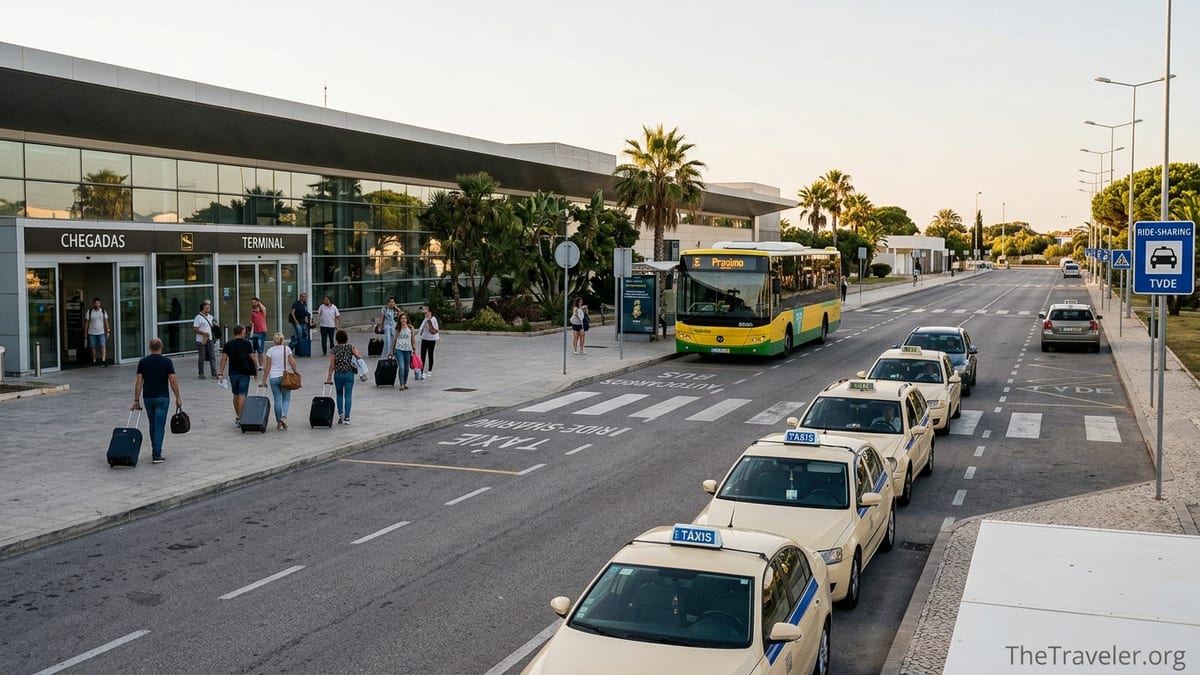
The airport is compact compared with major European hubs. After passport control and baggage claim, you exit into the main arrivals hall. Directly outside are signed areas for taxis and buses, while the dedicated pickup zone for Uber and Bolt is slightly offset and has recently been moved, so you may need to follow temporary signs or ask staff where rideshare vehicles stop. Recent traveler reports mention that signage can be confusing, so build in a few extra minutes the first time you arrive.
If you are heading directly into Faro city centre, you are likely aiming for one of three areas: the marina and old town, the central bus station, or Faro railway station. All are within a short walk of each other. Buses from the airport typically terminate at the main bus station near the marina, while taxis and rideshares can drop you right outside hotels or apartments in the old town streets if vehicle access is allowed.
Because Faro is the transport hub for the Algarve, many travellers only stay a night before catching a train west to Lagos or east to Tavira. If that is your plan, factor in the extra few minutes to reach Faro railway station from wherever your chosen transport drops you off, and avoid cutting connections too fine, especially in high season when both roads and the airport itself are busier than usual.
Airport Bus: The Cheapest Way Into Faro
For most budget conscious travellers, the Próximo city bus is the cheapest way to get from Faro Airport to the city centre. Two routes, commonly numbered 14 and 16, operate between the airport and Faro bus station close to the marina. Route 16 is the one most visitors use because it typically offers more frequent services through the day, while 14 runs less often. Journey time is usually around 20 minutes from the airport to the terminal stop in town, depending on traffic and intermediate stops.
Single tickets on these local buses are usually just a few euros per person, making them significantly cheaper than taxis or ride hailing for solo travellers or couples. Expect to pay roughly the price of a coffee and pastry in a local café for the ride, with the driver selling tickets on board for cash. Some services and seasons may allow contactless or travel cards, but you should not rely on this. If you are arriving late in the evening, keep in mind that frequencies drop and there may be long gaps between buses or no departures at all around midnight and in the very early hours.
The bus stop at Faro Airport is located just outside the terminal, typically a short walk from arrivals. Look for the Próximo signs and bus stop poles. At busy times in summer, you may find a small crowd of people with luggage waiting, which is usually a good indication you are in the right place. If you are unsure, confirm with the driver when the bus arrives that it is going to Faro city centre or the main bus station. In practice, almost all tourists boarding at the airport are heading that way.
In terms of luggage, buses are manageable for hand luggage and standard suitcases, but they are city buses rather than dedicated airport coaches. There is no guaranteed space for very large or multiple bags, and at peak times you may find it cramped. If you are travelling with several large suitcases, sports equipment such as golf clubs, or kids in strollers, a taxi, Uber, or private transfer will usually be far more comfortable even if the bus is substantially cheaper.
Taxi: Simple and Reliable Door to Door
Official taxis are one of the most straightforward ways to reach Faro city centre, especially if you are arriving with luggage or at a time when bus services are infrequent. The taxi rank is located directly outside the arrivals hall, usually clearly marked and forming a queue system. Licensed taxis in Faro are metered and typically run on standard regulated tariffs, with a base fare plus a per kilometre charge and surcharges at night, on weekends, and for luggage.
For a typical trip from Faro Airport to the central area around the marina or old town, recent travellers report fares in the approximate range of 15 to 20 euros during the day, sometimes a little higher at night or on public holidays. This assumes normal traffic and no significant detours. If you are heading to accommodation slightly outside the main centre, such as around the shopping centre or university, the final fare may be a few euros more. Taxi drivers are generally familiar with the main hotels and guesthouses; having your address written down or saved on your phone is still a good idea.
In terms of timing, a taxi usually takes 10 to 15 minutes to reach central Faro as long as there are no unusual delays. In peak summer, taxis can queue at the airport when several flights land at once, so you might wait 10 or 20 minutes for a car at the rank. For late night arrivals, local taxis are a good fallback if bus services have stopped and if rideshare availability is low. However, there may be fewer taxis operating at 03:00 than at 21:00, so it is sensible to keep some flexibility and patience in those hours.
Luggage is rarely an issue in a standard Portuguese taxi when travelling only from airport to city centre, as most cars are mid sized sedans or estate cars with adequate boot space for a family’s bags. If you are carrying outsized items such as surfboards or very large golf bags, mention this when you reach the front of the taxi queue so the dispatcher can assign a suitable vehicle. Payment is traditionally in cash, but more taxis now accept cards. If paying by card is essential, ask the driver before setting off to avoid surprises on arrival.
Uber and Bolt: Flexible and Often Good Value
Ride hailing services such as Uber and Bolt operate in Faro and across much of the Algarve, providing an alternative to taxis. At Faro Airport, there is usually a designated pickup area for these services, often located in or near one of the car parks adjacent to the terminal. Signage has been updated more than once, and some recent visitors have noted that it can be hard to spot, so it is best to follow directions in the app and watch carefully for signs indicating the rideshare area rather than waiting at the standard taxi rank.
For a journey from the airport into Faro city centre, typical app estimates for an Uber or Bolt car fall in a similar range to local taxis, often between about 10 and 18 euros depending on vehicle category, exact drop off point, and current demand. At quieter times you might see slightly lower prices; during peaks such as school holidays, summer evenings or flight arrival banks, prices can surge upward. The advantage is the ability to see the estimate before you confirm and to track your driver on the map. Payment is cashless through the app, which many travellers find convenient.
Rideshare wait times vary. In daytime and early evening it is often possible to get a car within 5 to 15 minutes. Close to midnight and in the early hours, availability can thin out, especially if many people are trying to leave the airport at once or if local drivers prefer not to work at those times. There are occasional reports of drivers accepting a ride and then cancelling if they do not like the destination or if traffic near the airport is heavy. If you are arriving very late, consider having a backup plan such as being ready to take an official taxi if rideshares are scarce.
For luggage, most ride hailing vehicles are similar in size to regular taxis and can accommodate typical tourist baggage without issues, though options such as “UberX” or small Bolt categories may be snug for three or four adults with large suitcases. If you are travelling with children who require car seats, note that local Uber or Bolt drivers in Portugal rarely carry them as standard, and specific child seat options may be limited or not available at Faro at all times. In that situation, a prebooked private transfer company that guarantees appropriate child seats is usually safer and less stressful.
Private Transfers: Best for Groups, Families and Late Nights
Private transfer services are a popular choice in the Algarve, particularly for families with children, large groups, and anyone arriving late at night who wants certainty about how they will reach town. These companies typically operate modern minibuses or large cars and meet you just outside arrivals with a sign bearing your name. The service is prebooked, paid for in advance or on arrival, and priced per vehicle rather than per person, which can be economical for three or more passengers.
For a one way private transfer from Faro Airport to central Faro, recent online quotes generally fall somewhere in the region of 22 to 35 euros for up to four passengers in a standard car, with larger vehicles for groups sometimes costing more but still working out cheaper per head. Unlike metered taxis or surge priced rideshares, the cost is fixed when you book, so traffic delays do not increase the fare. Many companies also offer return transfers at a discount if you book both legs together.
The key advantage of a private transfer is predictability. Your driver waits even if your flight is delayed, meets you in the arrivals hall, and knows your accommodation in advance. Parents often value the ability to request appropriate child seats in advance at little or no extra cost. Golfers can request vehicles with enough room for several sets of clubs. If you are arriving at 01:30 or 02:00 when bus services have stopped and taxis or ride hailing cars may be scarce, prebooking a transfer removes a lot of uncertainty after a long journey.
The downside is reduced flexibility. If your plans change at the last minute, you may face amendment fees or find your driver has already left. You also need to select a provider and make the booking in advance, rather than simply stepping into a taxi queue or opening a rideshare app on arrival. Still, for many travellers, especially in peak season or when travelling with children or heavy luggage, a prearranged private transfer provides the most stress free way to get from Faro Airport into the city.
Car Rental: Ideal if You Are Exploring the Algarve
For travellers planning to explore the Algarve beyond Faro, renting a car at the airport can make sense from the moment you land. Faro Airport has a large car rental presence, with international brands such as Avis, Budget, Europcar, Sixt and Enterprise, alongside many Portuguese and regional companies. Many operate desks in or immediately outside the terminal, while others use the dedicated car rental centre at car park P4 a short walk from arrivals, and some low cost agencies are based off airport with shuttle buses connecting their depots.
Daily rates for a small car from Faro Airport can be relatively low in the off season, sometimes starting from under 20 euros per day with basic insurance if booked well ahead. In summer, especially in July and August, prices rise significantly and popular vehicle categories can sell out. On top of the base rental price, factor in insurance upgrades, fuel policies, and the widespread use of the A22 motorway’s electronic toll system, which often requires renting a transponder or paying tolls through the rental company. Even if you only plan to drive from the airport to Faro city, you may find yourself using tolled roads later in your trip if you head farther along the coast.
In terms of convenience, collecting a car at Faro Airport usually takes 15 to 45 minutes depending on queues at the rental desks and whether your provider is in terminal or requires a shuttle ride to an external depot. Once you have the keys, the drive into Faro is straightforward, following well signed main roads. Parking in central Faro is a factor, though. The old town has narrow, sometimes restricted streets, and hotels may or may not offer parking. Public car parks and street parking are available but can be busy in summer and may require paid tickets.
For very short stays where you only need to reach a central hotel and perhaps move around within the city on foot, car rental is often more hassle and cost than it is worth. However, if you are using Faro merely as a gateway to the Algarve, driving on to destinations such as Albufeira, Lagos, Vilamoura, or Tavira, picking up a car at the airport can save a separate transfer and give you full flexibility from the start. Consider your full itinerary rather than just the airport to city leg when deciding whether to rent.
Costs, Journey Times and Luggage: Side by Side
When choosing between your options, it helps to compare approximate cost and journey time. A local bus ticket between Faro Airport and the city centre is typically the cheapest, costing just a few euros and taking around 20 minutes in normal conditions. This makes the bus excellent value for solo travellers and couples arriving during the day with modest luggage, especially if they are staying near the marina, old town, or central bus station.
A standard taxi between the airport and central Faro usually costs somewhere in the realm of 15 to 20 euros depending on traffic, time of day, and surcharges. Journey time is often 10 to 15 minutes. Uber and Bolt rides on the same route broadly match this timing and price bracket, though they can be a shade cheaper off peak and more expensive at busy times. For two people, these options represent only a modest cost per person for door to door service. For three or four people sharing, the per person cost can fall close to or only slightly above the bus fare while being significantly faster and more comfortable.
Private transfers are generally more expensive than a taxi for very short trips but become competitive for small groups. A typical prebooked car transfer for up to four passengers from Faro Airport into the city might cost in the region of 22 to 35 euros with a journey time similar to a taxi. Split between four people, this can end up close to the cost of individual bus tickets, while providing direct pickup, guaranteed space for luggage, and, if requested, child seats. For larger parties that need a minibus, the total price rises but often remains attractive when divided amongst six or eight travellers.
With luggage, the main question is not only volume but how important comfort and ease are to you after a flight. City buses can carry suitcases, but you may be standing or maneuvering bags around other passengers. Taxis and rideshares typically handle two large suitcases and carry on bags without trouble; if you have more, you can opt for estate style cars or vans where available. Private transfers and rental cars are best for bulky or specialist kit such as golf clubs or surfboards. Families with strollers will usually find taxis, rideshares or transfers much easier than buses, because you can load gear directly into the boot rather than navigating a possibly crowded bus aisle.
Late Night Arrivals and Practical Tips
Not all flights into Faro arrive in daylight, and evening or late night landings are common, especially from the United Kingdom and northern Europe. After about 22:00, bus services between the airport and city become less frequent, and there may be gaps or no service at all in the very late hours. Before relying on a bus after dark, check the current timetable close to your travel date and note the last departure that will realistically work with your scheduled arrival and baggage claim time.
For late night arrivals, taxis and ride hailing services tend to be the main options if you have not arranged a private transfer. Official taxis generally operate around the clock, but the number of cars waiting at the rank can shrink after midnight, so waits may be longer when several aircraft land together. Uber and Bolt usually still have drivers online in the evening, but availability and pricing are more variable than in the daytime. Travellers with young children or large amounts of luggage often prefer to book a private transfer in advance for flights scheduled to land after about 23:00, simply to remove uncertainty.
Whichever option you choose, there are a few simple tips that make arrival smoother. Keep some euros in cash for bus tickets, smaller taxi fares, or incidental expenses in case card machines are temporarily down. Have your accommodation address written clearly and, ideally, saved in an offline map app. If using Uber or Bolt, wait in the designated pickup area rather than the taxi rank and confirm the license plate matches the one in your app before getting into the car. If renting a car late at night, email your rental company with your flight number so they know if you are delayed and can advise on closing times or out of hours key pickup.
Finally, remember that Faro city centre is relatively compact. Once you have reached the marina or old town area, you can usually walk between hotels, restaurants and the train or bus stations in 10 to 15 minutes. This means that even if your chosen mode of transport drops you a few blocks from your accommodation, the final stretch on foot is manageable, and you do not necessarily need to pay extra to be delivered to the exact front door unless you have mobility issues or very heavy luggage.
The Takeaway
Getting from Faro Airport to Faro city centre is straightforward once you understand the range of options and how they fit different types of trips. Local buses offer the cheapest ride, ideal for budget travellers arriving in daytime with light luggage. Taxis and rideshares such as Uber and Bolt strike a balance between cost and convenience, providing fast door to door service at a reasonable price, especially when shared between two or more people.
Private transfers come into their own for families, groups, and late night arrivals, offering fixed prices, guaranteed space and, when needed, child seats or room for sports equipment. Car rental, meanwhile, is less about the short hop into Faro and more about giving you flexibility for a wider Algarve itinerary, although it can still be used simply to bridge the short distance into town if you plan to drive further later.
If you are arriving in the middle of the day with one small suitcase and want to save money, heading for the Próximo bus stop outside arrivals is a sensible choice. If you are landing after dark, tired, with a couple of large bags or children in tow, budgeting for a taxi, rideshare, or prebooked transfer will likely feel worth the extra euros. With a clear sense of prices, journey times, and how each option handles luggage and late night conditions, you can make a choice that gets your Algarve adventure off to the smoothest possible start.
FAQ
Q1. How far is Faro Airport from Faro city centre?
The distance is roughly 6 kilometres, and the drive by taxi or car usually takes around 10 to 15 minutes in normal traffic.
Q2. What is the cheapest way to get from Faro Airport to the city?
The local Próximo bus, typically on routes 14 or 16, is usually the cheapest option, with single tickets costing only a few euros per person.
Q3. How much does a taxi from Faro Airport to central Faro cost?
Recent travellers generally report daytime fares in the region of 15 to 20 euros for a standard metered taxi from the airport to the marina or old town areas.
Q4. Are Uber and Bolt available at Faro Airport?
Yes, both Uber and Bolt operate at Faro Airport, with pickups from a designated rideshare area near the terminal and prices broadly similar to local taxis, depending on demand.
Q5. Is there public transport late at night from the airport into Faro?
Bus services become less frequent later in the evening and may stop entirely in the very late hours, so for arrivals after about 22:00 many travellers rely on taxis, rideshares, or prebooked transfers.
Q6. Which option is best if I have a lot of luggage or sports equipment?
Taxis, ride hailing cars with larger boot space, and private transfers are more comfortable with heavy or bulky luggage, while private transfers and rental cars are ideal for items such as golf clubs or surfboards.
Q7. Should I rent a car at Faro Airport just to reach the city centre?
For a short stay in Faro itself, car rental is often unnecessary and more expensive than taxis or buses, but it becomes worthwhile if you plan to explore other Algarve towns during your trip.
Q8. Can I pay for buses and taxis by card at Faro Airport?
Some taxis accept cards and certain ticketing systems support contactless payments, but you should not rely on this; carrying some euros in cash is strongly recommended on arrival.
Q9. What is the best option for families with young children?
Prebooked private transfers are often the easiest for families, as they can provide suitable child seats on request and allow plenty of space for strollers and bags.
Q10. How long should I allow to get from my flight to accommodation in central Faro?
Assuming normal queues, baggage delivery and traffic, most travellers reach their hotel within 45 to 60 minutes of landing, including time to clear arrivals and travel into the city.