


More news on this day
A new wave of fast suburban electric multiple units is redefining regional rail, merging metro-style frequency and capacity with mainline speeds traditionally reserved for intercity and high speed trains.
Get the latest news straight to your inbox!
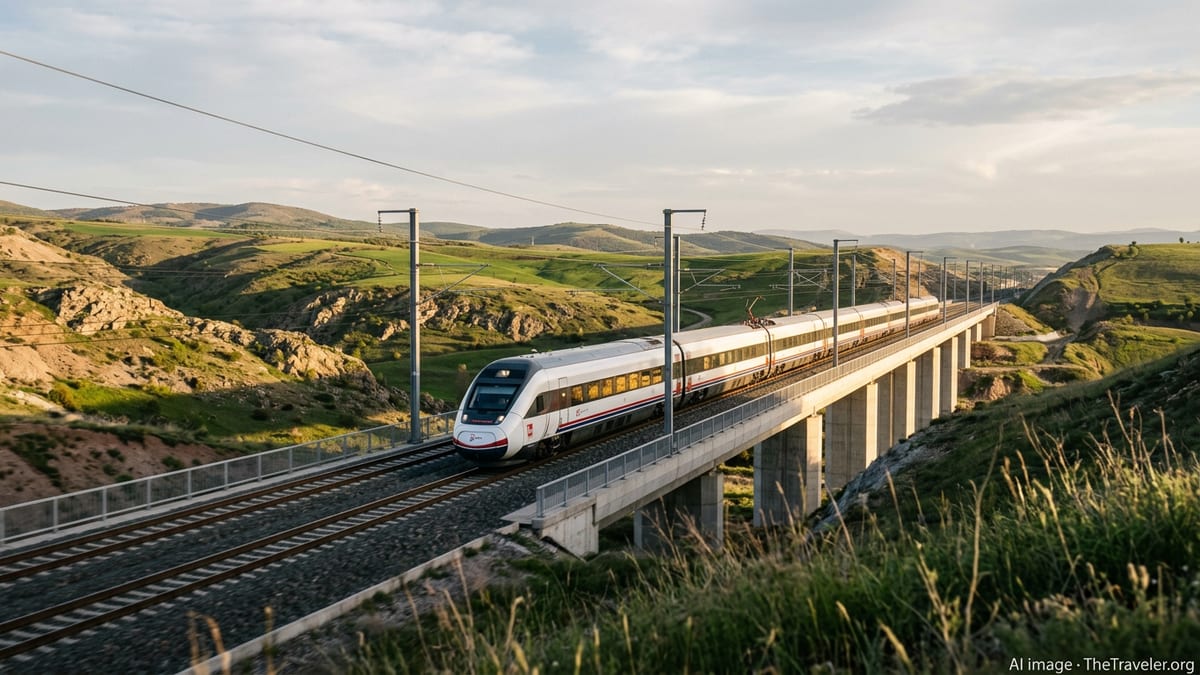
Blending two worlds on rails
Rail manufacturers and operators are increasingly turning to fast suburban electric multiple units that sit between classic metro stock and full high speed trainsets. Recent contracts in Europe and Asia highlight a growing preference for trains capable of 160 to 200 km/h that can still handle dense stop spacing, rapid boarding and frequent acceleration typical of urban and commuter networks.
Publicly available information on these new fleets shows a clear pattern. Trains are being designed with wide doors, generous standing areas and high acceleration more commonly associated with metro systems, while also incorporating intercity features such as higher top speeds, improved sound insulation and long-distance seating layouts. The aim is to shorten regional journeys without sacrificing the throughput needed on busy suburban corridors.
Manufacturers present these products as a response to shifting travel behavior. As housing and employment spread further from city centers, railways are seeking stock that can provide fast access from outer suburbs and regional towns into metropolitan cores, while still threading through high-demand inner segments where short headways and quick dwell times are essential.
Europe’s 200 km/h suburban and regional fleets
In Germany and the Netherlands, new generation regional trains illustrate how the gap between commuter and high speed services is narrowing. Alstom’s Coradia Stream family, ordered in multiple countries, is marketed as a low-floor, high-performance EMU platform with maximum speeds up to about 200 km/h, yet it is primarily deployed on regional and intercity-commuter routes rather than classic long-distance high speed lines.
Alstom’s Coradia Max variant, a double-deck high-capacity EMU for the German market, combines two single-deck intermediate cars with double-deck end cars to maximize capacity within existing platform lengths. Manufacturer data indicates maximum speeds in the 160 to 200 km/h range, depending on configuration, placing these trains firmly in the territory once reserved for long-distance stock while still maintaining rapid boarding and strong passenger flows suitable for suburban operations.
Stadler’s KISS double-deck EMU, supplied to several European operators, follows a similar pattern. Versions for Austria’s ÖBB Railjet-branded services are designed for 200 km/h operation but are intended to cover dense national and cross-border routes where commuter, regional and fast intercity patterns overlap. These trains share interior elements with intercity stock, such as luggage space and long-distance seating, although they continue to offer high door counts and generous circulation areas that shorten station dwell times.
These developments are supported by ongoing upgrades to signaling and infrastructure that permit higher speeds on routes traditionally classed as regional. In many European countries, sections of suburban and regional lines now meet the technical standards for high speed or near high speed operation, encouraging operators to procure rolling stock that can exploit these improvements without abandoning metro-like performance in busier inner sections.
China’s inter-city EMUs tighten regional travel times
China has been one of the earliest adopters of fast inter-city EMUs that bridge the space between metro networks and high speed rail. CRRC’s product catalog for high speed and inter-city trains includes multiple families with operating speeds around 200 km/h that are explicitly targeted at short to medium-distance corridors between major cities and their satellite regions.
CRRC documentation on its inter-city EMU types describes formations that can be flexibly configured for different service patterns, ranging from short trains for dense commuter service to longer consists that resemble high speed sets. These trains typically share core technologies with China’s standardized high speed EMUs but are optimized for more frequent stops and shorter trip lengths, making them suitable for suburban and regional shuttles that connect directly into high speed hubs.
Service patterns on some Chinese corridors show how such stock enables high-frequency, limited-stop services that feel closer to metro operations, while still offering travel times comparable to high speed services on similar distances. By running 160 to 200 km/h between nodes but accepting more stops than classic high speed trains, inter-city EMUs support both daily commuting and regional business travel.
Industry reports suggest that the same architecture is being adapted for export markets. Orders for 200 km/h EMUs in countries modernizing their inter-city and suburban systems illustrate how Chinese builders are positioning these trains as a middle-ground solution, promising high speed technology in a package suited to mixed-traffic, mixed-stop networks.
Designing for both capacity and comfort
The technical design of fast suburban EMUs reflects the competing demands of metro-style capacity and higher-speed comfort. Wide, often level-boarding doors and low-floor sections are now common, allowing quick passenger exchange at crowded stations. Double-deck cars, used by several European fleets, further boost capacity without requiring longer platforms, though they can pose challenges for accessibility and dwell times if not carefully designed.
At the same time, these trains increasingly feature passenger amenities once associated mainly with intercity stock. Quiet, air-conditioned interiors, power outlets, on-board information systems and, in some cases, small luggage racks or bike spaces, make them attractive for journeys of an hour or more. Noise and vibration control is a particular focus at 160 to 200 km/h, where suburban trains must still offer a comfortable ride despite frequent acceleration and braking cycles.
Energy efficiency is another design driver. Published technical material from several manufacturers emphasizes lightweight bodyshells, regenerative braking and efficient traction equipment as key selling points. Because these trains operate at relatively high speeds yet face frequent stops, fine-tuning traction and braking performance can significantly affect both operating costs and network capacity.
Operators also favor modular interiors that can be reconfigured as demand evolves. Adjustable seat layouts, standing zones and multi-purpose areas allow the same train type to cover peak-hour commuter runs and off-peak regional services. This flexibility supports a move toward more homogeneous fleets that simplify maintenance and deployment while still addressing diverse ridership needs.
Implications for cities and travelers
The spread of fast suburban EMUs is beginning to change expectations about what regional rail can deliver. As more corridors support operating speeds near 200 km/h, cities and regions are able to extend effective daily commuting ranges, integrating satellite towns into metropolitan labor markets and opening new possibilities for residential and commercial development along upgraded lines.
For travelers, the distinction between commuter, regional and even some intercity services is becoming less clear. Timetables increasingly feature patterns where trains that look and feel similar provide a spectrum of stopping patterns and journey times, from frequent all-stops runs to limited-stop services that rival traditional express trains. This can simplify user perception, provided that operators communicate clearly about service types and fares.
From a planning perspective, the hybrid character of these EMUs supports policy goals around decarbonization and congestion relief. By offering metro-like convenience over longer distances, they may entice car users out of highway corridors, especially where integrated ticketing and coordinated timetables make transfers to urban transit straightforward.
Industry observers note that the concept remains a work in progress. Infrastructure limitations, platform length constraints and funding questions still shape how far and how fast operators can push suburban speeds. However, the current generation of fast suburban EMUs suggests that the longstanding divide between metro stock and high speed trains is gradually giving way to a continuum of rolling stock tailored to different segments of the same integrated regional rail network.