


More news on this day
Commuter rail service on the South Shore Line between Chicago and northwest Indiana was abruptly halted after a freight train derailment and power loss near East Chicago triggered a suspension of all remaining trains late Wednesday night.
Get the latest news straight to your inbox!
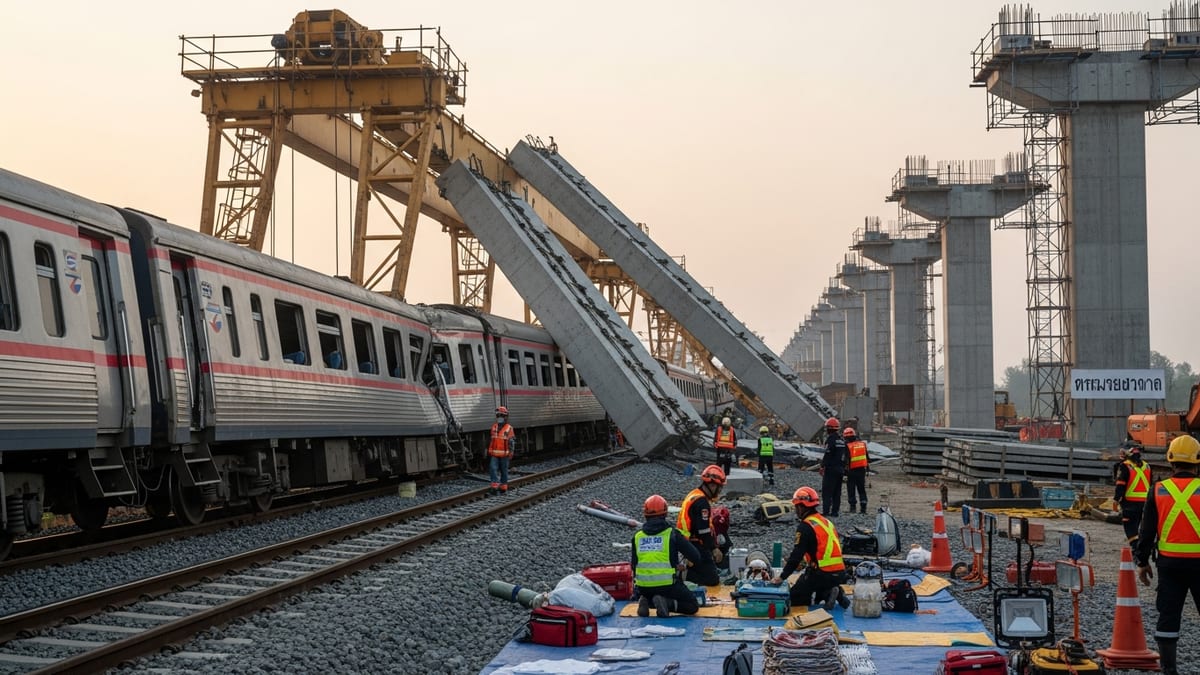
Freight derailment and outage halt evening operations
According to published coverage, a freight train derailed near the East Chicago and Gary Metro area on Wednesday evening, damaging infrastructure and contributing to an electrical power loss along a key stretch of the South Shore Line corridor. The incident was reported around 9:40 p.m. local time, just as many riders were preparing for late-evening trips between downtown Chicago and communities in northwest Indiana.
Service alerts circulating on regional news outlets indicate that the combination of the derailment and power failure left the commuter railroad unable to safely operate passenger trains through the affected zone. As a result, the South Shore Line announced that all remaining trains for the night would be suspended, effectively shutting down the line for the rest of the evening.
The disruption unfolded after a day of strong thunderstorms and high winds across northeast Illinois and northwest Indiana, which had already strained electrical systems and transportation networks. Early reports did not immediately specify whether weather directly caused the freight train to derail, but the timing of the incident intensified the impact on riders already coping with storm-related delays.
Initial information available late Wednesday did not mention injuries or hazardous material releases linked to the derailment. Images and descriptions shared by local outlets focused primarily on the service outage and the resulting scramble for alternate transportation.
Uncertain outlook for Thursday morning commute
In its evening updates, the South Shore Line warned that Thursday morning’s rush-hour service could also be affected, noting that the extent of the damage and the pace of repairs would determine how quickly regular operations could resume. Publicly available information emphasized that passengers should plan for the possibility of reduced or suspended service during the critical morning period.
Regional coverage described riders being urged to seek alternate travel options into Chicago, including other commuter rail lines, buses, and carpooling, particularly for early-morning arrivals in the city’s central business district. With many northwest Indiana residents relying on the South Shore Line for daily commutes, even a partial shutdown during rush hour could create significant congestion on parallel highways and local roads.
Rail service disruptions of this type often require a staged recovery, with track inspections, signal testing, and power-line assessments preceding any resumption of passenger operations. Recent incidents involving derailments and power issues on commuter and regional rail systems elsewhere in North America have shown that service can remain limited for hours or days while damaged equipment is cleared and infrastructure is certified for safe use.
As of late Wednesday, full details on the extent of the damage, the number of freight cars involved, and the exact cause of the derailment remained limited in publicly available reports. Additional updates were expected as crews assessed the scene overnight.
Impact on riders across northwest Indiana corridor
The South Shore Line links downtown Chicago with communities across northwest Indiana, including Hammond, East Chicago, Gary, and Michigan City, before continuing to South Bend International Airport. The corridor functions as a critical commuter artery, as well as a travel link for students, airport passengers, and visitors heading to Lake Michigan communities.
With evening trains suspended, many passengers were left to improvise last-minute alternatives. Some turned to ride-hailing services or arranged pickups at unaffected stations, while others reportedly shifted to intercity buses or postponed planned trips. For riders already en route when the outage was announced, the situation added uncertainty to late-night travel plans.
Past performance reports from the operator show that severe weather, power issues on shared infrastructure, and occasional freight interference have contributed to delays and annulled trains in prior years. The combination of a derailment and a power loss, however, represents a particularly disruptive scenario, cutting off both the physical track and the electrical supply needed for the South Shore Line’s electric multiple-unit trains.
The timing of the incident also raises concerns for shift workers and travelers outside typical office hours. Evening cancellations can complicate schedules for airport-bound riders, hospitality workers, and healthcare employees whose jobs depend on late-night and early-morning rail access.
Weather and infrastructure challenges under scrutiny
The derailment and power loss came on the heels of a volatile weather pattern that brought strong storms across the Great Lakes region. Similar systems have recently been linked to power line damage and rail disruptions in other parts of the United States, underscoring the vulnerability of overhead electrical infrastructure and signaling equipment to high winds and falling debris.
Publicly available information from recent storm-related derailments in the Midwest illustrates how severe wind gusts can topple freight cars and damage track structures, in some cases pushing railcars off the rails or into adjacent rights-of-way. While investigators had not yet released findings on the precise mechanism of Wednesday’s South Shore Line incident, the overlap with a period of intense storms will likely form part of any subsequent review.
Commuter rail systems that share corridors with freight operators often face complex recovery efforts when cargo trains derail. Crews must not only remove damaged freight equipment but also evaluate track geometry, ballast conditions, signal cabling, and any adjacent catenary or power systems before passenger trains can safely pass. That process can extend well beyond the initial clearing of derailed cars.
In the coming days, transportation analysts are expected to examine how the South Shore Line’s expansion and modernization plans interact with resilience concerns, particularly in an era of more frequent extreme weather. Questions about redundancy in power feeds, alternative routing, and communication with riders tend to follow large-scale service shutdowns of this kind.
Travel advice and alternatives for affected passengers
For riders planning to travel on the South Shore Line in the hours following the incident, published advisories recommend closely monitoring real-time service updates and preparing backup options in case trains remain suspended or operate on modified schedules. Morning commuters in particular may wish to allow additional time to reach downtown Chicago and to consider interim arrangements such as park-and-ride lots on other rail lines or express bus routes.
In previous Midwestern rail disruptions related to derailments and power failures, temporary bus shuttles have occasionally been arranged between selected stations, though such arrangements depend on the scale and location of the damage. Travelers should be prepared for the possibility that no direct replacement service is available if track access remains constrained.
For those with flexible schedules, delaying nonessential trips until later in the day, after updated service information becomes available, may help avoid overcrowded alternatives and last-minute changes. Riders heading to time-sensitive events or flights may find it prudent to switch to highway or airport shuttle options rather than relying on a potentially reduced rail timetable.
As rail operators and freight companies work through overnight repairs and assessments, the South Shore Line’s situation serves as a reminder of how quickly a single infrastructure incident can disrupt a wide commuter catchment. Travelers across the Chicago and northwest Indiana region are likely to watch closely for indications of when full service can safely resume.