


More news on this day
New double-deck commuter railcars built by Alstom have officially entered passenger service on Sound Transit’s Sounder line between Seattle and Lakewood, marking a significant capacity and comfort upgrade for one of the Puget Sound region’s key rail corridors.
Get the latest news straight to your inbox!
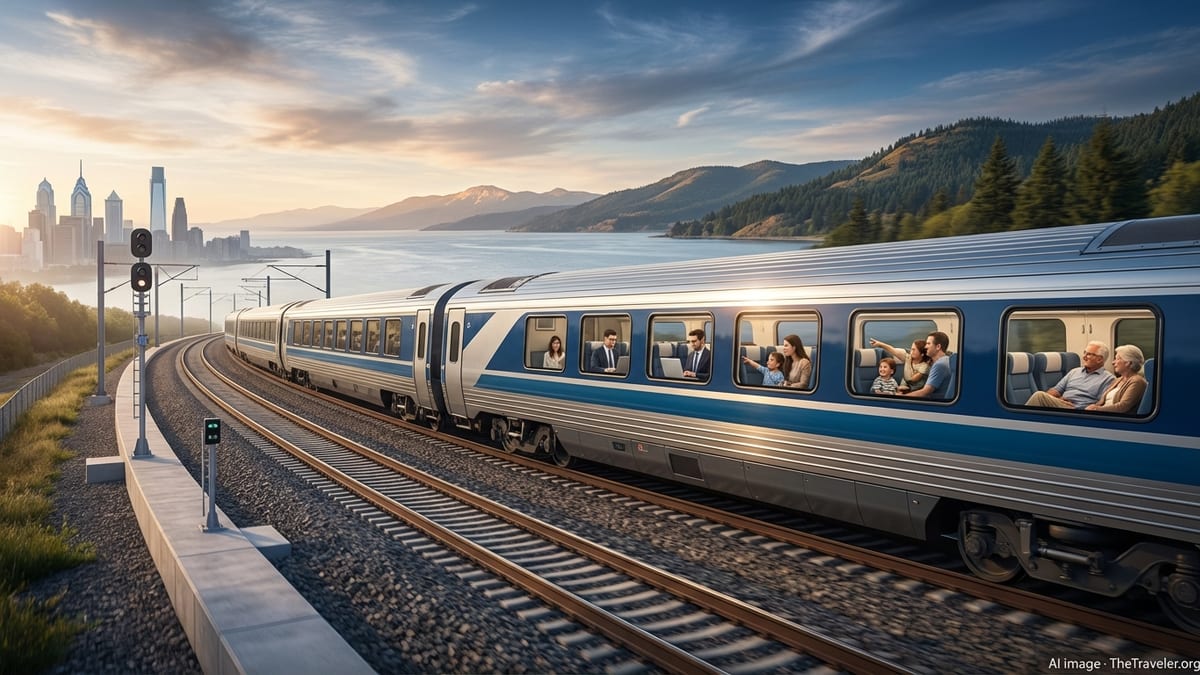
New fleet enters service between Seattle and Lakewood
Reports indicate that the first of Sound Transit’s new Sounder railcars began carrying passengers on the S Line at the start of June 2026, with an inaugural trip departing Seattle’s King Street Station toward Lakewood. The introduction follows several years of procurement and delivery after the regional transit agency approved the order in 2020.
The initial deployment places the new cars into regular peak-period commuter service, operating in mixed consists with existing Sounder equipment. The double-deck railcars are assigned to trains on the busy south corridor, where demand from communities such as Kent, Auburn, Puyallup, and Lakewood has driven the need for higher capacity on limited track slots.
Publicly available information shows that the new vehicles were manufactured by Alstom at facilities in North America, under a contract valued at approximately 46.5 million dollars. The order includes a mix of cab cars and standard coaches, all configured for Sound Transit’s existing locomotive-hauled operations.
The rollout aligns with Sound Transit’s broader strategy to maintain and modestly grow capacity on Sounder, even as the agency faces financial and policy debates about the long-term role of commuter rail alongside expanding regional light rail.
Design rooted in proven double-deck technology
The new Sounder cars are based on Alstom’s bilevel commuter rail platform, a design that traces its lineage to the well-known Bombardier BiLevel cars used widely across North America. According to industry coverage, the vehicles feature two passenger decks connected by internal stairways, allowing more seats within the same train length compared with single-level cars.
The double-deck configuration is particularly valuable for lines such as Sounder’s S Line, where track capacity and platform lengths constrain the number of available train slots. By placing more seats in each car, Sound Transit can carry additional riders without dramatically expanding the length or frequency of trainsets, which are governed by agreements with the host railroad.
Externally, the cars retain the familiar Sounder livery, with blue and green waves along the sides, but closer inspection reveals updated doors, windows, and mechanical systems reflecting Alstom’s current production standards. The cars are designed to operate with existing Sounder locomotives and legacy coaches, preserving fleet interoperability while gradually refreshing older equipment.
Industry reports note that the vehicles comply with current federal crashworthiness and accessibility standards, incorporating energy-absorbing structures and level-boarding compatibility with Sounder’s high platforms to support efficient boarding and alighting.
Passenger experience: more seats and modern amenities
The interior of the new Alstom double-deck cars is configured to balance capacity with comfort, with forward- and backward-facing seats on both levels and wide aisles to manage commuter flows. Observations from early riders shared through local transit coverage describe brighter lighting, updated upholstery, and a generally cleaner, more contemporary feel compared with some of the older cars in the fleet.
Reports indicate that the new cars provide power outlets at many seats, accommodating commuters who rely on laptops and mobile devices during their trip. Large windows on both decks aim to preserve the popular views of the Duwamish, Puget Sound, and the South Sound corridor that have long been a draw for Sounder riders.
Accessibility has been a core consideration in the new design. The lower level includes dedicated spaces for passengers using mobility devices and strollers, with nearby seating for companions. Handrails, contrasting step edges, and clear signage are intended to make movement between levels safer and more intuitive during busy peak periods.
Sound Transit documentation suggests that the vehicles also incorporate updated onboard information systems, supporting clearer audio and visual announcements about stops and service changes, which has been a consistent request from riders on both rail and bus services.
Joint procurement model lowers costs and supports domestic production
The Sounder double-deck order was structured as part of a broader joint procurement with two California commuter rail agencies, according to trade press reports. By aligning technical specifications and purchase timelines, the agencies sought to reduce per-car costs and secure more favorable manufacturing terms from Alstom.
This collaborative approach reflects a growing trend among U.S. transit agencies that use similar bilevel commuter equipment. Larger, standardized orders can help builders maintain domestic production lines that comply with federal Buy America requirements, while agencies benefit from shared engineering, testing, and spare parts strategies.
Industry analyses indicate that the Sounder fleet expansion has been assembled at Alstom’s existing North American plants, supporting skilled manufacturing jobs and preserving a supply chain specialized in passenger rail equipment. The new cars join a portfolio of Alstom-built vehicles entering service across the United States in 2025 and 2026, from airport people movers to new commuter and regional rail fleets.
For Sound Transit, participation in joint procurement provides both economies of scale and a degree of risk-sharing, as design changes and lessons from early service can be coordinated among partner agencies operating similar equipment on different corridors.
Capacity boost arrives amid evolving Sounder strategy
The arrival of new double-deck railcars comes at a complex moment for Sounder. Sound Transit has advanced plans to lengthen station platforms on parts of the S Line so that trains can eventually operate with up to ten cars, an increase from the seven-car maximum that has been standard in recent years. Published planning documents indicate that longer trains could raise seated capacity by roughly 40 percent on the busiest trips.
At the same time, the agency is reassessing the future of the underperforming N Line, which runs between Everett and Seattle. Public reports describe a proposal to phase out N Line commuter rail service in the early 2030s, redirecting investment toward extending regional light rail to Snohomish County. That discussion has sharpened the focus on how Sounder’s remaining services can deliver maximum value to riders within financial and operational constraints.
Within this context, the Alstom cars function both as a capacity tool and as a visible commitment to maintaining a robust south corridor commuter rail offering. Newer vehicles typically offer higher reliability and lower maintenance demands, which can help stabilize operations amid construction and service changes elsewhere in the Sound Transit network.
Transit observers note that the introduction of modern equipment tends to attract additional riders, particularly lapsed commuters who may be reconsidering their travel patterns as office attendance and regional population trends continue to evolve. For Sounder, a refreshed train interior, additional seating, and more reliable onboard amenities could play a role in rebuilding weekday ridership after the disruptions of recent years.