


More news on this day
Flights to and from London’s Heathrow Airport faced significant disruption after a fire near one of the runways prompted a temporary closure and forced aircraft to divert, delay departures, and hold in the air while emergency teams responded.
Get the latest news straight to your inbox!
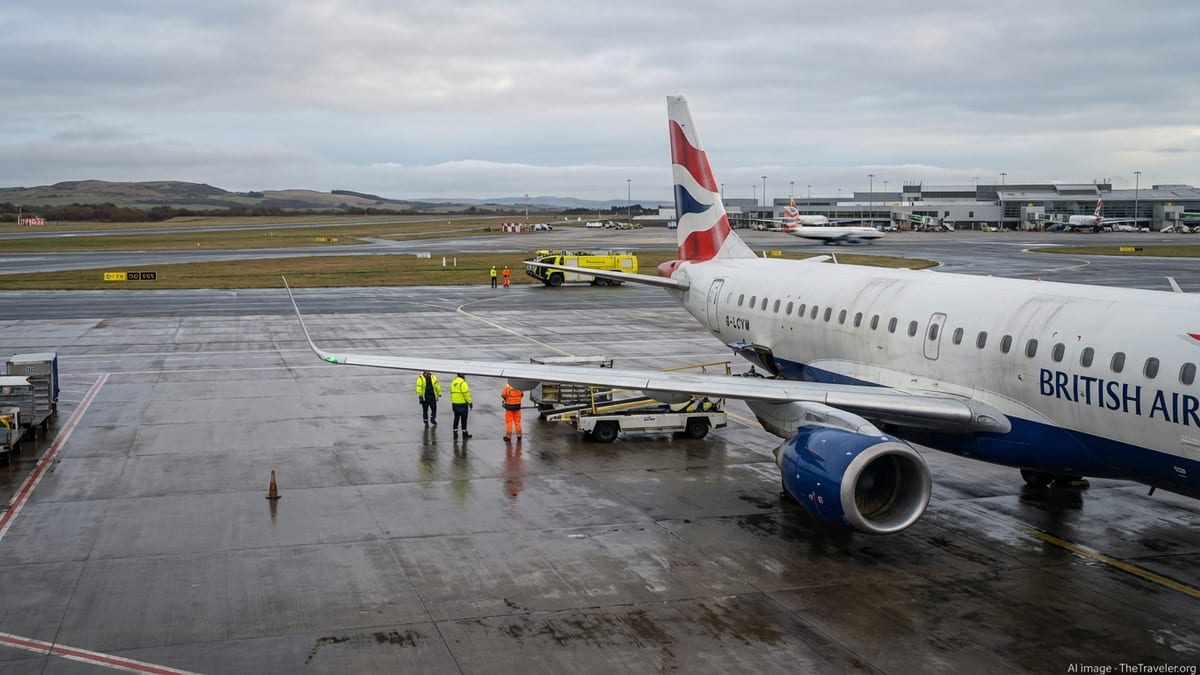
Runway closure after fire prompts emergency response
According to early reports and flight-tracking data, a fire was reported close to the western end of Heathrow’s southern runway, prompting air traffic controllers to halt movements on the affected strip while airport fire crews responded. Visuals shared on social media showed emergency vehicles positioned along the runway and a number of aircraft waiting on taxiways as operations were temporarily suspended.
Published coverage indicates that the affected runway was taken out of service while teams assessed the situation and worked to ensure the area was safe for aircraft movements. The incident occurred during a busy travel period, magnifying the impact of even a short interruption at one of Europe’s most heavily used hubs.
Initial assessments suggest that the incident did not involve an aircraft in distress but rather a localized fire on or adjacent to the runway infrastructure. Nonetheless, standard safety procedures required an immediate halt to operations on that runway until the risk of any further ignition or damage could be ruled out.
Heathrow has experienced serious disruption in the past following infrastructure and power incidents, and the airport’s published resilience plans highlight fire risk as one of the key scenarios that can trigger temporary runway closures and widespread schedule changes.
Delays, diversions and knock-on disruption for passengers
Publicly available flight data showed a wave of arriving services entering extended holding patterns over southeast England while the runway remained unavailable. Some long-haul arrivals were diverted to other UK airports, including London Gatwick, Luton and regional hubs, in order to ease pressure on Heathrow’s constrained runway capacity.
Departures were also affected, with some outbound flights held at gates or on taxiways pending confirmation that the runway could safely reopen. Airlines began posting warnings of delays and potential re-routing, advising travelers to check flight status before leaving for the airport.
The immediate operational disruption was concentrated around the time of the runway closure, but aviation analysts note that even relatively short interruptions at a high-intensity hub can generate knock-on delays that last well into the following day. Crews and aircraft may end up out of position, and connections for transfer passengers can become difficult to maintain, leading to missed onward flights and rebooking headaches.
Travel forums and social media posts from passengers described extended waits on board aircraft, missed connections and last-minute diversions to other airports, underscoring how quickly a localised runway incident can ripple through airline networks.
Heathrow’s capacity constraints magnify impact of incidents
Heathrow operates at close to its declared capacity under normal conditions, with two runways handling one of the world’s densest schedules of long-haul and short-haul flights. Industry studies of major hubs regularly cite Heathrow as an example of how limited runway capacity can amplify the impact of any unplanned outage.
When one runway is partially or fully unavailable, the airport’s ability to absorb disruption is sharply reduced. With fewer available landing and takeoff slots, controllers have limited flexibility to resequence aircraft, and airlines have less room to swap aircraft or adjust rotations without affecting other parts of their network.
In previous events involving technical issues or power failures near the airport, Heathrow has been forced to reduce movements or temporarily suspend operations, triggering extensive delays and cancellations. The latest fire-related closure fits into that broader pattern where an external or localised incident can quickly constrain operations when there is little spare capacity built into the system.
Academic work on runway capacity and delay propagation has highlighted that highly utilised hubs face steep performance drops when even a single runway is compromised, with reactionary delays traveling across airline networks in the hours that follow.
Guidance for travelers caught in the disruption
Travelers heading to or through Heathrow in the aftermath of the incident are being advised, via airline and airport communication channels, to monitor flight status closely and allow additional time for their journeys. Even after the affected runway is brought back into service, residual delays, gate changes and schedule reshuffles are likely as airlines work through the backlog.
Passenger advocates recommend that those with connecting flights keep boarding passes, booking references and any receipts for food or accommodation obtained during long waits, as this documentation can be important when seeking assistance or compensation under airline policies or regional passenger-rights frameworks.
For travelers whose flights are diverted to other airports, onward transport arrangements can vary widely depending on the carrier and the circumstances of the disruption. Publicly available airline guidance typically states that passengers should follow the instructions provided by ground staff or customer-service channels, which may include rebooking on the next available service or arranging ground transfers to their original arrival airport.
Those yet to begin their journey are generally encouraged to avoid traveling to the airport until their flight is confirmed as operating, since large numbers of early-arriving passengers during a disruption can add pressure to terminals that are already handling delayed travelers.
Questions over resilience as peak travel season continues
The fire and temporary runway closure are likely to renew discussion about the resilience of London’s primary hub at a time when airlines are operating near peak summer schedules. Aviation commentators frequently note that while severe incidents remain rare, Heathrow’s high utilisation leaves limited margin to absorb shocks without significant passenger disruption.
Policy documents and independent reviews related to Heathrow have previously stressed the importance of robust fire, power and infrastructure protection for an airport that handles tens of millions of passengers each year. The latest disruption highlights how vulnerabilities around a single runway can have implications well beyond the airfield perimeter, affecting rail and road access, hotel occupancy and wider regional travel plans.
In the coming days, further operational data and official summaries are expected to clarify the precise origin of the fire, the duration of the runway closure and the number of flights affected. Analysts will be watching closely to see how quickly schedules stabilise and what lessons are drawn about managing similar incidents in an environment where capacity is closely constrained.
For now, travelers planning to pass through Heathrow in the short term face the prospect of longer queues, altered itineraries and a reminder that even the most routine travel day can be disrupted when a key piece of airport infrastructure is briefly taken out of service.