


More news on this day
Italy has revised its travel guidance for citizens visiting the United States, highlighting growing concerns over wildfires in Washington and Oregon and the resulting air quality problems across parts of the Pacific Northwest.
Get the latest news straight to your inbox!
Advisory Highlights Fire and Smoke Risks in the Pacific Northwest
Recent guidance from Italian authorities draws attention to the wildfire situation in the US states of Washington and Oregon, noting that multiple blazes have produced smoke affecting communities far beyond the immediate fire zones. Publicly available information from regional weather services and local media in the Pacific Northwest describes a pattern of recurring summer fires that periodically blanket cities and rural areas in haze.
The advisory points out that smoke from wildfires can reduce visibility along major highways and around airports, potentially disrupting travel through popular gateways such as Seattle and Portland. Reports indicate that travelers may face rapidly changing conditions, with skies shifting from clear to smoky within hours as winds redistribute fire plumes.
Italian travelers are encouraged to understand that fire seasons in the Pacific Northwest have become increasingly variable. Coverage from US outlets and local community forums describes how new ignitions can occur with little warning and how containment levels can change quickly depending on wind, terrain, and resources on the ground.
The updated guidance suggests that visitors monitor local air quality metrics during trips in Washington and Oregon and remain flexible with itineraries, especially when planning outdoor activities in mountainous or forested areas that are more exposed to smoke.
Popular Tourist Routes Face Potential Disruptions
The advisory notes that some of the most sought after destinations for Italian and other European travelers overlap with areas periodically affected by wildfire smoke. These include national parks and coastal and mountain routes in both Washington and Oregon that are commonly featured in long-haul itineraries.
Publicly available road and fire information for the Pacific Northwest shows that long-distance drives between cities such as Portland and Seattle, or into interior regions like central Oregon and eastern Washington, can occasionally be affected by fire activity. While major interstate highways usually remain open, side routes toward scenic viewpoints, hiking trailheads, and campgrounds are more vulnerable to temporary closures.
Coverage from local tourism organizations and regional news outlets indicates that businesses in gateway communities sometimes experience last-minute cancellations when smoke becomes dense or when nearby fires trigger official closure orders. The Italian advisory reflects these realities by advising travelers to reconfirm reservations and check local conditions shortly before arrival.
Travelers planning road trips are encouraged to build extra time into their schedules to allow for detours or slower driving speeds in periods of reduced visibility. Public information on wildfire behavior in the region emphasizes that even areas not directly threatened by flames can experience heavy smoke, which may alter views and outdoor plans.
Health Considerations for Sensitive Travelers
The Italian guidance also addresses health implications tied to wildfire smoke, emphasizing that fine particulate matter can affect people who have asthma, heart or lung conditions, or heightened sensitivity to air pollution. Health advisories issued by regional US agencies in recent seasons describe how smoke can irritate eyes and respiratory systems even at moderate concentrations.
Italian citizens are advised to consult with healthcare providers before travel if they belong to high risk groups and to prepare contingency plans in case smoke levels rise. Public health recommendations in the United States commonly include limiting outdoor exertion, staying indoors with filtered air when possible, and using well-fitted masks during periods of poor air quality.
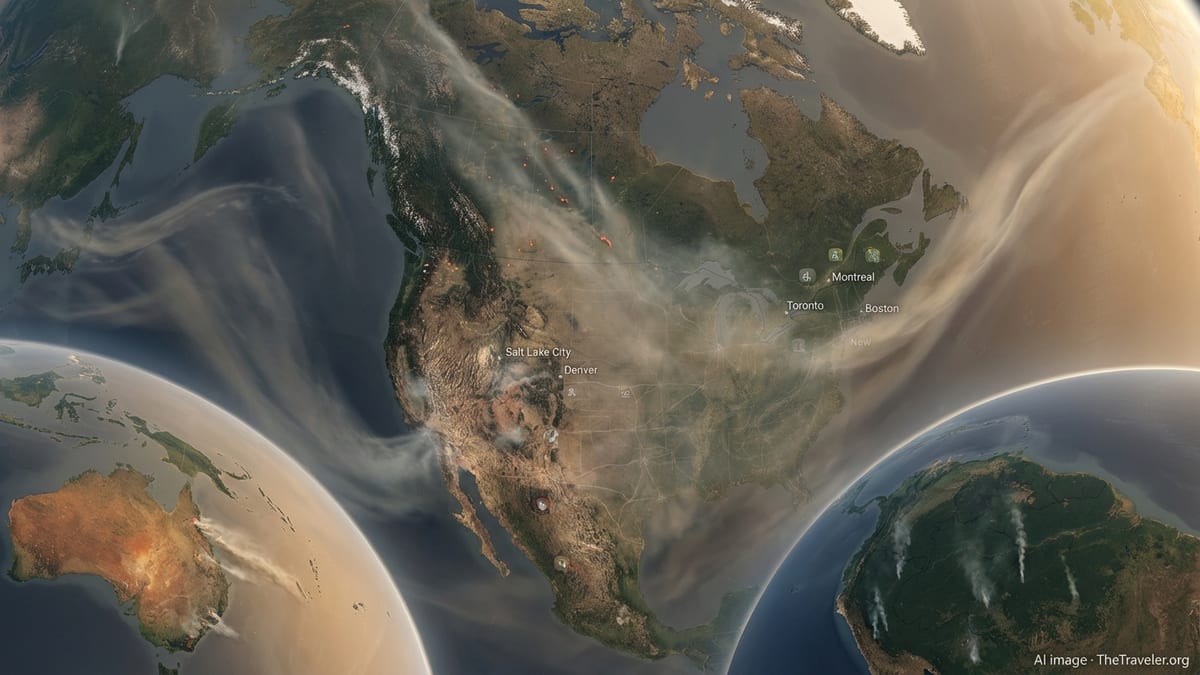
The advisory notes that air quality can deteriorate not only near active fire fronts but also in urban areas hundreds of kilometers away when wind patterns shift. Travelers may therefore experience smoke impacts in cities that appear to be far from the fires on a map.
According to publicly available air quality guidance, visitors who experience respiratory distress, chest pain, or severe headaches during smoke episodes are urged to seek medical attention. Travelers are also encouraged to verify that their travel insurance covers health issues potentially aggravated by environmental conditions.
Guidance on Monitoring Conditions Before and During Trips
Italy’s updated advisory encourages travelers to the Pacific Northwest to make use of open access tools that track fire locations, smoke plumes, and air quality readings. US public agencies and meteorological services publish daily updates showing where fires are burning, how much they have grown, and whether smoke is expected to linger or clear.
Travelers are advised to check these resources both before departure and throughout their journey, especially when moving between coastal, urban, and inland areas. News coverage of recent fire seasons in Washington and Oregon underscores how conditions can change in response to heat waves, lightning storms, and shifting winds.
Italian citizens are also encouraged to enroll in any available alert systems that provide notifications of rapidly evolving hazards such as new fire starts, highway closures, and degraded air quality. Publicly accessible platforms and regional information services often allow users to filter alerts by county or city, which can be helpful for complex itineraries.
The advisory recommends that travelers keep their accommodation details and contact information for local services easily accessible so that plans can be adapted quickly if local authorities announce new restrictions or evacuations in certain areas.
What the Advisory Means for Future US Travel Plans
While the updated guidance highlights wildfire risks, it does not suggest that Italian citizens avoid the United States altogether. Instead, it frames the situation as a call for heightened awareness, flexible planning, and careful attention to local information during visits to the Pacific Northwest and other fire-prone regions.
Travel industry commentary indicates that many visitors continue to complete trips to Washington and Oregon without significant disruption, particularly outside peak fire periods or during stretches of favorable weather. However, international travelers unfamiliar with wildfire dynamics are encouraged to factor seasonal patterns into their timing and route selection.
The advisory suggests that those with fixed travel dates consider focusing on regions less affected by smoke if conditions deteriorate, or adjusting activities away from strenuous outdoor excursions when air quality readings are poor. This type of contingency planning is consistent with guidance issued by US public health and emergency management bodies for residents and visitors alike.
For now, Italy’s updated travel advisory serves as a reminder that environmental risks are increasingly central to long-haul travel decisions. As fire seasons evolve in the American West, Italian travelers are being urged to combine traditional trip planning with real-time monitoring of climate and air quality conditions across Washington, Oregon, and neighboring states.