


More news on this day
Expanded US social media screening for visa applicants is beginning to ripple across Mexico and Caribbean nations, adding new layers of scrutiny and uncertainty for travelers and tourism-dependent economies already managing long interview backlogs.
Get the latest news straight to your inbox!
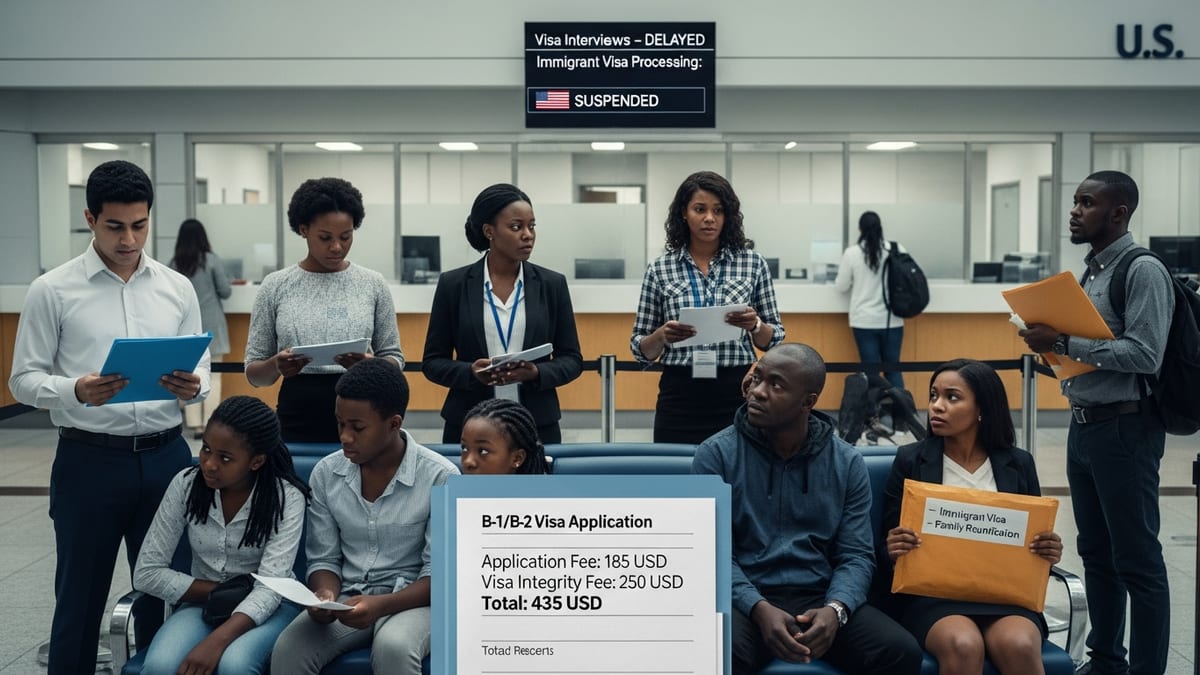
From Pilot Programs To Near-Universal Social Media Checks
Social media review in US visa processing has been building for several years, but recent policy steps are transforming it from a niche tool into a near-universal filter across categories. Publicly available State Department materials show that most immigrant and nonimmigrant visa forms were updated as early as 2019 to request applicants’ social media identifiers for the previous five years, formalizing a practice that had begun on a more limited basis.
More recent guidance and reporting indicate that these checks are no longer limited to security-sensitive or employment-based categories. Industry analyses note that social media vetting has now expanded to cover a wider range of nonimmigrant visas, including student and exchange visitor permissions, religious worker visas and fiancé visas, with additional categories added in phases. In parallel, consular posts continue to use a separate supplemental form, known as DS-5535, in cases flagged for heightened review, which can trigger detailed questioning about online activity.
While the US government frames these measures as part of a broader effort to modernize screening and guard against security threats and misinformation campaigns, traveler advocates and civil liberties groups have repeatedly raised concerns over transparency, data retention and the potential chilling effect on speech. For applicants across Mexico and the Caribbean who rely on US travel for tourism, business and family visits, the net result is a more complex and less predictable visa environment.
Mexico: Heavy Demand Meets Deeper Digital Vetting
Mexico sits at the center of the shift because of sheer volume. The US mission in Mexico is one of the busiest consular operations in the world, handling millions of tourist and border-crossing travelers, along with students, temporary workers and cross-border business visitors. Embassy updates over the past two years describe ongoing efforts to reduce extraordinary post-pandemic wait times for B1/B2 visitor visa interviews, including special weekend interview days and the gradual opening of earlier appointment slots for those originally scheduled into 2025 and beyond.
As these capacity measures roll out, the expanded use of social media screening adds a second layer of complexity. Applicants now face not only the logistical hurdle of securing an interview date but also the expectation that consular officers may review public posts, photos and interactions across multiple platforms when assessing eligibility. Legal practitioners and travel advisers report that Mexican applicants are increasingly being coached to review their digital footprint, avoid inconsistent information across applications and profiles, and ensure that casual online commentary cannot be misconstrued as security or immigration risk.
For border regions that rely heavily on short-term US visits for shopping, healthcare and family events, incremental delays tied to additional background checks can have outsized economic and social effects. Even when visas are ultimately issued, travelers may experience longer processing windows if cases are selected for supplemental vetting, creating uncertainty for time-sensitive trips such as conferences, graduations or medical appointments.
Caribbean Destinations Weigh Tourism Exposure
Across the Caribbean, many island nations are watching the US visa shift with particular concern because of their tourism exposure. A significant share of residents in countries such as Jamaica, the Dominican Republic, Trinidad and Tobago, and smaller Eastern Caribbean states travel to the United States for shopping, visiting relatives, seasonal work and cruise embarkations. In many of these markets, B1/B2 visas are widely viewed as a vital mobility tool.
Published coverage by travel-industry and immigration-focused outlets suggests that consular posts serving the Caribbean are also tightening social media review in line with global guidance, even if local announcements are limited. That means applicants from tourism-dependent states now navigate a dual challenge of limited interview capacity and more expansive digital screening, a combination that can amplify perceived risk of refusal or delay.
Tourism boards and regional business groups are monitoring whether stricter vetting changes travel patterns, particularly for short-stay visitors who might shift shopping trips or conference attendance to Canada, Europe or intra-Caribbean destinations with simpler entry regimes. At the same time, some Caribbean governments are expanding their own outreach on lawful travel, warning residents against misrepresenting work intent on social media while holding visitor visas, as such posts can be cross-checked against statements made during US interviews.
Privacy, Free Expression And The Social Media Footprint
The expansion of social media checks has revived long-standing debates over privacy and free expression in cross-border travel. Rights organizations and academic centers have documented a steady build-out of social media monitoring tools by US security and consular agencies, arguing that online context is easy to misinterpret across cultures, languages and political climates. Concerns focus on the possibility that satire, activism or routine political criticism could be mistaken for hostility or security risk, particularly where guidance to officers is not fully public.
Travelers from Mexico and Caribbean nations often use social platforms to stay connected with large diasporas in the United States, making their feeds a dense mix of family updates, remittance discussions, informal job leads and political commentary in both directions. Immigration lawyers caution that this interconnected landscape can complicate screening, because an individual applicant’s account may surface group chats, forwarded memes or tagged content that does not reflect their own views but can still appear in a quick review.
The lack of detailed public data on refusal rates tied specifically to social media findings leaves applicants guessing about how heavily their posts weigh in decisions. Advocacy groups argue that this opacity undermines trust and may prompt self-censorship among would-be visitors, students and temporary workers who fear that controversial, humorous or oppositional content could jeopardize a visa application, even when it is lawful and contextually benign.
Practical Impacts For Travelers And The Tourism Economy
On the ground, the most immediate impact of wider social media screening is felt in preparation and timing. Travel advisers in both Mexico and Caribbean hubs now routinely recommend that clients audit their public profiles before submitting US visa forms, cross-checking biographical details, employment history and travel narratives to ensure alignment with what appears on official applications. They also warn against deleting large volumes of content immediately before an interview, a step that can itself raise questions when other digital traces remain.
For tourism and aviation sectors, the new environment adds another variable to demand forecasting. Airlines serving resort corridors from Cancun and Los Cabos to Montego Bay and Punta Cana already track US policy discussions on border control, student visas and work programs when modeling seasonal capacity. Expanded social media vetting, combined with persistent interview bottlenecks in some consulates, introduces additional uncertainty about how many travelers will receive visas in time for peak periods such as winter holidays, spring break and major events tied to the 2026 World Cup.
Regional governments, meanwhile, are balancing the immediate need to preserve access to the US market with longer-term goals of diversifying tourism and education links. Some are stepping up promotion of visa-free destinations for their own citizens or pursuing new air links to countries with electronic travel authorization systems perceived as more predictable. Yet the United States remains the primary draw for many Mexican and Caribbean travelers, meaning that shifts in US digital vetting practices will continue to carry outsized weight in the travel calculus for individuals, families and the industries that depend on their movement.