


More news on this day
Evening commuters on Houston’s METRORail Red Line faced disruption after a Houston Fire Department engine collided with a light rail train near downtown, derailing the train and sending one passenger to the hospital with non-life-threatening injuries.
Get the latest news straight to your inbox!
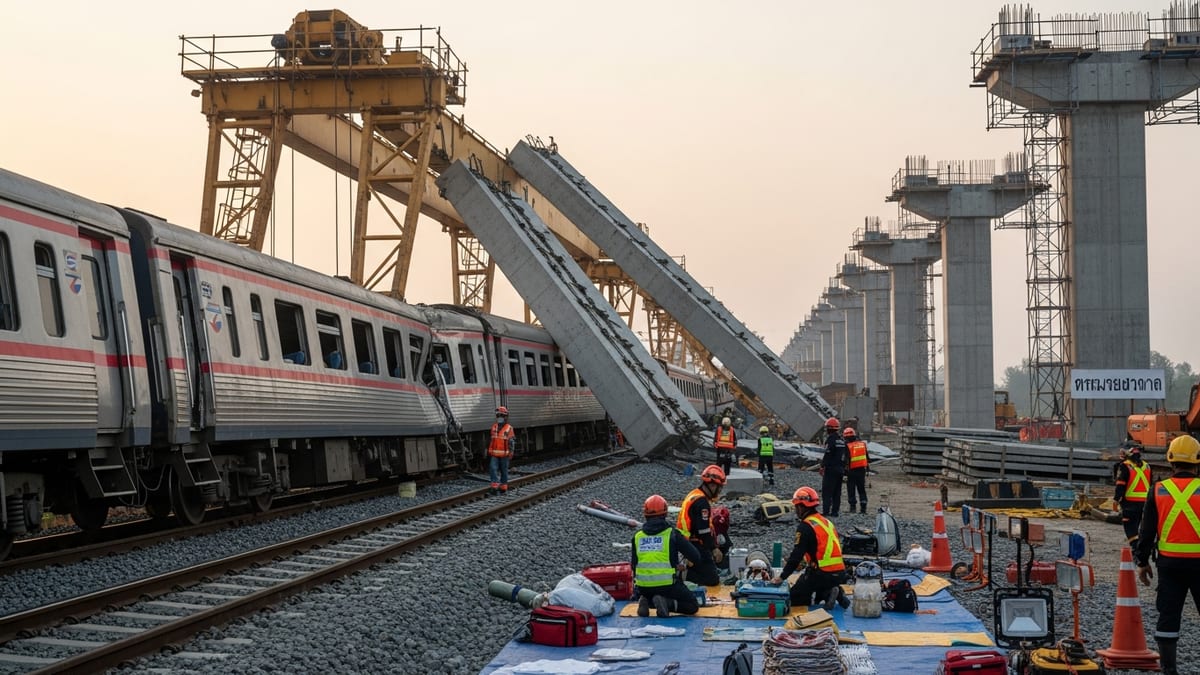
Crash near downtown disrupts Red Line service
Publicly available information shows that the collision occurred early Friday evening at the intersection of Hogan Street and North Main Street, on the edge of Houston’s Near Northside neighborhood just north of the central business district. The location sits along the Red Line, the busiest segment of the city’s light rail network, which links the Texas Medical Center and Museum District to downtown and the Northline Transit Center.
Initial reports indicate that the fire engine and the METRORail train entered the intersection at roughly the same time, leading to an impact strong enough to push the train off the tracks. Images from the scene show the front section of the train skewed from the rails while the fire truck came to rest nearby with visible front-end damage.
According to published coverage, one train passenger was transported to a hospital for evaluation and was reported to have injuries described as not life-threatening. Several other riders and personnel were assessed at the scene. No fatalities have been reported.
The crash occurred at the start of a busy holiday and sports weekend in Houston, raising questions about how quickly full rail service could be restored and how the incident might affect travel into and around downtown.
Emergency response and early investigation details
Reports indicate that the Houston Fire Department engine involved in the crash was responding to an emergency call at the time of the collision and was operating with lights and sirens. Publicly available descriptions of the scene note a large presence of fire, police, and transit personnel as the incident unfolded, with the intersection blocked to traffic and the damaged rail car remaining stationary while assessments were carried out.
Transit police and local investigators are reviewing how the collision unfolded, including signal timing, vehicle movements, and whether the emergency response created conditions that contributed to the impact. Early information circulating in local coverage indicates that the light rail train was struck by the fire vehicle, resulting in the derailment, but a full sequence of events has not yet been released.
Crews worked into the evening to secure the derailed train, inspect the overhead power system, and clear debris from the tracks. Specialized equipment is typically required to re-rail a light rail vehicle, a process that can extend for several hours depending on the extent of the damage and the position of the train.
Publicly available statements from transit representatives emphasize that safety reviews and internal protocols are activated following any derailment, particularly when a city emergency vehicle is involved. Findings from the investigation are expected to shape any changes to procedures for both transit operations and emergency responses near rail corridors.
Impact on METRORail riders and holiday travel
The Red Line serves as a key spine for visitors and residents traveling between downtown Houston, major employment centers, and nearby neighborhoods. The crash near Hogan and North Main forced service disruptions along part of the corridor, with rail vehicles halted while crews assessed damage and began recovery work.
Transit alerts and local news coverage advised riders to expect delays and possible single-tracking or bus bridges around the impacted area. Travelers planning to reach downtown hotels, nightlife districts, and nearby attractions were encouraged to allow extra time and to check for the latest service updates before heading out.
The incident came as Houston prepares to host major events, including international soccer matches, with METRORail expected to carry heightened passenger loads. According to public information from the transit agency, light rail service is a central part of plans to move crowds to and from stadiums and fan zones, making rapid restoration of normal operations a high priority.
For local commuters, the derailment served as a reminder of how quickly a single incident can ripple through the broader transportation network. Event organizers and hospitality businesses in and around downtown are closely watching recovery efforts to gauge any ongoing impacts on visitor access.
Safety context on Houston’s light rail network
Houston’s METRORail system operates largely at street level through central neighborhoods and the downtown core, sharing intersections with cars, trucks, and emergency vehicles. Transit safety studies and prior incident histories show that this street-running design can create conflict points, particularly at busy junctions where trains and road traffic intersect.
Published analyses of METRORail operations have noted that many past collisions have involved road vehicles entering the train’s path at intersections. While derailments remain relatively rare, crashes strong enough to push a light rail vehicle off the tracks can require extensive inspections of track, power, and signaling equipment before service resumes as normal.
Friday’s event near the North Main corridor adds to a broader conversation in Houston about how to balance street-running rail with heavy traffic, frequent emergency responses, and a growing calendar of large events in and around downtown. Urban planners and transportation advocates have pointed to additional signage, refined signal timing, and clearer priority rules as tools that can reduce risk at complex junctions.
As investigators compile findings from this latest derailment, the outcomes are likely to inform future safety campaigns and infrastructure decisions along the Red Line, including any adjustments at intersections where emergency vehicles regularly cross the rail alignment.
Next steps for service restoration and travelers
In the hours after the collision, publicly available information from local outlets indicated that transit crews were focused on re-railing the damaged train and inspecting overhead power and track conditions. The timing for a full return to normal schedules hinged on the extent of the infrastructure review and any necessary repairs.
Riders planning to use METRORail through the weekend are being urged in local coverage to verify service patterns and potential delays before heading to stations, particularly if their journeys pass through the Near Northside area into downtown. For those attending stadium events or downtown gatherings, officials have highlighted a range of alternatives including local buses, park-and-ride services, and rideshare options while the rail system returns to regular operations.
Travel industry observers note that such incidents can influence visitor perceptions of a city’s public transit reliability, especially during high-profile events. Clear communication about detours, expected travel times, and safety measures is seen as important to maintaining rider confidence as Houston welcomes increased numbers of domestic and international visitors.
As the investigation proceeds and service stabilizes, attention is expected to turn to whether changes in training, intersection design, or emergency response coordination might help prevent similar collisions between first-response vehicles and light rail trains in the future.