


More news on this day
American Airlines is moving ahead with a sweeping fleet upgrade that will add thousands of premium seats and bring advanced seatback entertainment screens to large portions of its network, signaling a renewed push to compete for high-spending business and leisure travelers.
Get the latest news straight to your inbox!
Large aircraft orders anchor a premium-focused strategy
Publicly available financial filings and corporate announcements show that American Airlines has committed to a significant narrowbody and regional jet order book designed to increase cabin density at the front of the plane. In March 2024, the carrier detailed plans to acquire 260 additional aircraft across Airbus, Boeing and Embraer families, an order positioned to “upgauge” many domestic and short-haul international routes with larger jets and more high-yield seats.
Company materials indicate that, when combined with ongoing interior retrofits, these deliveries are expected to lift the total number of premium seats in American’s fleet by more than 20 percent by 2026. Longer term, investor presentations point to targeted growth of lie-flat and premium economy seating of roughly 50 percent by the end of the decade, underscoring a structural shift toward higher-revenue cabins.
The latest fleet plans build on a multiyear renewal in which American has introduced hundreds of new aircraft while retiring older types. According to fleet data, the airline now operates more than 1,000 mainline aircraft, giving it ample scale to redeploy new premium-heavy layouts on routes where demand justifies higher fares.
More first class on A319s and A320s as retrofits ramp up
One of the most visible changes for frequent flyers will appear on the Airbus A319 and A320 fleets, workhorse aircraft on many domestic and short-haul routes. Recent American Airlines fleet updates and regulatory filings describe an interior refresh that adds more first class seats, introduces new powered seating and installs larger overhead bins intended to speed boarding and reduce the need to gate-check bags.
On the A319, American is increasing the premium cabin to 12 seats, while the A320 will see its first class section expanded to 16 seats. These changes align with American’s strategy of carrying more high-value travelers on the same number of flights, rather than simply growing capacity through additional frequencies.
The retrofit program also focuses on bringing a more uniform look and feel across the narrowbody fleet. Descriptions of the new cabins reference updated finishes, additional storage and modern connectivity in every row, which together are meant to narrow the gap with competitors that have long emphasized a more premium domestic product.
Seatback screens return alongside high-speed connectivity
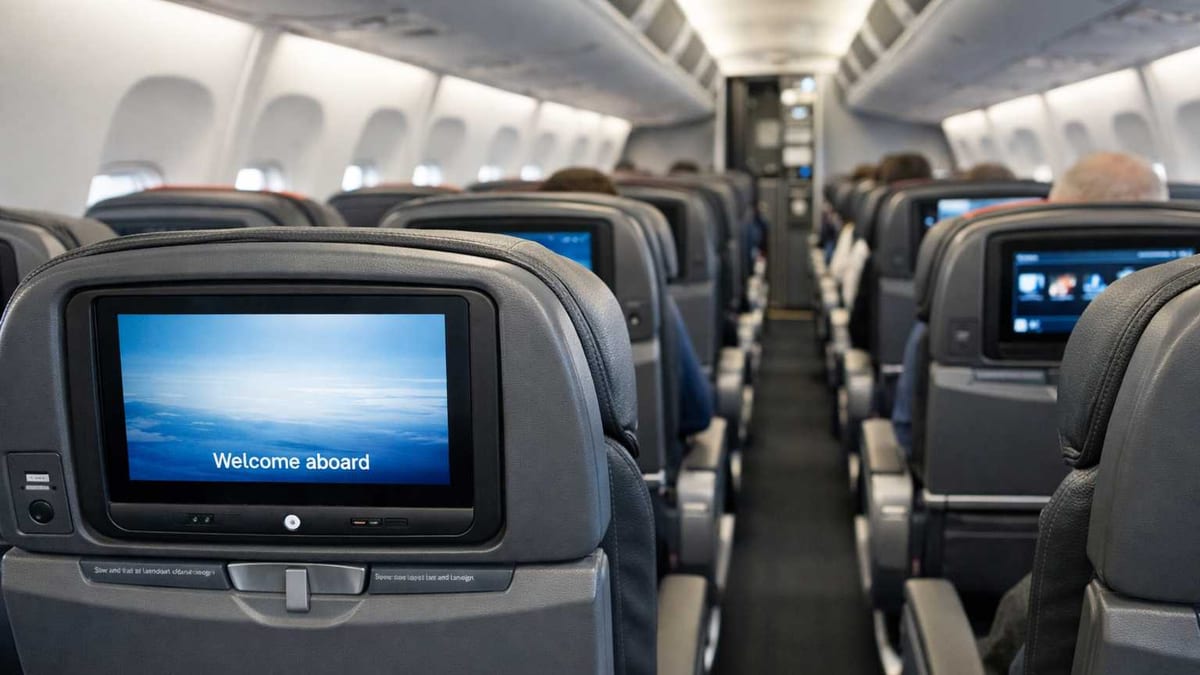
After years of favoring a bring-your-own-device model, American is pivoting back toward built-in seatback entertainment on new and refurbished aircraft. Airline communications on upcoming Boeing 787-9, 777-300 and Airbus A321XLR interiors highlight 4K seatback screens with Bluetooth connectivity, AC and USB-A/USB-C power in Main Cabin, as well as larger screens in premium cabins.
More recently, travel-industry coverage and customer-facing materials describe plans to extend this seatback experience across the narrowbody fleet over the next several years. The systems are being paired with high-speed satellite Wi-Fi that American has already introduced on most mainline and many regional aircraft, allowing passengers to stream or work while simultaneously using the in-seat entertainment.
The move represents a reversal from an earlier strategy in which American removed older screens from many domestic aircraft in favor of wireless streaming to personal devices. Industry analysts note that rival U.S. network carriers have used modern, high-resolution seatback systems as a differentiator, particularly for less-frequent travelers who perceive built-in screens as a hallmark of a premium airline.
Flagship Suite and Premium Economy drive long-haul upgrade
While narrowbody retrofits reshape the domestic experience, American is also investing heavily in its long-haul cabins. The airline has unveiled a new Flagship Suite concept for future Boeing 787-9 deliveries, reconfigured 777-300ERs and incoming A321XLRs, featuring privacy doors, more personal storage and upgraded finishes aimed at business travelers and affluent leisure customers.
Alongside the business-class overhaul, American continues to broaden its Premium Economy footprint. Product descriptions emphasize wider leather seats, additional legroom, enhanced foot and headrests, and dedicated power outlets and USB ports at each seat. Investor documents indicate that the carrier expects premium economy and lie-flat capacity to expand steadily as more aircraft are delivered or retrofitted with the new layout.
For long-haul flights, this two-tier premium strategy allows American to market a clear step up from standard economy without requiring all travelers to pay full business-class fares. Travel analysts suggest that this positioning is tailored to the growing “premium leisure” and “bleisure” segments, in which customers are willing to pay for added comfort and privacy, especially on overnight routes.
Competitive pressures and what travelers can expect
American’s fleet plans unfold against a competitive backdrop in which Delta Air Lines and United Airlines have already committed to installing seatback entertainment and substantial premium seating across most of their mainline fleets. Industry commentary portrays American’s latest moves as a bid to close that perceived product gap while still leveraging the scale and connectivity of its network.
For travelers, the changes will roll out gradually over the rest of the decade as new aircraft enter service and existing jets visit modification lines. On many routes, passengers can expect to see more opportunities for domestic first class and extra-legroom seating, fresher interiors and more consistent access to in-seat power, high-speed Wi-Fi and modern entertainment screens.
At the same time, the upgrades are likely to accelerate a long-running divide between basic economy offerings and the rest of the cabin. As American devotes more real estate and investment to premium seats and amenities, analysts anticipate continued focus on upselling customers into higher fare classes and loyalty tiers, with inflight comfort and technology serving as key incentives.