


On paper, the Eurowings Credit Card Gold looks like the perfect travel sidekick: no foreign transaction fees, included travel insurance, priority services at the airport and the promise of earning Miles & More miles on every supermarket run. Look closer, though, and the shine starts to fade. Between a fairly steep annual fee after year one, aggressive default interest settings and insurance gaps that many travelers do not notice until it is too late, this card is far from a one-size-fits-all solution. The harsh truth is that for many casual travelers, the Eurowings Gold (today often branded as Eurowings Premium) is a niche tool that only pays off in very specific scenarios.
Get the latest updates straight to your inbox!
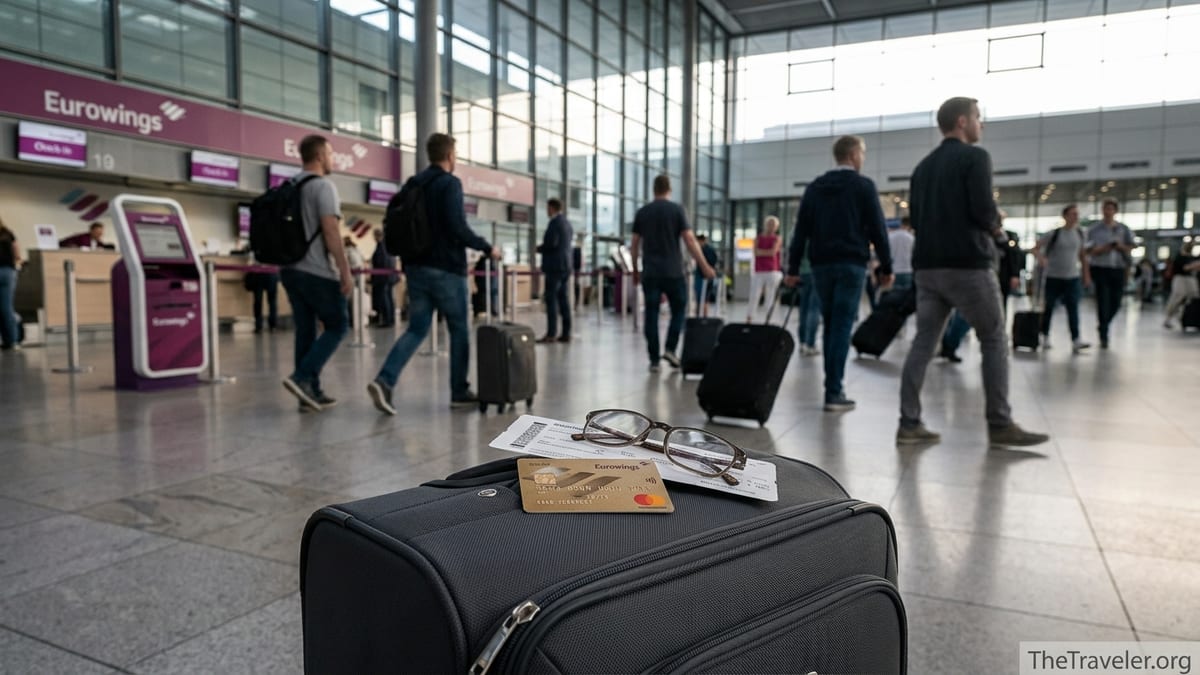
What the Eurowings Gold Card Really Is in 2026
The Eurowings Credit Card Gold, issued in partnership with Barclays (now trading in Germany under the Easybank brand), has evolved in recent years and is increasingly marketed as the “Premium” version of the Eurowings card portfolio. The core promise remains: pay an annual fee, earn Miles & More miles on everyday spending and enjoy extra perks when you fly on Eurowings. For frequent Eurowings customers based in Germany who appreciate status-like benefits without formal airline status, that pitch is attractive.
In practice, this card is a mid-range airline co-branded product, not a high-end premium card. As of mid 2026, most public comparisons still reference an annual fee of around 69 to 99 euros from the second year onward, depending on the exact tariff and promotional phase. That puts it well above free travel cards that already offer foreign currency payments and global ATM withdrawals. The Eurowings Gold therefore has to earn its keep through airline-specific advantages and insurance coverage that general-purpose cards do not provide.
It is also important to understand that “Gold” here is more of a marketing label than a universal standard. Unlike a classic bank Gold card that bundles strong travel insurance, airport lounge access and broad protections, the Eurowings Gold prioritizes airline-related benefits and a limited but useful travel insurance package instead of an all-round premium experience. If you come in expecting an all-inclusive shield, you are likely to be disappointed.
Crucially, the card’s value hinges on how often you actually book and pay Eurowings flights with it. Many of the eye-catching perks, such as free sports baggage or extra checked luggage for children, only trigger when the trip is booked directly with Eurowings and paid with the card. If most of your travel is with Lufthansa, Ryanair, easyJet or long-haul carriers outside the Lufthansa Group, much of what you are paying for will sit unused.
The Hard Costs: Annual Fee, Hidden Traps and Interest
The headline cost that most travelers see is the annual fee. For years the Eurowings Credit Card Gold has been marketed as free in the first year, with a fee kicking in from the second year. A typical structure is 0 euros in year one, then 69 euros per year afterward, with some newer Premium variants moving closer to 99 euros. That price point puts the card in competition with serious alternatives such as the Lufthansa Miles & More Gold or no-fee cards with strong travel features but no airline branding.
The less visible costs matter just as much. Domestic cash withdrawals at ATMs in Germany are usually subject to a clear penalty: around 4 percent, with a minimum amount near 5 to 6 euros per withdrawal. That means withdrawing 50 euros in cash at your local ATM could instantly cost you close to 6 euros in fees, an effective fee of around 12 percent for that single transaction. The selling point of free withdrawals mainly applies abroad, which is useful on a holiday in Thailand or the United States but a trap if you casually use the card for cash at home.
Another harsh reality lies in the interest model. By default, the Barclays / Easybank system often activates partial repayment, not full statement payment. Typical default settings might be 3.5 percent of the outstanding balance per month, with a minimum of 50 euros. If you do not deliberately switch to 100 percent repayment in the app or online banking, the remaining balance accrues interest at rates that can exceed 18 to 20 percent per year and in some past disclosures have been quoted at more than 23 percent. For anyone who carries even a modest balance across several months, the interest cost can dwarf the value of the miles earned.
To see how this plays out, imagine you book a 1,200 euro family trip to Mallorca on Eurowings and leave the default partial payment active. You pay down 50 euros plus a small percentage each month, but a large balance rolls from one statement to the next. Over six to eight months, you could easily pay more than 100 euros in interest charges alone. That is more than the value of the welcome miles and likely more than any Eurowings perks you use that year. The marketing focus on miles and benefits makes it easy to overlook this very expensive credit feature.
Miles & More Earning: Useful, But Often Overrated
The Eurowings Gold earns Miles & More miles on everyday spending, typically at a rate of 1 mile per 2 euros of card turnover. This looks and feels satisfying when you see your miles balance climb each month, especially if you previously had no way to collect Miles & More outside of flying. A 400 euro grocery bill, 100 euros of fuel and 300 euros of online shopping in a month might generate around 400 miles, which over a year can total several thousand miles without a single flight.
The harsh truth is that this earning rate is modest, and the real-world value depends heavily on how you redeem. If you use cash-and-miles discounts on short Eurowings flights, one mile might be worth roughly 0.5 to 1 euro cent in practice. That means 10,000 miles from a year of spending could be worth something in the region of 50 to 100 euros in flight value. Against an annual fee of 69 to 99 euros, the math is not overwhelmingly attractive for light or moderate spenders.
There is also the issue of mile expiry. Eurowings is now deeply integrated with the Miles & More ecosystem, and standard Miles & More rules apply. For most travelers without elite status or a dedicated Miles & More credit card that protects against expiration, miles can expire after three years if they are not used. The Eurowings Gold itself does not generally shield you from this. Travelers who collect slowly may discover that miles earned on years of supermarket shopping quietly disappear before they can be redeemed for a valuable trip.
When compared to simple cashback cards or fee-free travel cards that give, for example, 0.5 to 1 percent cashback on all spending, the Eurowings miles can look weak unless you are a focused optimizer. A modern German fintech debit card that pays 1 percent cashback on foreign spending, for instance, would return 10 euros in real cash on a 1,000 euro hotel bill in New York. The same spend on a Eurowings Gold might earn only 500 miles, which in practice could be worth less than that 10 euro cashback unless redeemed very strategically.
The Fine Print on Insurance: Where Coverage Falls Short
Travel insurance is one of the big marketing hooks for the Eurowings Credit Card Gold. The package usually includes an international health insurance for trips abroad and a collision damage waiver style coverage for rental cars, often with a deductible. These are genuinely useful benefits if understood and used correctly. A week-long car rental in Portugal could cost 15 to 25 euros per day extra if you buy full coverage at the counter, so having primary or secondary coverage included in the card can save significant money over a few trips.
However, several harsh truths hide in the details. First, the policy set attached to the Eurowings Gold is more limited than some travelers assume. A notable gap repeatedly mentioned in independent tests is the lack of a built-in trip cancellation insurance in some Gold or Premium variants, or its restriction to specific scenarios. Where some classic Gold credit cards bundle a robust cancellation and interruption policy, Eurowings’ package often focuses on medical emergencies abroad and rental car damage instead. If you cancel a 2,000 euro family holiday because your child falls ill before departure, you may discover that the card offers no reimbursement, or that coverage only applies under strict conditions that you did not meet.
Second, the insurance often requires you to have paid the trip with the card to activate full benefits. A traveler might assume they are covered simply because they hold the card, but if they booked flights via an online travel agency or paid with a different credit card to take advantage of a sale, the Eurowings insurance could decline a claim. This is not unique to Eurowings, but the combination of relatively high annual fee and conditional coverage deserves careful scrutiny.
Real-world experiences also show that included card insurances can be bureaucratic. Claim processes may involve extensive documentation, tight deadlines and coordination with external underwriters. While some cardholders report smooth reimbursement for rental car damage or medical bills abroad, others describe time-consuming back-and-forth with the insurer over technicalities such as maximum trip length or pre-existing conditions. If you travel only once a year, a standalone family travel insurance tailored to your pattern can sometimes provide clearer conditions and better support for less than the card’s recurring fee.
Where the Card Actually Shines: A Narrow but Real Sweet Spot
Despite its drawbacks, the Eurowings Credit Card Gold does have a real sweet spot. It tends to work best for travelers who fly Eurowings multiple times per year, especially for leisure trips with sports equipment or family in tow. Eurowings-specific perks can be meaningful: free sports baggage when you pay the flight with the card, priority check-in and fast lane access at several German and European airports and extra checked baggage for children on certain tariffs.
Imagine a couple from Cologne who regularly fly Eurowings for ski trips to Innsbruck and hiking holidays to Palma de Mallorca. Sports baggage for skis or a large bike case can easily cost 50 to 100 euros per flight segment if paid separately. If each of them flies with bulky sports equipment twice per year, they might otherwise pay 400 euros in baggage fees annually. By using the card and booking correctly, this couple could offset the entire annual fee and still come out ahead, especially if they also value the faster security lane at Cologne Bonn or Düsseldorf on busy Friday evenings.
The card also works relatively well for those who make frequent payments in non-euro currencies and do not like juggling multiple cards. Many alternative travel credit cards waive foreign transaction fees but do not offer airline-specific perks or miles. The Eurowings Gold combines both in one plastic or digital wallet entry. For someone who spends several thousand euros per year on hotels and restaurants in the United States, the United Kingdom or Asia, the savings from a 0 percent foreign transaction fee compared to a typical 1.75 to 2 percent bank surcharge can already rival or exceed the annual fee.
Another functional use case is as a backup travel card. Some frequent travelers hold a primary premium card such as an American Express Platinum or a Lufthansa Miles & More Gold but appreciate having a Visa or Mastercard that is widely accepted and includes separate rental car coverage. In this scenario, the Eurowings Gold is not meant to be the best value card, but rather a redundancy that fills airline-specific gaps and provides peace of mind if a primary card fails or is not accepted.
Comparing Eurowings Gold to Alternatives: When It Loses on Value
When you look beyond the Eurowings marketing ecosystem, the card’s value becomes less compelling for a broad audience. Fee-free travel cards from German direct banks and fintechs offer 0 percent foreign transaction fees and free ATM withdrawals worldwide without any annual fee. A traveler who mostly cares about cheap access to foreign cash and card payments abroad will likely be better off with a no-fee card that has no airline ties at all.
On the airline side, the Lufthansa Miles & More Gold Credit Card competes in a similar price bracket. It often charges around 120 to 140 euros per year but in return includes more robust protection against miles expiry and in some cases a stronger set of travel insurances, though foreign transaction fees may still apply. For a traveler who flies Lufthansa and Star Alliance long haul more often than Eurowings point-to-point routes, the Lufthansa card can deliver more tangible benefits even with a higher fee.
Then there are pure rewards cards and cashback products. A simple 1 percent cashback card effectively gives you 1 euro for every 100 euros spent, in real money. To beat that with Eurowings miles, you would need to consistently redeem at a value greater than 1 euro cent per mile, which is not always realistic on short-haul flights with taxes and surcharges. Many travelers underestimate how complex it can be to squeeze that kind of value out of airline miles, and they overpay for the privilege of trying.
Finally, serious frequent flyers who chase elite status and transcontinental premium cabins often prefer broader flexible points programs or premium cards that give lounge access, hotel status and comprehensive protections. For them, Eurowings Gold is more of a side card tied to a single low-cost carrier within the Lufthansa Group, not a central strategy piece. It is telling that many deep-dive reviews frame it as a niche, underrated tool for specific patterns rather than a universal recommendation.
Common Misconceptions and Real-World Gotchas
One of the most persistent misconceptions is that holding any “Gold” card makes you automatically safe on trips. Travelers may assume that every cancellation, missed connection or lost suitcase will be covered just because they see the word “Versicherung” in the brochure. Only when a claim is denied for technical reasons, such as booking through a third-party site or exceeding a maximum trip length, do they realize how narrow the protection really is.
Another trap is forgetting the first-year free structure. Many cardholders sign up to grab the welcome miles and enjoy a year of fee-free usage, then simply forget to cancel before the first annual fee is charged in year two. A traveler who used the card lightly might see 69 euros debited from their account in month 13 and feel that it is too much effort to call and cancel. Over several years of half-hearted use, they can easily spend hundreds of euros in fees without having extracted meaningful value.
Meilensammeln, or miles collecting, can also become an emotional rather than rational activity. Someone might insist on using the Eurowings Gold for every purchase, even when another card would give better cashback or more flexible rewards, simply because they want to see the Miles & More balance grow. This behavior is convenient for the issuer and airline but often suboptimal for the cardholder. Unless you sit down once a year and calculate what your miles are actually worth in trips taken, it is easy to overestimate the benefit.
There is also the question of opportunity cost. Carrying a Eurowings Gold in your wallet or digital wallet takes up one of a limited number of slots that you actively manage and monitor. If you already have a strong debit card for day-to-day payments, a dedicated fee-free travel card and perhaps a premium rewards credit card, the additional complexity of another airline-specific product may not be justified unless you are a very regular Eurowings customer.
The Takeaway
The harsh truth about the Eurowings Credit Card Gold is that it is neither a scam nor a universal must-have. It is a specialized tool that can be very good value for a narrow group of travelers and fairly poor value for everyone else. The glossy brochures tend to highlight the upside: priority check-in, free sports baggage, no foreign transaction fees and miles on every euro spent. They say far less about the domestic ATM withdrawal fee, the high interest rates tied to partial payment defaults and the limitations of the insurance package.
If you live in a Eurowings hub city, fly the airline several times each year with sports gear or family luggage and are disciplined enough to always pay your card in full, the Eurowings Gold can absolutely pull its weight. The savings on baggage fees alone can exceed the annual fee, and the ability to earn Miles & More miles on supermarket and fuel purchases is a pleasant bonus. Used this way, it is a rational and even savvy addition to your travel toolkit.
If, on the other hand, you mostly fly other airlines, travel abroad only once a year or tend to carry a card balance, you are likely better served by a no-fee travel card plus a separate, tailored travel insurance policy. In that setup, you avoid tying yourself to a specific airline’s ecosystem and keep your finances simpler and cheaper. The Eurowings Gold would then be an unnecessary complication that quietly drains money while offering little in return.
Before applying, ask yourself three hard questions: How many Eurowings flights will I realistically take next year, will I always repay the card in full and would I be better off with straightforward cashback or a flexible rewards system? Answer those honestly, and the true value of the Eurowings Credit Card Gold for your personal travel style will quickly reveal itself.
FAQ
Q1. Is the Eurowings Credit Card Gold really free in the first year?
The card is often marketed as free in the first year, but from the second year onward an annual fee, commonly around 69 to 99 euros depending on the tariff, usually applies.
Q2. Does the Eurowings Gold card charge foreign transaction fees?
One of its main selling points is that it typically waives foreign transaction fees on payments in non-euro currencies, which can save about 1.75 to 2 percent per transaction compared with many standard bank cards.
Q3. Are cash withdrawals with the Eurowings Gold really free worldwide?
Cash withdrawals abroad are often free from the card issuer’s side, though local ATM operators may add their own fees. In Germany, however, domestic withdrawals usually incur a significant fee of around 4 percent with a fixed minimum per withdrawal.
Q4. What kind of travel insurance does the Eurowings Gold include?
The card generally includes an international travel health insurance and rental car coverage, sometimes with an excess, but cancellation and trip interruption coverage may be limited or absent, so it is essential to read the specific policy conditions.
Q5. Do I have to pay for my trip with the card to be insured?
In many cases, yes. For full coverage, especially on rental car and some travel-related protections, you usually need to have paid the relevant service with your Eurowings Gold card, otherwise claims may be rejected.
Q6. How many Miles & More miles do I earn with the Eurowings Gold?
Most variants earn Miles & More at a rate of about 1 mile per 2 euros spent. That is enough to build up miles slowly through everyday spending but is not a particularly aggressive earning rate compared with some other co-branded cards.
Q7. Do miles earned with the Eurowings Gold expire?
Yes, miles typically follow standard Miles & More rules and can expire after a set period if not used, unless you have separate status or another product that explicitly protects against miles expiry.
Q8. Is the Eurowings Gold better than a free travel credit card?
For many travelers, a fee-free travel card with no foreign transaction fees and free ATM withdrawals delivers better value, particularly if they do not fly Eurowings often or do not use perks like free sports baggage.
Q9. Can the Eurowings Gold replace standalone travel insurance?
It can cover some scenarios, such as medical emergencies abroad and rental car damage, but it usually does not fully replace a comprehensive standalone travel insurance policy, especially for families or long, expensive trips.
Q10. Who is the Eurowings Credit Card Gold best suited for?
The card works best for travelers who fly Eurowings several times a year, regularly check in sports equipment or travel with children, and who always repay their balance in full to avoid high interest charges.