


More news on this day
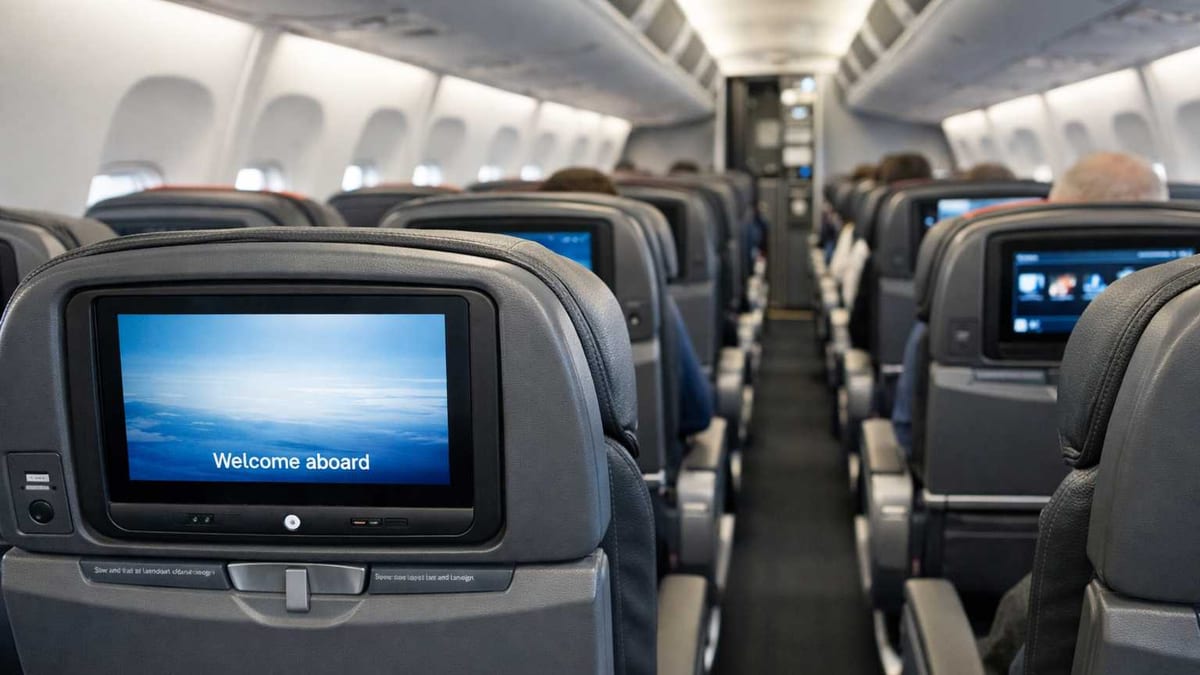
American Airlines is preparing to reintroduce seatback entertainment screens on future aircraft deliveries, signaling a strategic shift away from its long-running bet that passengers would prefer streaming content solely on their own devices.
Get the latest news straight to your inbox!
From Device-Only Strategy to a Hybrid Approach
For much of the past decade, American Airlines distinguished itself among the largest U.S. carriers by removing seatback screens from domestic narrowbody cabins and promoting a bring-your-own-device model. Company leaders argued that most travelers boarded with phones or tablets that offered better displays than traditional inflight systems, while the airline concentrated on expanding high-speed satellite Wi-Fi and free streaming options.
According to publicly available information, American equipped the bulk of its mainline fleet with gate-to-gate connectivity and personal-device streaming, while newer narrowbody deliveries arrived without built-in monitors. This approach contrasted sharply with Delta Air Lines and United Airlines, which invested heavily in adding or refurbishing seatback screens across their domestic fleets.
Recent disclosures and product announcements now indicate that American is recalibrating that stance. New design details for upcoming long-haul aircraft show that the airline is re-embracing embedded entertainment as a key part of the onboard experience, particularly on longer flights where customers expect a more traditional, screen-at-every-seat layout.
The evolving strategy suggests that, rather than choosing between personal devices and built-in systems, American is moving toward a hybrid model that aims to give passengers more flexibility in how they watch, work, and stay connected in the air.
New Widebody Cabins Highlight 4K Seatback Screens
American’s latest cabin plans for future Boeing 787-9 and Airbus A321XLR aircraft point to a more premium inflight product centered on new-generation seats and upgraded entertainment hardware. Product outlines describe a refreshed interior featuring Flagship Suite seating in premium cabins and redesigned Main Cabin seats equipped with large 4K-resolution seatback screens, Bluetooth audio pairing and multiple charging options, including USB-C power ports.
These long-haul aircraft are expected to serve international routes and select transcontinental services where travelers often spend many hours on board. Industry reports note that these jets will pair the new seatback systems with the airline’s existing satellite Wi-Fi service, allowing customers to stream, browse and message while also using the embedded screens for movies, television series, games and curated content.
The decision to invest in advanced displays and connectivity features indicates a recognition that seatback systems still play a significant role in differentiating premium long-haul travel. The 4K screens and wireless headphone support bring American’s product closer to the offerings of rival global airlines that promote inflight entertainment as a key amenity for international passengers.
While the precise rollout timeline runs over several years, the design direction marks a clear departure from earlier messaging that emphasized personal devices as the primary platform for entertainment on nearly all flights.
Signals of Change for Narrowbody Fleets
Beyond widebodies, attention is turning to what American’s evolving stance could mean for its large narrowbody fleet. Publicly available information about future aircraft orders indicates that the airline has committed to hundreds of additional Boeing 737 and Airbus A321 aircraft for delivery over the coming decade. Industry commentary now points to plans to introduce an updated onboard platform on these jets that incorporates modern seatback screens alongside enhanced connectivity.
Reports circulating in aviation forums and specialist outlets describe a “next-generation” narrowbody cabin concept that would include larger, higher-definition screens with improved touch response, standard USB-C charging, and better integration with passengers’ own headphones and earbuds. Although many details remain in development, the direction of travel suggests American is preparing to move away from the screen-free narrowbody interiors that have been a hallmark of its domestic strategy.
Such a shift would represent a notable reversal for an airline that removed screens from its existing single-aisle aircraft and took new jets without them, citing maintenance costs, weight, and the rapid pace of consumer electronics upgrades. Reintroducing embedded systems will require new investment in hardware, software, and content partnerships, but it may also help narrow the perceived product gap with competitors that already advertise seatback entertainment on most domestic routes.
For travelers, the prospect of screens returning to American’s narrowbody cabins would mean more choice in how to spend time on board, particularly on longer domestic and transborder flights where juggling multiple devices can be inconvenient.
Competitive Pressures and Passenger Expectations
The emerging change in strategy comes amid accelerating competition on the passenger-experience front. Delta and United have spent years marketing their inflight entertainment systems as a core part of their brand, with television-style campaigns and cabin tours that spotlight colorful seatback screens, free content libraries and power at every seat. Those efforts have resonated with many travelers who say the presence of a built-in screen is a visible sign of a more premium product.
Consumer discussion on travel forums and social media has frequently contrasted American’s device-only approach with the screen-heavy cabins offered by its largest rivals. Commenters often describe choosing flights based on the availability of seatback entertainment, particularly when traveling with children or working across multiple devices on long segments.
At the same time, American has been investing in other aspects of the onboard experience, including improved Wi-Fi coverage, new amenity kits in premium cabins, updated bedding, and refreshed food and beverage offerings. By layering seatback systems onto these upgrades, the airline appears to be seeking a more comprehensive answer to perceptions that its hard product lagged behind that of its competitors.
Analysts note that while digital connectivity remains central to American’s strategy, the renewed focus on embedded entertainment reflects a broader industry recognition that many passengers still value the simplicity of a built-in screen that works from gate to gate without draining personal devices.
What Passengers Can Expect in the Coming Years
Travelers are unlikely to see overnight transformation across American’s fleet, given the long timelines associated with aircraft deliveries and interior overhauls. New widebody aircraft with 4K seatback systems are set to arrive gradually, and any move to introduce screens on narrowbody jets would roll out over many years of deliveries and potential retrofits.
In the interim, passengers will continue to encounter a mix of cabin types. Existing international widebodies already offer traditional inflight entertainment, while much of the domestic fleet relies on personal-device streaming through the American Airlines app. Over time, more aircraft are expected to feature larger built-in screens paired with high-speed Wi-Fi, Bluetooth audio, and multiple charging points, aligning the physical cabin with a more digital, app-enabled experience.
For American, the shift represents both an operational and brand investment. The airline is effectively acknowledging that its earlier calculation about seatback screens may have been too narrow in a market where visible onboard amenities can influence customer choice. For passengers, the return of screens on new jets promises a more flexible mix of entertainment and connectivity options, suggesting that the long-running debate between personal devices and seatback systems is giving way to a future in which most travelers can comfortably rely on both.