


Seoul Incheon International Airport is one of Asia’s biggest hubs, and for a first-time visitor it can feel like a small city with its own rules. The good news: it is well signposted, safe, and designed for travelers who do not speak Korean. The challenge is knowing what to expect the moment you land or before you depart, so you can move confidently between terminals, find transport into Seoul, grab a shower, or even sleep during a long layover without wasting time or money.
Get the latest updates straight to your inbox!
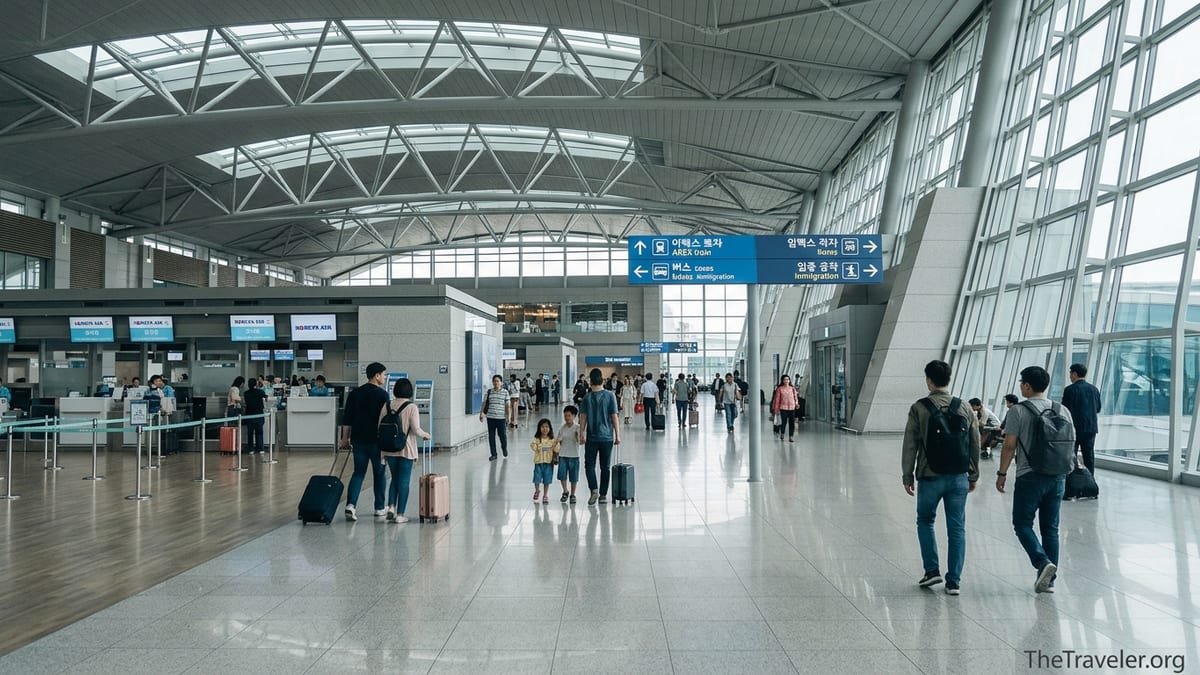
Know Your Terminals: T1, T2 and How They Work
Incheon currently has two main passenger terminals used by most international travelers: Terminal 1 (T1) and Terminal 2 (T2). T1 is the original and larger terminal, used by a wide mix of airlines including many low-cost carriers and non-SkyTeam international airlines. T2 is newer and generally quieter, home to Korean Air and its SkyTeam partners, plus a few other selected carriers. Your terminal is printed on your e-ticket and boarding pass; check this carefully before you fly, because it affects where you get dropped off, where you collect your bags, and which train or bus stop you use.
Arrivals and departures are separated vertically. In both terminals, departures check-in is on the upper floor, security and immigration are just above or behind check-in, and arrivals with baggage claim are on the lower floor. If you are meeting someone, they will usually wait in the public arrivals hall on the lower level, near the exit numbers printed on the sliding doors. Signs are in Korean and English and are color-coded; for example, “Baggage Claim” and “Exit” are clearly marked as you walk from the gate.
Transferring between T1 and T2 is straightforward but takes time. A free shuttle bus runs regularly between the terminals and typically takes around 15 to 20 minutes, depending on traffic. There is also the AREX airport train which connects both terminals on the same line. If you land at T1 but your next flight departs from T2, follow the “Transfer” signs after you get off the plane, and allow at least one extra hour on top of your standard connection time to cover the transfer and security checks.
Many first-time visitors worry about language barriers. In practice, most frontline staff at airline counters, information desks and security checkpoints speak at least basic English, and signage is clear. For more complex questions, head to an official information desk in the arrivals hall; these are staffed and can call interpreters if needed. Having your hotel name, address in Korean (from their website or booking confirmation) and return flight details saved on your phone is often enough to bridge any communication gaps.
Arriving Procedures: Immigration, Baggage and Money
On landing, you will walk from your gate through a series of corridors and moving walkways to immigration. Expect this walk to take 5 to 15 minutes depending on where your aircraft parked. Before you join the immigration queue, you will pass automated temperature scanners and sometimes officers checking arrival cards. Many nationalities no longer need a separate visa for short stays in 2026, and some do not need a K-ETA either, but requirements change often, so check your specific situation before flying.
Immigration lines at Incheon can vary widely. During late evening and early morning rushes, you might wait 30 to 60 minutes; at quieter times you can be through in under 15 minutes. Families with young children, elderly travelers, and people with reduced mobility can look for priority or assistance lanes. Keep your passport, completed arrival card if required, and boarding pass or e-ticket handy. Officers usually ask standard questions such as where you are staying in Korea and for how long. Having your hotel name and a rough itinerary ready makes the process smoother.
After immigration you descend to baggage claim. Large screens list your flight number and carousel; if you flew in from major hubs like Los Angeles, Paris or Singapore, expect your bags to appear in about 10 to 25 minutes after you reach the carousel. Baggage carts are free and easy to find. Once you have your luggage, you pass customs, where officers may randomly direct travelers through an inspection lane. If you are carrying high-value electronics for commercial use or large quantities of alcohol or tobacco, declare them; for typical tourists with standard luggage, it is usually a quick walk-through.
Right after customs you step into the public arrivals hall. This is where you will find currency exchange counters, ATMs, mobile SIM and eSIM desks, and transport ticket counters. Airport exchange rates are rarely the best in the country, but withdrawing a moderate amount of Korean won from an ATM using a Visa or Mastercard often gives a more competitive rate. If your home bank charges high foreign ATM fees, you might exchange a small amount at the airport for immediate needs, then use a city bank later. Most major services in the airport and in Seoul accept international credit cards, so many travelers only need a modest amount of cash for small purchases or local markets.
Getting from Incheon Airport to Seoul
The biggest decision on arrival is how to get from Incheon Airport into Seoul. The three main options are the AREX train, airport limousine buses, and taxis or ride-hailing. The best choice depends on your budget, the time of day, how much luggage you have, and where in the city you are staying.
The AREX Express train is the fastest and most predictable option for many travelers. It runs non-stop between Incheon and Seoul Station in around 43 minutes. As of 2026, a one-way adult ticket typically costs under 10,000 won. You buy tickets at dedicated AREX counters or vending machines in the basement level of both T1 and T2; simply follow signs that say “Airport Railroad” or “AREX.” The Express gives you an assigned seat, luggage racks and clear onboard announcements in English. From Seoul Station you can transfer to subway lines or catch a taxi to neighborhoods like Myeongdong or Hongdae.
The AREX All-Stop (sometimes called the local train) is cheaper but slower, making stops at several stations between the airport and the city. Many budget travelers use this option if they are not in a hurry and are staying near a station like Hongik University, which is handy for Hongdae guesthouses. The fare is roughly the price of a standard metro ride plus a small airport surcharge, usually under 5,000 won. The trade-off is a longer journey, closer to 55 to 60 minutes, and more standing if the train is busy, although there are reserved luggage spaces near car doors.
Airport limousine buses are comfortable and convenient if you have heavy luggage or are staying at a hotel along a specific route. These coaches run from both terminals to major areas such as Gangnam, City Hall, Dongdaemun, and Jamsil. Tickets normally cost in the 17,000 to 18,000 won range for central Seoul, and the ride can take 60 to 90 minutes depending on traffic. You buy tickets at official bus counters or outdoor ticket machines near the bus stops, and staff can suggest the best route if you show your hotel name. Once aboard, you store suitcases in the underfloor compartment and relax in reclining seats until the bus reaches your stop.
Taxis provide door-to-door convenience, especially late at night or if you are traveling as a group. For a regular taxi to central Seoul, a realistic range including tolls is around 65,000 to 100,000 won, with higher prices during busy periods or night surcharges. There are also deluxe or jumbo taxis at higher fixed rates that work well for families with lots of luggage. Official taxi ranks are clearly marked outside arrivals; avoid unlicensed drivers who approach you inside the terminal. Ride-hailing services operate mainly by dispatching licensed taxis rather than private cars, so for most first-time visitors, walking to the official taxi stand remains the simplest and safest choice.
Sleep, Showers and Surviving Long Layovers
Incheon is well prepared for people with long layovers or very early-morning flights. If you need real rest, the Darakhyu capsule hotel inside T1 and T2 is a popular choice. It offers private, pod-style or small-room accommodation right inside the terminal, with proper beds, soundproofing and access to shared showers. Travelers often book 6 or 12 hour blocks rather than full nights, which is ideal if you land close to midnight and fly out again at dawn. Because capacity is limited, the capsules can sell out weeks ahead during busy seasons, so reservations are strongly recommended if you know your dates.
There are also traditional transit hotels within the secure airside area, generally on the upper levels between concourses. These operate more like standard hotels, with proper hotel-style rooms you can book by the night or for a shorter day-use period. Prices can be similar to or higher than central Seoul hotels, but the advantage is maximum convenience: you can walk from your gate to your room without passing immigration. This is particularly useful if you are connecting internationally and do not plan to officially enter Korea.
If you are on a budget or cannot secure a room, Incheon provides multiple free rest areas and “nap zones.” These are typically located in the departure gate areas, with reclined lounge chairs, dimmer lighting and quieter surroundings. Travelers report that some of the quieter zones are along the far ends of the concourses, away from duty-free shopping. It is common to see passengers sleeping with eye masks and small blankets or jackets over themselves. Security staff allow sleeping in these areas as long as you keep aisles clear and behave respectfully.
Freshening up after a long flight is easy thanks to several shower options. There are paid shower rooms both landside and airside where you can buy a 30-minute slot, often including a towel, basic toiletries and a locker. Some lounges and spa-style facilities inside the terminals also offer showers, and a few even operate 24 hours. If you hold a premium cabin ticket or certain credit cards, you may access airline lounges with showers included. For economy passengers, paying a modest fee for one of the public shower facilities is often the simplest route to feel human again before continuing your journey.
Food, Shopping and Airport Essentials
Food at Incheon ranges from quick convenience snacks to full restaurant meals. Once you pass security and immigration, you will find international chains such as fast-food burgers, coffee shops and bakery-cafes, alongside Korean options like bibimbap, kimbap and noodle restaurants. Prices are higher than in downtown Seoul but not dramatically so: a simple Korean meal might cost the equivalent of 10 to 15 US dollars, while a latte from a coffee chain is similar to other major airports. In the arrivals halls, there are also convenience stores where you can grab triangle kimbap, bottled drinks and instant noodles if you want a budget-friendly bite before heading into the city.
Duty-free shopping is extensive, especially in T1 and T2’s main concourses. You will see big-name cosmetics, skincare, fashion and electronics brands side by side with Korean specialties like ginseng, teas, local snacks and K-beauty labels. If you are targeting a specific brand of skincare or cosmetics, Incheon often has dedicated counters with multilingual staff who are used to first-time customers asking for recommendations. Remember to keep your passport and boarding pass handy at the checkout; staff will usually scan both.
For practical essentials, look for the electronics and mobile sections. Here you can buy Korean SIM cards or pick up eSIM activation help, rent portable Wi-Fi routers, or purchase universal adapters if your plugs do not match Korean sockets. There are also travel pharmacies and health shops where you can get over-the-counter painkillers, motion sickness tablets and basic first-aid items. If you wear prescription glasses or contact lenses, it is wise to pack spares, as arranging replacements in a country where you do not speak the language can be complicated even with good airport facilities.
Families will find children’s play zones in several parts of the terminals, with soft play structures and seating for parents. Many restrooms include baby changing tables, and there are nursing rooms for breastfeeding or pumping in privacy. Public drinking water dispensers are common, so carrying an empty reusable bottle in your hand luggage is convenient and environmentally friendly. Before filling up, just double-check any signs around the fountain; where water is not drinkable it should be clearly marked.
Practical Tips for a Smooth First Experience
Time management is one of the most important factors at Incheon. For departing international flights, aim to arrive at the airport about three hours before departure, and add extra time if you need to move between terminals or return a rental car. Security and immigration can be fast on quiet days but can also back up during holiday periods when large tour groups arrive together. If you are flying in economy and do not have priority lanes, arriving early is a simple way to reduce stress.
Security screening follows global norms: remove laptops and large electronics from your bag, empty your pockets, and place jackets in the trays. Korea does not generally enforce the same strict liquid rules as some regions for domestic flights, but for international departures you should expect standard restrictions on liquids in hand luggage. If in doubt, keep liquids in small containers and pack larger bottles in checked luggage. Airport staff are professional and used to first-time visitors, so if something is unclear, simply watch other passengers in front of you or ask the nearest officer politely.
Wi-Fi at Incheon is free and widely available. You can connect to the official airport network and use it for messaging, map downloads and last-minute hotel confirmations. However, for heavy use such as streaming or working with large files, many travelers prefer to buy a local SIM or rent a Wi-Fi router in the arrivals hall, as speeds and stability are usually better once you leave the airport. Having offline maps of Seoul and screenshots of your hotel details is a good backup in case your connection drops.
Finally, pack some small comforts for possible delays. A light jacket or hoodie is useful, as the air conditioning can be cool, especially late at night. Earplugs and an eye mask make naps in the chairs much easier. Portable chargers are essential because although charging points are widely available, they can be busy during peak hours. With a bit of preparation, even an unexpected delay can become a manageable pause rather than a stressful ordeal.
The Takeaway
Stepping into Incheon Airport for the first time can feel overwhelming, but behind the glass and steel is an airport designed to be logical, walkable and surprisingly comfortable. If you know which terminal you are using, how you will get into Seoul, and what your options are for sleep, showers and food, the maze quickly turns into a clear path. Most of the services you might worry about, from money exchange to SIM cards and baggage carts, are set up specifically with international visitors in mind.
By approaching your arrival or departure with a simple plan, you can turn Incheon from a source of anxiety into a highlight of your trip. Choose the transport that fits your budget and schedule, give yourself enough time for immigration and security, and do not hesitate to make use of the airport’s rest zones, capsule hotel or shower facilities if you have a long wait. Your first experience here will shape how you feel about Korea as a whole, and with a little knowledge before you fly, it can be as smooth and welcoming as the city that waits beyond the terminal doors.
FAQ
Q1. How long does it take to get from Incheon Airport to central Seoul?
Typical travel time is around 43 minutes on the AREX Express train to Seoul Station, about 60 minutes or more on airport buses, and roughly 60 to 80 minutes by taxi depending on traffic.
Q2. Which terminal will my flight use at Incheon Airport?
Terminal 1 serves a wide mix of international and low-cost airlines, while Terminal 2 is used mainly by Korean Air and its SkyTeam partners. Your e-ticket and boarding pass will specify T1 or T2.
Q3. Is English widely spoken at Incheon Airport?
Yes. Most signs are in Korean and English, and many airport staff speak basic English. For more complex questions, head to the official information desks in the arrivals hall.
Q4. Do I need cash immediately on arrival, or can I use cards everywhere?
International credit and debit cards are widely accepted at the airport and in Seoul. Having some Korean won in cash is still helpful for small purchases, markets or certain buses, but not essential for most first-time visitors.
Q5. What is the best way to get into Seoul for a first-time traveler?
For many newcomers the AREX Express train to Seoul Station is the simplest option, thanks to clear signage, fixed pricing and a fast, non-stop journey. If your hotel is directly on an airport bus route and you have heavy luggage, the limousine bus can be equally convenient.
Q6. Can I sleep inside Incheon Airport during a long layover?
Yes. You can book a room at the Darakhyu capsule hotel or a transit hotel, or use free rest zones with reclining chairs in the departure areas. For busy travel seasons, reserve paid options in advance as they can sell out.
Q7. Are there showers available for economy passengers?
Several paid shower facilities are open to all passengers regardless of ticket class, both before and after security. Some lounges and spa-style facilities also offer showers, and the capsule and transit hotels include them as part of the stay.
Q8. How early should I arrive at Incheon Airport before an international flight?
Plan to arrive about three hours before your scheduled departure time. Add extra time if you need to move between terminals, return a rental car, or travel during major holidays or peak seasons.
Q9. Is it easy to transfer between Terminal 1 and Terminal 2?
It is straightforward but not instant. A free shuttle bus and the AREX train connect T1 and T2, and the journey usually takes around 15 to 20 minutes. Allow at least an extra hour on top of your normal connection time to be safe.
Q10. Can I leave the airport during a layover to visit Seoul?
If your nationality and ticket allow entry into Korea and your layover is long enough, you can pass immigration and take the train or bus into the city. As a rule of thumb, you generally want at least eight hours between flights to make a short city visit without rushing.