


For many frequent travelers, Flexjet sits in the sweet spot between owning an entire aircraft and simply chartering a jet when needed. Yet the pricing can feel opaque at first glance, spread across fractional ownership shares, leases, and jet cards that each bundle capital, management and hourly costs differently. If you are trying to understand what Flexjet might actually cost for your travel pattern, you need to break those pieces down and compare them to real trips you might fly in a year.
Get the latest updates straight to your inbox!
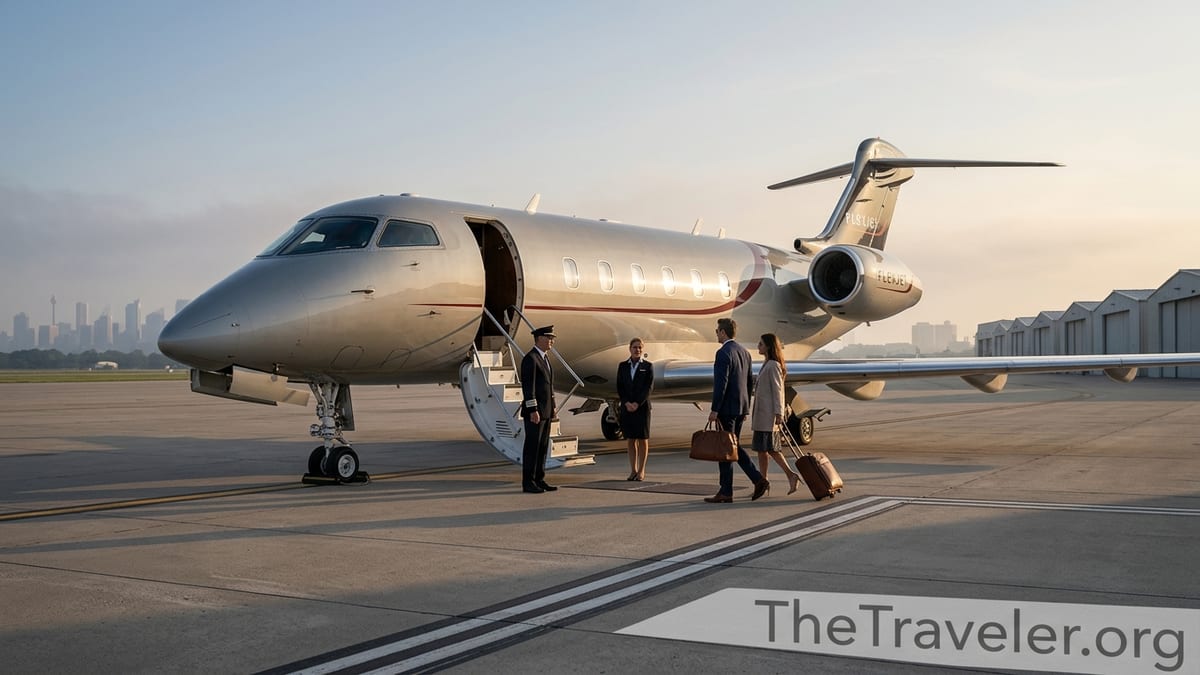
How Flexjet Fits Into the Private Aviation Landscape
Flexjet is one of the largest players in fractional private aviation, competing directly with NetJets and similar providers. Instead of selling individual charter flights, Flexjet focuses on long term access programs built around a dedicated fleet. That means you are not buying a random aircraft every time you fly. You are buying guaranteed access to specific models, consistent cabin standards and fixed or predictable pricing structures.
At a high level, Flexjet offers three main ways to fly: fractional ownership, where you buy a share of an aircraft; aircraft leasing, which gives you similar access without owning an asset; and jet cards, which prepay for a bank of hours, typically starting around 25 hours. Each pathway uses the same basic ingredients. There is usually an upfront cost or deposit, an ongoing monthly management style fee, and an occupied hourly rate that you pay when you actually fly.
For a traveler who takes a dozen business round trips per year between New York and Florida, a 50 or 75 hour fractional share on a super midsize jet like the Praetor 600 or Challenger 3500 can provide predictable, on demand access with a known hourly cost. For someone who only needs five or six leisure trips annually, a 25 hour jet card on a light jet such as the Embraer Phenom 300 may be enough to cover a year of flying without committing capital to ownership.
Understanding how these options are priced, and how they compare to simply chartering each flight, is the key to deciding which route makes financial sense.
Fractional Ownership: Capital, Monthly Fees and Hourly Rates
Fractional ownership is Flexjet’s flagship product. In this model, you purchase an equity share of a specific aircraft type, usually sized so that your share equates to a set number of hours per year. A 1/16 share often corresponds to about 50 hours of annual flying, while larger shares of 1/8 or 1/4 might give you 100 or 200 hours. Flexjet’s own materials describe three main cost components: a one time capital cost for the share, a monthly management fee that covers fixed expenses, and an occupied hourly rate plus a fuel component that you pay when you actually fly.
Pricing varies by aircraft type and contract year, but real world examples from recent owner discussions are instructive. Travelers looking at a super midsize jet such as a Praetor 600 or Challenger 3500 in the United States have mentioned upfront share purchase prices in the ballpark of 1.3 to 1.6 million dollars for a share that yields roughly 75 to 100 hours annually. On top of that, owners report occupied hourly rates around 4,000 to 5,000 dollars per hour on paper for a smaller jet and roughly double that, often 9,000 to 11,000 dollars per hour, for a Praetor 600 class aircraft when fuel and program specifics are included.
To make those numbers concrete, imagine you buy a fractional share on a Praetor 600 with an effective all in occupied hourly rate of about 11,000 dollars. If you fly 75 hours per year, your yearly flight time cost alone is roughly 825,000 dollars, plus monthly management fees that can add well into the low six figures over a year. The tradeoff is that your aircraft access is guaranteed with relatively short call out times, typically a day or so, and you benefit from a high level of service continuity, including pilots and cabin standards tailored to Flexjet’s LXi branded interiors.
Fractional contracts usually run three to five years. At the end of the term, providers like Flexjet will repurchase your share at a preset formula, which often returns around half of the original capital cost depending on the market and how the specific aircraft has depreciated. That capital recovery can make the effective annual cost look lower once you spread the net capital outlay over the term and the hours you actually flew.
Leases and Membership Style Access Without Ownership
For travelers who want the consistency of a dedicated fleet but prefer not to tie up capital in an aircraft share, Flexjet offers jet leases. In a lease, you commit to a specific aircraft type and number of hours, similar to fractional ownership, but instead of paying a large upfront share purchase, you pay a structured monthly lease payment plus an occupied hourly rate. Flexjet itself describes leasing as a way to enjoy the benefits of fractional ownership while maintaining liquidity and avoiding depreciation risk.
In practice, the lease structure appeals to business travelers or family offices that expect a steady 50 to 100 hours of flying per year but cannot justify a seven figure capital outlay. For example, instead of wiring 1.4 million dollars to purchase a share of a super midsize jet, a lessee might agree to a fixed monthly payment over a five year term that, combined with hourly charges, leads to a similar total cost per hour while keeping the aircraft off their balance sheet.
The cost components under a lease mirror fractional ownership. You will still see a monthly program or management style fee and an occupied hourly rate plus a fuel surcharge element. The key distinction is that at the end of the lease term you simply walk away, renew, or step up or down into another aircraft type. There is no residual value to recapture, but there is also no exposure to resale conditions or aircraft valuation.
From a traveler’s standpoint, leases and fractional ownership deliver similar operational privileges, including guaranteed availability windows, peak day policies, and interchange options to move between aircraft sizes. The financial calculus is different, however. For a company that prefers predictable operating expenses over tying up capital in an asset, a lease can look more like a straightforward service contract even if the effective hourly rate is close to that of an ownership program.
Flexjet 25 and Jet Card Style Programs
Below the ownership and lease tiers sits the jet card category. Historically, Flexjet has marketed its Flexjet 25 Jet Card program as a way to experience its service with a smaller, prepaid commitment. A jet card is essentially a block of flight time, often 25 hours, purchased in advance at a fixed or capped hourly rate. You do not own any part of the aircraft, and you are not signing a multi year ownership contract, but you get access to a defined fleet under published terms and conditions.
While Flexjet has periodically adjusted and regionalized its card offerings, recent data from specialist comparison sources and industry observers gives a sense of real pricing. One independent comparison guide lists an LXi branded Flexjet Jet Card on a Phenom 300 light jet around 7,900 dollars per hour, based on a 25 hour commitment with fixed rates and guaranteed availability in the United States. Another cost index aimed at frequent private fliers notes that Flexjet’s jet card pricing is broadly similar to NetJets across comparable aircraft categories, with a spread of roughly 170,000 to 300,000 dollars for a 25 hour block depending on whether you choose a light, super midsize, or large cabin aircraft.
More granular examples have surfaced from Flexjet clients and brokers discussing current year offers. One commonly referenced figure is approximately 198,000 dollars, before the 7.5 percent federal excise tax, for a 25 hour jet card on the Phenom 300. That works out to about 7,900 to 8,500 dollars per hour once tax and typical surcharges are included. For large cabin aircraft, total hourly costs can land near 10,000 dollars per hour or slightly higher for a 25 hour card.
Jet cards are usually structured as all inclusive hourly rates within a primary service area, covering aircraft, crew, standard catering, and repositioning. You may still see pass throughs or add ons for deicing, certain international fees, or peak day surcharges. Importantly, cards tend to have expiration periods, often around 24 to 36 months, and blackout or peak days where guaranteed access is more limited. For a traveler who flies six round trips a year on a light jet between Los Angeles and Aspen, a 25 hour card could comfortably cover their annual travel with cost certainty and the ability to budget in hours rather than fluctuating charter quotes.
What You Actually Pay Per Hour: Real World Scenarios
Because Flexjet’s programs are custom quoted and updated frequently, the best way to understand cost is to translate typical numbers into realistic trip scenarios. Consider a New York to Miami round trip on a light jet like a Phenom 300. The flight time is usually around two and a half hours each way, or five occupied hours in total. If your jet card effective hourly rate is roughly 8,000 dollars, that trip costs about 40,000 dollars plus any taxes and incidental fees. A similar trip on a super midsize jet with a 10,000 dollar effective hourly rate could cost about 50,000 dollars.
Now shift to an ownership lens. If you have a 75 hour fractional share on a Praetor 600 with an all in occupied hourly cost near 11,000 dollars, that same five hour New York to Miami round trip would be approximately 55,000 dollars in direct hourly charges. Spread over a year, if you fly your full 75 hours, you might take about 10 to 12 similar trips, adding up to more than 800,000 dollars in flight time alone. Once you factor in the amortized net capital cost of your share and annual management charges, your effective hourly rate may land somewhere in the mid teens in thousands of dollars, but you gain priority access, customization and fleet access that card holders or ad hoc charter clients do not.
For a more occasional traveler, the math looks different. If you only fly 25 hours per year, a full fractional share on a super midsize jet is likely overkill, both in capital and commitment. A 25 hour jet card around 200,000 dollars plus tax might be more appropriate. You trade some flexibility in aircraft type and network for a simpler, prepaid structure. On the other hand, if you fly fewer than 15 hours per year, industry cost indices regularly show that straightforward on demand charter often beats every structured program on total cost, even if the per hour charter quote for a single trip looks slightly higher on paper.
One subtle point is how programs treat taxi time and minimums. Some cards charge a minimum of one hour per leg, even for very short hops, while others have policy details on whether taxi time is billed separately. Flexjet emphasizes occupied hourly rates that are intended to be transparent, but your contract will spell out how flight time is calculated. A frequent flyer making many 45 minute regional hops in the Northeast may find that hourly minimums make their effective rate higher than the headline hourly number suggests.
Comparing Flexjet to Charter and Other Membership Models
The logical question for any traveler is whether Flexjet’s structure saves money compared with other options. The answer depends heavily on your hours and your preference for certainty. Independent jet card comparisons in 2026 show Flexjet’s jet card hourly rates aligning closely with those of major competitors such as NetJets and Sentient Jet for similar cabin classes. When you consider effective hourly cost including fuel surcharges and taxes, most reputable card programs cluster in the same broad bands, with light jets in the high single thousands per hour, super midsize jets in the low to mid tens, and large cabin aircraft somewhat higher.
Where Flexjet can stand out is in its broader ecosystem. Under Directional Aviation’s umbrella, Flexjet sits alongside brands that focus on charter, jet cards, and whole aircraft transactions. In practice, that lets a traveler migrate from a jet card to a fractional share, or complement ownership with on demand charter, without leaving the family of companies. For example, a family might start with a 25 hour card on a Phenom 300 to test whether private aviation truly fits their lifestyle. If they find themselves hitting 40 or 50 hours a year, a sales advisor can run side by side projections showing the cost of stepping into a 1/16 fractional share or lease instead.
Against charter, Flexjet’s pitch is stability and guaranteed availability. Publicly published private jet card indexes point out that while a 25 hour card may appear more expensive on a simple hourly basis than the cheapest one off charter quotes, it protects travelers against seasonal spikes, tight capacity, and last minute surges. For high demand weeks such as Christmas and New Year in the Caribbean, or major events like Art Basel or the Masters, charter prices can jump markedly. A card member or fractional owner with fixed or capped rates and guaranteed access often avoids those extremes, even if they pay slightly more during quieter weeks.
Finally, there is the non financial dimension. Many travelers value the consistent cabin design of Flexjet’s LXi interiors, the ability to request the same crew on repeat routes, and the operational depth that comes from a dedicated fleet. Those elements do not show up in a spreadsheet, but they are part of why some high net worth individuals remain with the same provider for a decade or more, even when cheaper charter options exist for occasional flights.
Key Contract Terms That Affect Your Total Cost
Regardless of whether you choose fractional ownership, a lease, or a jet card, the details of Flexjet’s contract will drive your ultimate cost per hour. First, pay close attention to peak day and blackout policies. Many programs publish a calendar of high demand days when hourly surcharges, longer booking windows, or tighter cancellation rules apply. If your travel calendar leans heavily toward school holidays, long weekends, or major events, those peak rules can materially increase your annual spend compared with someone who mostly flies midweek in shoulder seasons.
Second, understand how Flexjet calculates flight time and what the minimum billable duration per leg is for your program. Some contracts include a fixed taxi allowance within the occupied hourly rate; others bill a minimum number of minutes for each takeoff and landing. On a 25 hour card, losing an extra tenth or two of an hour on each segment to rounding may not matter. For an owner flying 100 hours a year, it can add up.
Third, scrutinize ancillary fees. While Flexjet positions its hourly rates as all inclusive for standard cabin service, there can still be extra charges for deicing, certain international handling, or special catering. If you regularly fly in winter from airports like Teterboro, White Plains, or Toronto, deicing fees can become a notable line item. Likewise, frequent transborder trips to Canada, Mexico, or the Caribbean may involve additional navigation or overflight charges that are passed through at cost.
Lastly, consider term length and exit options. Fractional ownership includes a defined contract period and rules for how and when you can sell your share back. These rules will determine how much of your initial capital you are likely to recover. With jet cards and shorter term membership style products, focus on expiration policies. Some cards require you to use all hours within a set period, while others allow rolling balances or top ups. If your work or lifestyle is unpredictable, flexibility around expiry may be worth accepting a slightly higher hourly rate.
The Takeaway
Flexjet’s pricing can look complex at first, but it follows a clear logic once you separate capital, fixed, and variable costs. Fractional ownership and leasing favor travelers who fly 50 hours or more each year, value guaranteed access on specific aircraft types, and are comfortable with multi year commitments. In those tiers, real world numbers suggest all in occupied hourly costs in the low to mid five figures on super midsize and large cabin jets once you blend hourly charges, management fees, and the net capital cost over the contract term.
Jet card style products, including Flexjet’s 25 hour offerings, target travelers in the 20 to 50 hour per year range who want predictable pricing without buying an asset. At current indicative pricing, a 25 hour card on a light jet like the Phenom 300 often falls around 200,000 dollars plus tax, while larger aircraft move the headline hourly figure upward. The benefit is budgetable, prepaid access with fewer surprises than ad hoc charter, especially during peak periods.
If you fly fewer than 20 hours annually, however, on demand charter remains hard to beat on pure cost. In that case, Flexjet still enters the picture if you find that your flying is growing and you are ready to trade some flexibility for the consistency and service level of a dedicated fleet. The right choice ultimately rests on soberly adding up your likely hours, the kinds of trips you actually take, and how much of a premium you are willing to pay to make private aviation feel as smooth and predictable as a trusted commercial route in business class.
FAQ
Q1. How much does a Flexjet 25 hour jet card typically cost?
A 25 hour Flexjet style jet card on a light jet such as the Phenom 300 commonly falls in the neighborhood of 180,000 to 220,000 dollars before taxes, though exact offers vary by year, aircraft, and region. That equates to roughly 7,000 to 9,000 dollars per hour once federal excise tax and usual surcharges are included.
Q2. What is the minimum number of hours for Flexjet fractional ownership?
Fractional shares at Flexjet generally start around 1/16 of an aircraft, which is typically structured to provide about 50 hours of flying per year. Larger shares, such as 1/8 or 1/4, will correspond to roughly 100 or 200 hours annually and tend to bring down the effective hourly rate compared with the smallest share.
Q3. How long are Flexjet fractional ownership contracts?
Most fractional ownership contracts with major providers, including Flexjet, run for three to five years. At the end of the term, the company will usually buy back your share according to a preset formula that reflects projected depreciation, which is why many owners expect to recover around half of their initial capital cost, though the exact amount depends on market conditions.
Q4. Are Flexjet jet card hourly rates all inclusive?
Within the primary service area, Flexjet’s jet card rates are designed to be largely all inclusive for the aircraft, crew, standard catering, and repositioning flights. However, travelers may still see separate charges for items such as deicing, certain international or overflight fees, premium catering, and taxes like the 7.5 percent federal excise tax on eligible U.S. flights.
Q5. How does Flexjet pricing compare with on demand charter?
On a pure hourly basis, Flexjet’s jet card and fractional rates often look similar to or slightly higher than high quality charter quotes for the same aircraft category. The main difference is that Flexjet offers fixed or capped hourly pricing and guaranteed availability with defined notice, which can be valuable when charter prices spike during holidays or major events. For travelers flying fewer than about 20 hours a year, on demand charter typically remains cheaper overall.
Q6. Can I switch aircraft types within Flexjet without changing my contract?
Flexjet programs usually allow some ability to interchange among aircraft within the fleet, for example stepping up from a light jet to a super midsize for a longer trip. When you do this, the occupied hourly rate is adjusted according to published interchange tables, so your cost per hour changes with the aircraft size. Owners and card holders should review these tables closely, since frequent upgauging can noticeably raise their effective hourly spend.
Q7. What extra fees should I expect beyond the headline hourly rate?
In addition to the occupied hourly rate, travelers should budget for the federal excise tax on eligible U.S. flights, possible fuel surcharges tied to an index, and incidental items such as deicing, certain airport or international handling fees, and any bespoke catering requests. While these line items are usually modest compared with the hourly charge itself, frequent winter operations or international sectors can make them a more prominent part of the annual budget.
Q8. Do Flexjet jet cards have expiration dates?
Yes. Jet cards, including Flexjet’s 25 hour style products, generally come with an expiration period, commonly around two to three years from the date of purchase. If you do not use all the hours within that window, you may forfeit the remaining balance or need to negotiate an extension, which is why cards are best suited to travelers who can realistically forecast at least 20 to 25 hours of flying in that timeframe.
Q9. Is leasing through Flexjet cheaper than fractional ownership?
Leasing and fractional ownership often produce similar effective hourly costs for the same aircraft type and number of hours; the main difference is in how you pay. Leasing avoids a large upfront capital outlay and the risk and reward of residual value, instead spreading cost into a steady monthly payment plus hourly charges. Fractional ownership requires more capital at the start but offers the possibility of recovering part of that investment when you sell your share back at the end of the term.
Q10. How do I know whether a Flexjet program is right for my travel pattern?
The most practical approach is to review your last one to three years of travel and estimate realistic future hours. If you consistently reach 50 hours or more annually and prioritize guaranteed access on specific aircraft types, a fractional share or lease may merit a detailed cost comparison. If you expect 20 to 40 hours a year with some flexibility in dates and aircraft, a 25 hour jet card can strike a useful balance between commitment and convenience. Travelers flying only occasionally are usually better served by high quality on demand charter until their usage increases.