


More news on this day
Domestically produced electric multiple units have entered regular passenger service on the Edirne–Istanbul corridor, signaling a new phase in Turkey’s shift toward modern, homebuilt rail technology on one of its most significant intercity routes.
Get the latest news straight to your inbox!
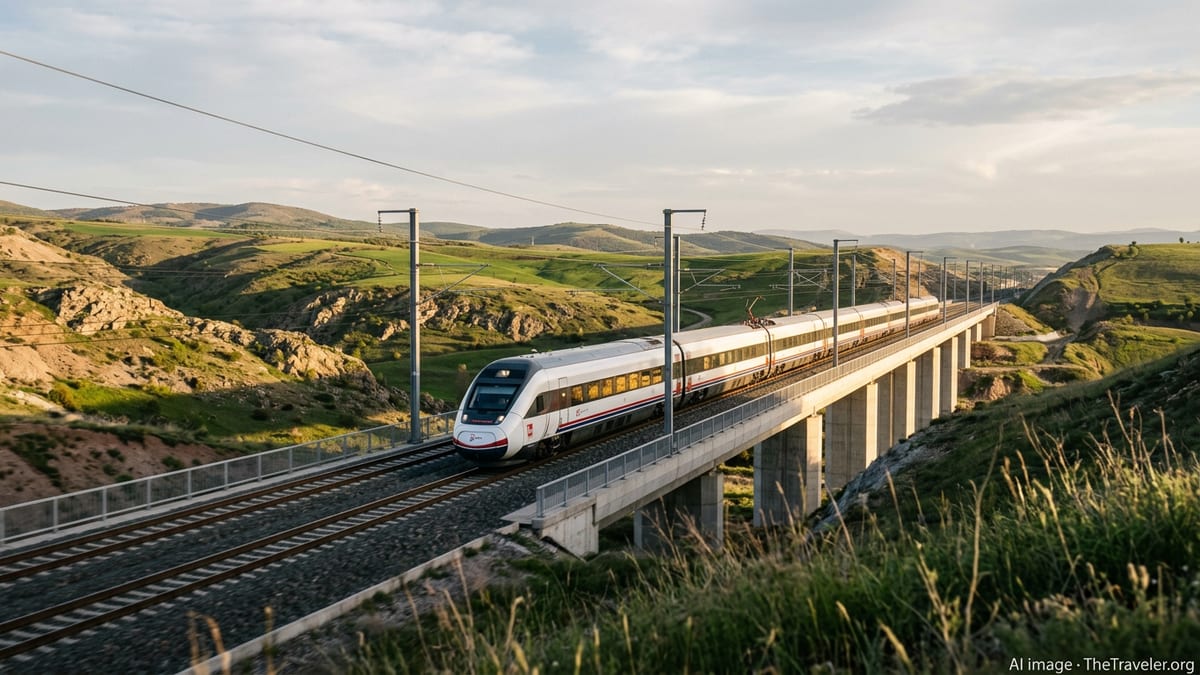
New national EMUs roll out on Thrace corridor
Recent reports from regional and national outlets indicate that Turkey’s National Electric Train sets, developed and assembled by rail manufacturer TÜRASAŞ, are now being deployed on services linking Edirne and Istanbul via the Thrace region. The units are entering operation on the Uzunköprü–Halkalı route, a key section of the broader Edirne–Istanbul axis, with schedules tailored to daily commuters as well as regional travelers.
Publicly available information shows that the new trains are derived from the TCDD E44000 “National Electric Train” platform, an electric multiple unit design created in Turkey for state rail operator TCDD Taşımacılık. The sets have already seen service on other busy lines and are now being reassigned to Thrace as part of a wider strategy to expand electric passenger operations and raise comfort standards on conventional routes.
Media coverage of the deployment notes that the introduction of the domestic EMUs coincides with ongoing investment in the Kapıkule–Halkalı high speed line, which is under construction along a similar corridor. While the high speed project is expected to sharply cut journey times once completed, the new EMUs are intended to deliver immediate gains on the existing infrastructure, using modern rolling stock while major civil works continue nearby.
Services with the new units are being promoted as a step change for passengers accustomed to older diesel trains on the line. Reports highlight air conditioned interiors, wide doors, and low floor access that is more suitable for passengers with reduced mobility, bringing regional services between western Thrace and Istanbul closer to the standard of urban commuter networks around the country.
Design, capacity and on board experience
Technical details made available through manufacturer and operator data describe the National Electric Train sets as modular EMUs capable of operating in multiple formations, typically around four to five cars per set on regional routes. The trains are powered by overhead electric lines and are designed for service speeds around 160 kilometers per hour, which aligns them with many modern European regional EMUs.
The interiors are configured with a mix of standard class seating and multi purpose spaces suitable for standing passengers, bicycles and luggage, reflecting the needs of both commuters and longer distance travelers. Public descriptions emphasize wide aisles, large windows and LED lighting, as well as passenger information screens that provide real time journey updates in Turkish and, in some cases, additional languages used by visitors arriving from the Bulgarian and Greek borders.
Accessibility has been a focus of the new design. Floor heights are matched more closely to platform levels on upgraded stations, reducing step gaps that previously posed difficulties. Trains include dedicated wheelchair spaces, tactile surfaces near doors and priority seating, in line with broader efforts to standardize accessible transport across Turkey’s public rail network.
Energy efficiency is another selling point. The EMUs make use of regenerative braking, returning power to the grid during deceleration where infrastructure allows, and employ lightweight carbody materials compared with older locomotive hauled stock. This combination is expected to lower operating costs per passenger kilometer while also reducing noise and local emissions along the corridor, which passes through towns, agricultural areas and the outskirts of Istanbul’s expanding suburbs.
Strengthening Edirne’s link to Istanbul
The launch of domestically built EMUs on the Edirne–Istanbul axis is particularly significant for Thrace, where rail connections have historically played a central role in linking the region to the economic heart of the country. Edirne sits close to the borders with Greece and Bulgaria, and the line toward Istanbul serves not only local residents but also cross border travelers connecting to long distance trains and urban transport in the metropolis.
According to published coverage, the new services will initially focus on the Uzunköprü–Halkalı segment, essentially shuttling between a key town in Edirne province and Istanbul’s main European suburban hub. From Halkalı, passengers can transfer to Marmaray commuter services and onward metro lines, creating a continuous rail link from Thrace into central Istanbul without the need for road transport.
The deployment supports national objectives to shift more passenger traffic from intercity buses and private cars to rail, particularly on corridors where road congestion and environmental pressures are pronounced. By coupling locally engineered trains with gradually modernized track and signaling, planners aim to make rail a more attractive option for residents of smaller Thracian communities who work, study or seek services in the Istanbul metropolitan area.
Regional media also underline the potential benefits for tourism. Edirne’s Ottoman heritage sites, annual cultural festivals and proximity to Balkan neighbors draw domestic and international visitors, many of whom either drive or use a combination of bus and rail. Faster, more comfortable electric trains between Edirne province and Istanbul are expected to strengthen short break and weekend tourism, particularly once timetables are fully integrated with urban transit in the city.
Part of a broader rail modernization strategy
The introduction of homegrown EMUs on the Edirne–Istanbul corridor is one component of a much larger rail transformation program in Turkey. Over the past decade, publicly available information shows that the country has invested heavily in both conventional and high speed lines, expanded its electric network and prioritized domestic production of rolling stock ranging from commuter EMUs to intercity trains and locomotives.
Reports on the National Electric Train project indicate that production facilities in Sakarya and other industrial centers have been retooled to design and assemble complete train sets largely with local expertise and components. This approach is intended to reduce long term dependence on foreign suppliers, develop a domestic supply chain and position Turkey as a potential exporter of modern rail vehicles to neighboring markets.
The Thrace deployment follows earlier use of the same EMU platform on lines in northwestern and central Anatolia, where operators have gathered operational experience and passenger feedback. Lessons from those routes have informed fine tuning of interior layouts, maintenance regimes and station interface details ahead of the Edirne–Istanbul rollout.
In parallel, Turkey’s first national high speed train sets are progressing through testing, with plans to introduce them on dedicated high speed corridors in the coming years. Although those trains are destined for different lines, the simultaneous development of regional EMUs and high speed sets reflects a unified strategy: to create a largely domestically built fleet that can serve everything from dense suburban services around Istanbul to long distance intercity connections across the country.
Implications for passengers and future services
For passengers on the Edirne–Istanbul route, the most immediate changes come in the form of quieter rides, shorter dwell times at stations and a more predictable timetable, as modern EMUs accelerate and brake more efficiently than older locomotive hauled compositions. The availability of climate control, improved seating and better on board information is expected to enhance the overall perception of rail as a viable alternative to highway travel.
From an operational perspective, the use of standardized domestic EMUs can simplify maintenance and training requirements. Workshops in the region are being prepared to handle the specific systems of the National Electric Train sets, and staff previously familiar with older equipment are transitioning to the new fleet using training materials developed in conjunction with manufacturer documentation.
Observers note that the arrival of the EMUs also sets the stage for a smoother transition once the Kapıkule–Halkalı high speed line is completed. While the current EMUs are not the high speed sets planned for that project, their presence familiarizes passengers with electric rail travel, station upgrades and integrated ticketing that will underpin future services with significantly reduced journey times.
As Turkey continues to reshape its railway landscape, the debut of homebuilt EMUs on the Edirne–Istanbul axis stands out as a tangible example of how industrial policy, regional development goals and day to day passenger experience intersect on the tracks of a historic corridor connecting Thrace with the country’s largest city.