


More news on this day
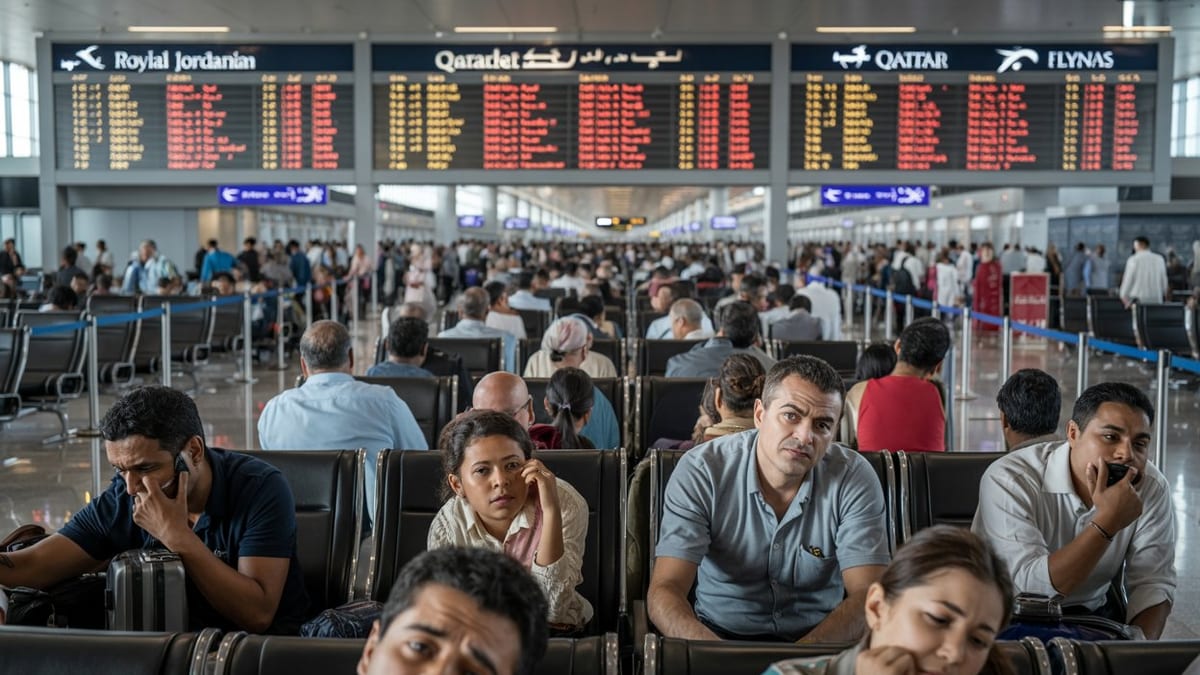
Air travelers across the United States faced a difficult start to the week as more than 380 flights were cancelled and at least 7,831 were delayed, with disruptions rippling through major and regional hubs including Chicago, Des Moines, Madison, Hebron, Minneapolis and Evansville.
Get the latest news straight to your inbox!
Nationwide Disruptions Hit Major and Regional Airports
Publicly available tracking data for Tuesday, June 9, 2026, indicates that flight operations within, into and out of the United States were under significant strain, with hundreds of cancellations and thousands of delays accumulating through the day. The disruptions affected both large connecting hubs and smaller regional airports, complicating travel plans for passengers across multiple time zones.
Airports serving Chicago, Des Moines, Madison, Hebron in Kentucky, Minneapolis and Evansville were among the locations reporting elevated levels of irregular operations. These facilities form key nodes in the domestic network, linking small and midsize communities to larger national and international gateways. When problems mount simultaneously across this tier of airports, the resulting knock-on effects typically spread rapidly through the system.
Several monitoring platforms that compile real-time airport and airline performance data showed that the overall number of delayed flights far outpaced outright cancellations. While cancellations stranded some travelers for extended periods, the much larger volume of delays created rolling congestion on taxiways and in terminal areas, with departures pushed back and arrivals stacked in holding patterns.
A combination of localized weather, congestion in the national airspace system and operational challenges at individual carriers contributed to the elevated numbers. Industry and government data published over recent years show that on a typical day only a small fraction of flights are cancelled nationwide, underscoring how a total above 380 cancellations and many thousands of delays marks an unusually disrupted operating environment.
Regional Carriers Bear Brunt of Operational Stress
The latest disruption wave heavily involved regional operators that fly under the brands of larger network airlines. SkyWest Airlines, Envoy Air, Republic Airways and GoJet Airlines, along with low cost and mainline carriers such as Southwest Airlines, all appeared frequently in delay and cancellation logs for the day, reflecting their central role in connecting smaller cities to major hubs.
SkyWest, one of the largest regional airlines in the United States, operates flights on behalf of several major carriers using shared reservation systems and codes. When schedule reliability falters at an airline of this scale, the resulting impact is generally felt at dozens of airports simultaneously, from large hubs in the Midwest to smaller fields in the Great Plains and Upper Midwest.
Envoy Air and Republic Airways, which also specialize in regional flying under mainline brands, showed multiple disrupted departures and arrivals across the network. Past statistics from the U.S. Department of Transportation highlight that regional carriers historically experience higher percentages of cancellations than some larger mainline airlines, in part because they operate more short-haul sectors that are vulnerable to even minor schedule perturbations.
Southwest Airlines, which runs one of the densest domestic schedules in the country, also contended with notable delays, especially at airports serving as key points in its point-to-point network. Because many Southwest itineraries rely on tight turnarounds rather than traditional hub banks, a delay on one sector can quickly propagate through subsequent flights if recovery buffers are exhausted.
Midwestern and Heartland Hubs Experience Ripple Effects
Airports across the Midwest and central United States felt a disproportionate share of the turbulence. Chicago’s airports, including O’Hare and Midway, function as critical connectors between East and West Coast traffic flows and as primary entry points for flights from smaller cities such as Des Moines, Madison and Evansville.
Disruptions affecting Chicago airports tend to cascade outward, particularly for passengers relying on regional connections operated by SkyWest, Envoy or Republic. When a flight into Chicago is delayed or cancelled, onward connections to smaller markets often have to be rebooked or dropped entirely, amplifying the effect in communities that have relatively few daily departures.
In Kentucky, the airport at Hebron, which serves the greater Cincinnati and Northern Kentucky region, also registered elevated levels of irregular operations. As a major transfer point for both passenger and cargo carriers, congestion or schedule slippage here can influence flows across a wide geographic area, including the upper South and Midwest.
Minneapolis and other Upper Midwest airports recorded growing queues of delayed departures as the day progressed. Weather variations common to this region can quickly reduce arrival and departure rates, requiring air traffic managers to meter flights more cautiously and forcing airlines to reshuffle aircraft and crews to maintain minimum coverage on priority routes.
Systemic Causes: Weather, Airspace Congestion and Airline Operations
Historical data maintained by the Bureau of Transportation Statistics and summarized in prior government reports show that most flight disruptions in the United States fall into several broad categories: air carrier issues such as maintenance or crew availability, national aviation system constraints like airspace congestion and routine weather, and less frequent causes such as extreme weather or security events.
The pattern observed on June 9 aligns with these long-standing trends, with no single catastrophic incident but rather a convergence of localized weather cells, high traffic volumes and staffing and equipment pressures at airlines and air traffic facilities. When several of these factors occur on the same day, even small individual delays can aggregate into large systemwide disruptions.
Regional carriers are particularly exposed to such conditions because their networks rely on high flight frequencies using smaller aircraft. A late inbound aircraft can leave a route temporarily unserved if there is no backup aircraft or spare crew available, leading to a cancellation that might not be feasible for a larger mainline operator with more fleet flexibility on a particular route.
Data published in previous federal performance tables also indicate that carriers such as Envoy, Republic and other regionals have historically recorded higher cancellation percentages than large network airlines, in part due to their role operating marginal routes that are more easily trimmed when weather or congestion reduces available capacity. The latest figures appear to follow that pattern, with disproportionate impacts seen at smaller spokes feeding major hubs.
Travelers Confront Missed Connections and Rebooking Challenges
The spike in cancellations and delays created a difficult environment for travelers trying to complete same-day itineraries, especially those relying on tight connections through Midwestern and central hubs. Missed onward flights, overnight misconnects and extended time in terminal queues for rebooking emerged as frequent scenarios reported through social media and travel forums.
Passengers on regional operators such as SkyWest, Envoy and Republic often face additional complications because their flights are branded and sold by larger partner airlines, while being operated by separate companies. This structure can sometimes lengthen customer service interactions when seats are scarce, as carriers work within interline and codeshare agreements to find alternative routings.
For travelers on Southwest and other point-to-point carriers, daylong waves of delays can lead to rolling schedule changes, with estimated departure times shifting repeatedly as aircraft and crew rotations are adjusted. While many flights eventually depart, the uncertainty can be especially challenging for those with time-sensitive commitments or onward ground transportation.
Consumer advocates typically recommend that during periods of heightened disruption, travelers monitor flight status frequently, build in additional buffer time for connections, and consider morning departures where possible, as early operations are statistically less affected by the cumulative impact of delays that build up later in the day.