


More news on this day
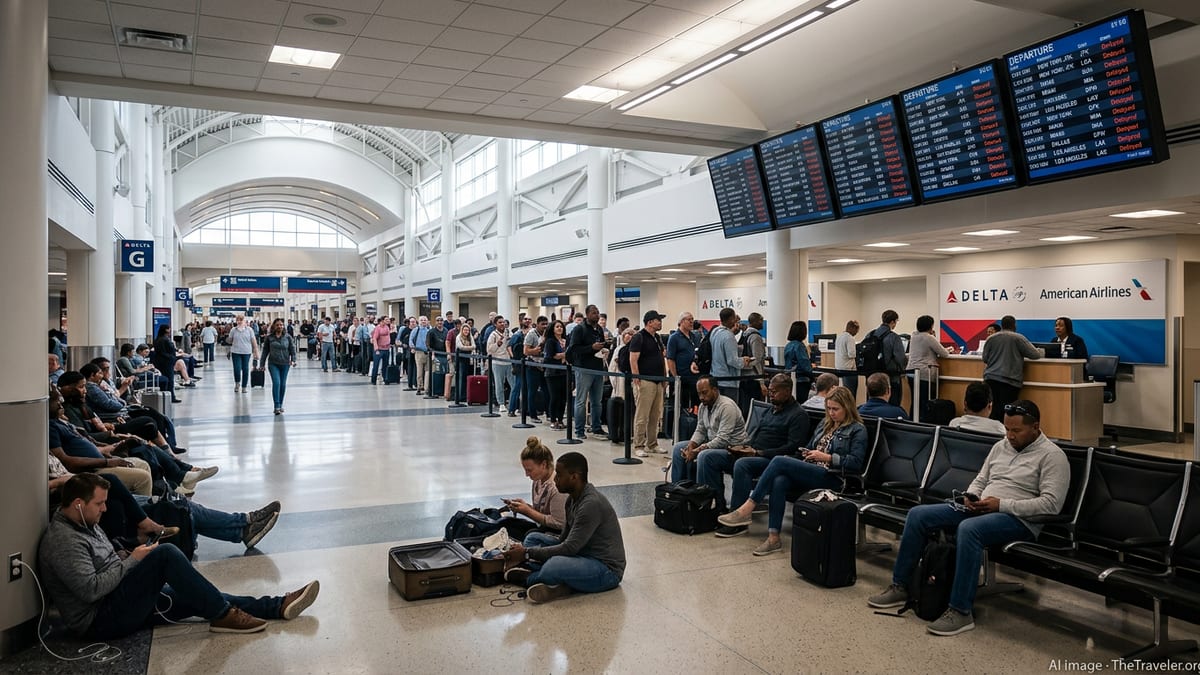
A Delta Air Lines passenger traveling with two toddlers says a routine connection through Atlanta turned into an overnight ordeal after their flight was delayed 13 times, ultimately stranding the young family at Hartsfield Jackson Atlanta International Airport with little guidance and a blunt message to “figure it out.”
Get the latest news straight to your inbox!
A String of Rolling Delays Ends in a Missed Connection
According to accounts shared on social media and travel forums, the problems began when the family’s original flight encountered repeated rolling delays. What was supposed to be a straightforward journey stretched across the day as departure time moved again and again, reportedly a total of 13 times, leaving the parent to navigate hours in the terminal with two small children and limited clear information about the outlook for the trip.
Reports indicate that each new delay was communicated close to the revised departure, a pattern that can make it difficult for travelers to make backup plans or request rebooking before connections become impossible. By the time the aircraft finally departed for Atlanta, the family’s onward connection was effectively out of reach, raising the risk they would be forced to overnight at the hub.
Other passengers at Atlanta have described similar experiences during recent weather and staffing disruptions, with rolling delays continuing into late evening as ground operations pause during thunderstorms and crews struggle to remain within regulated duty hours. In such conditions, a family traveling with toddlers can quickly face a combination of fatigue, hunger and confusion that is far more challenging than for solo or business travelers.
In this case, the parent later wrote that the stress of trying to keep the children soothed and entertained over many unexpected hours in crowded gate areas became as difficult as the prospect of missing the final flight of the night.
“Figure It Out” Response Fuels Frustration
When the family finally reached Atlanta and realized their connection was no longer feasible, they turned to Delta representatives at the hub for help. The parent’s account describes an exchange in which a staff member allegedly told them to “figure it out,” a phrase that has since been widely shared online as shorthand for the perceived lack of support given to the family with toddlers.
Publicly available information shows that Delta’s customer service commitments for significant delays call for rebooking, meal assistance and, in some circumstances, overnight lodging when disruptions are within the airline’s control. However, implementation often depends on the specific cause of the delay, local hotel availability and the judgment of airport agents who are managing long lines of distressed passengers late at night.
Travelers in similar situations at Atlanta have reported a wide range of outcomes, from hotel and meal vouchers to being advised to stay in the terminal and seek reimbursement later. For parents managing young children, the immediacy of the problem often outweighs the promise of a future claims process, and terse or unsympathetic language from front line staff can become a focal point for online anger.
In this instance, the family’s description of being effectively left on their own to find somewhere to rest in the airport underscores the emotional gap between published service policies and what some travelers say they experience during major operational disruptions.
What Delta’s Policies Say About Delays and Overnight Disruptions
Delta’s published guidance for delayed or canceled flights explains that when a passenger is held more than several hours due to events considered within the airline’s control, the carrier may provide meal vouchers and, where available, hotel accommodations with transportation for overnight disruptions. The airline also directs passengers to an online reimbursement form to submit receipts for reasonable expenses when they are stranded away from home and unable to secure assistance at the airport.
The company’s contract of carriage further describes a tiered approach to irregular operations, distinguishing between weather and other factors beyond its control and issues such as crew or mechanical problems that may obligate the airline to do more for affected customers. Families traveling with children are directed to standard customer service channels, rather than a dedicated guaranteed accommodation program, which can leave parents negotiating for support at crowded service desks late at night.
At the same time, federal consumer resources, including the U.S. Department of Transportation’s airline customer service dashboard, highlight that while carriers are expected to rebook passengers after cancellations or long delays, they are not uniformly required to provide hotels or meals in every scenario. For travelers unfamiliar with the fine print, the result can be a confusing patchwork of rules and exceptions that only become apparent once they are already stuck at an airport like Atlanta overnight.
Advocacy groups often advise passengers to keep all receipts from food, transport and lodging during such disruptions and to document interactions with airline staff in case they file refund or reimbursement requests later. Reports from recent Delta disruptions show a growing number of families turning to social media and third party compensation services to press their claims after difficult nights in hub airports.
Atlanta’s Role as a Pressure Point for Delta Travelers
Hartsfield Jackson Atlanta International Airport is Delta’s largest hub and among the busiest passenger airports in the world, making it a critical connection point and a frequent bottleneck when storms or staffing constraints hit. Published coverage of recent operational challenges has described thousands of passengers stuck in Atlanta overnight during major disruptions, with lines for customer service stretching across concourses and limited hotel availability compounding the strain.
Travel experts note that families with small children are particularly vulnerable when hub operations begin to unravel late in the day. Even when flights eventually depart, missed connections can funnel parents and toddlers into a small pool of remaining options, often involving overnight stays in unfamiliar cities or long rebooked itineraries the following morning.
For Delta, these high visibility episodes can carry reputational risk that extends beyond the original disruption. Social media accounts relaying images of children sleeping on terminal floors, or of parents recounting brusque exchanges at service counters, can quickly shape broader public perceptions of how the airline treats its youngest and most stressed customers.
In the wake of large scale delays, the airline typically highlights its efforts to restore operations and assist customers, pointing travelers to its app for rebooking and to online forms for reimbursement. Yet stories like the Atlanta family’s underline how the gap between formal policies and on the ground execution can drive viral frustration, especially when parents feel they were told to simply cope on their own.
Growing Scrutiny of How Airlines Treat Families
The Atlanta incident comes amid increased scrutiny of how major U.S. airlines accommodate families with young children during disruptions. Federal officials have recently spotlighted practices around seating children next to a caregiver and communicating options during long delays and cancellations. Consumer advocates argue that airlines should adopt clearer, family specific commitments for overnight disruptions, particularly when toddlers and infants are involved.
Public discussion of family travel has also been shaped by a series of high profile confrontations over the past decade in which parents were removed from flights or left stranded after disputes involving car seats, seat assignments or last minute schedule changes. While airlines often respond with apologies and compensation in those cases, critics say the recurring pattern shows a need for more consistent training and clearer guidelines for staff when dealing with young children and their caregivers.
For now, parents of toddlers planning to connect through major hubs are increasingly advised by travel professionals to build in longer connection times, travel earlier in the day when possible, and understand both their airline’s written commitments and the limits of what is guaranteed in severe weather or large operational disruptions. The Atlanta family’s frustrations, widely shared online, are likely to add fresh urgency to calls for stronger and more predictable protections for families caught in long delay spirals at busy U.S. airports.