


More news on this day
Thailand’s role as a regional aviation crossroads is facing renewed strain as a wave of short-notice flight cancellations by Kuwait Airways, Thai VietJet and other carriers disrupts itineraries linking Bangkok with Kuwait, Kuala Lumpur, Cambodia and other key hubs.
Get the latest news straight to your inbox!
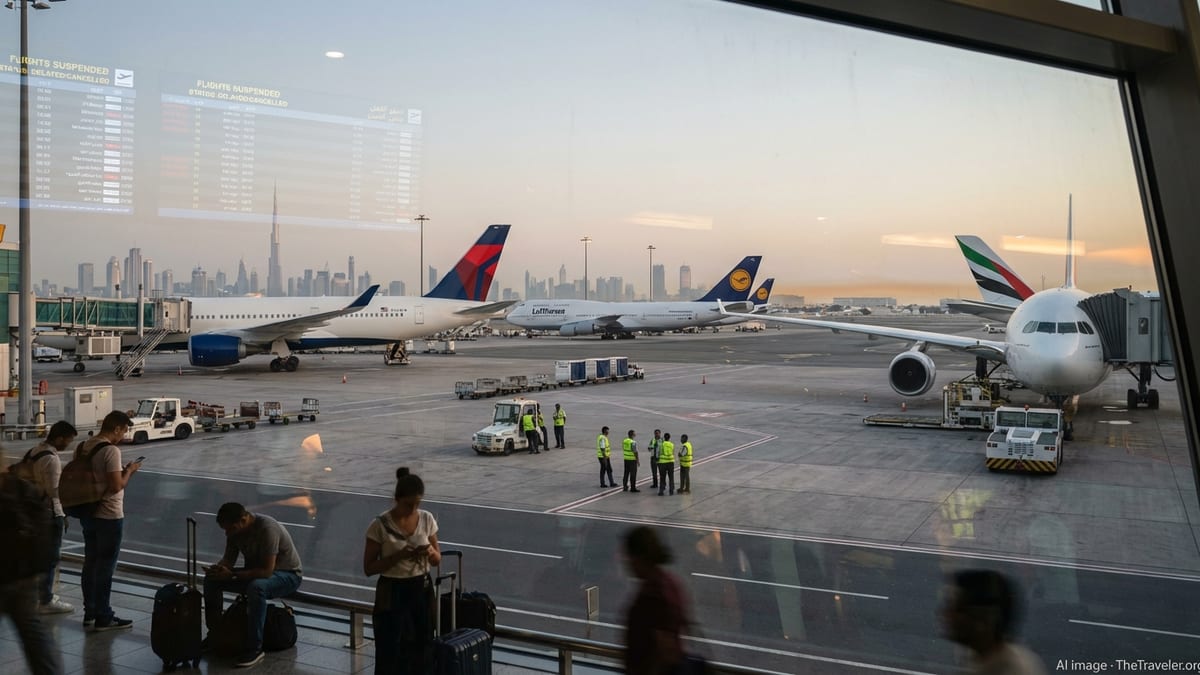
Seven Key Flights Pulled From Schedules In Fast-Moving Disruption
Recent schedule data and regional coverage indicate that at least seven prominent flights touching Thailand have been withdrawn or cancelled in quick succession, concentrating pressure on Bangkok’s Suvarnabhumi and Don Mueang airports. The changes include Kuwait Airways services between Kuwait City and Bangkok, as well as Thailand based low cost operations that connect the capital with major cities in Southeast and East Asia.
Tracking information shows Kuwait Airways flight KU413 on the Kuwait City to Bangkok route listed as cancelled on selected May travel dates, following weeks of instability at Kuwait International Airport. At the same time, network summaries highlight that carriers are still attempting to rebuild connectivity from Kuwait, suggesting that the latest cancellations are part of a volatile restart rather than a full retreat from the Thai market.
For travelers, the practical effect is immediate. Passengers on affected Kuwait Airways flights report receiving abrupt notifications of cancellation or rebooking with limited advance warning, while those booked on certain regional low cost routes via Bangkok are finding that services have been temporarily pulled from sale altogether. The result is a concentrated burst of disruption focused on a relatively small group of high demand flights.
The pattern highlights how even a handful of cancellations on heavily used trunk routes can reverberate across networks linking the Middle East to Southeast Asia. With Bangkok acting as both an origin and a major transit point, the removal of seven key flights in a short period is enough to trigger missed connections, crowded alternative services and rising concern among tour operators.
Kuwait Airways Adjusts Bangkok Operations Amid Regional Turmoil
Kuwait Airways sits at the center of the latest turbulence. Publicly available information on the airline’s operations shows that its Bangkok services have been repeatedly revised in the wake of earlier drone attacks and prolonged disruption at Kuwait International Airport, which only recently reopened more broadly to commercial traffic.
Flight tracking sites documented at least one Kuwait City to Bangkok rotation being cancelled in early May, even as other Kuwait Airways services into Thailand remained on the schedule. This mixed pattern underlines the complexity facing the carrier, which is attempting to balance safety restrictions, aircraft availability and demand from passengers eager to resume long haul travel through the Gulf.
Reports on consumer forums reflect this uncertainty. Some travelers with mid May bookings on Kuwait Airways describe receiving cancellation notices followed by offers of alternative dates, while others report automatic refunds with no clear rerouting option. Such uneven handling is feeding frustration among passengers who had chosen Kuwait as a competitively priced connecting point between Europe, the Middle East and Bangkok.
The situation illustrates how tightly connected Bangkok is to developments far beyond Thailand’s borders. Disruptions at a single hub such as Kuwait can quickly cascade into cancellations on routes serving Thai airports, affecting not only origin and destination traffic but also travelers using Bangkok as a stopover en route to other Asian cities.
Thai VietJet and Regional Carriers Trim Capacity To Key Asian Hubs
Alongside Gulf based disruption, Thailand’s own low cost sector is recalibrating. Industry schedule filings for the second quarter of 2026 show Thai VietJet cutting frequencies and temporarily cancelling selected international routes from Bangkok, including seasonal links to cities such as Fukuoka in Japan. These adjustments have reduced options for passengers who typically rely on low cost connections through Suvarnabhumi.
Thai VietJet’s changes come on the heels of warnings from Thai full service airlines and regional commentators about sharply higher jet fuel costs and softer demand during the low tourism season. Publicly reported statements from Thai carriers point to rising operating expenses and geopolitical volatility in the Middle East as core reasons for trimming capacity, even on routes that traditionally carry strong leisure traffic.
Travelers are already feeling the impact. Trip reports and travel community discussions describe last minute cancellations on VietJet operated itineraries involving Bangkok connections, leaving passengers facing substantial extra costs to secure replacement flights on other airlines. With fewer low cost seats available on routes linking Thailand to Japan, Cambodia and neighboring countries, price-sensitive travelers are being squeezed.
These domestic capacity reductions intersect with the Kuwait Airways disruptions to produce a layered effect. Passengers who previously could combine a Kuwait Airways long haul sector with a Thai VietJet hop onward to secondary destinations now find themselves with fewer back up options when one leg of the journey is cancelled.
Knock-On Effects For Kuala Lumpur, Cambodia And Regional Transit Hubs
The seven highlighted cancellations form part of a broader wave of schedule reshaping that touches key regional hubs including Kuala Lumpur and Cambodia’s emerging gateways. Published coverage on Thailand’s aviation outlook notes that airlines are pruning less profitable services, rerouting aircraft and in some cases suspending flights altogether on shorter routes that connect into Bangkok from neighboring countries.
In Malaysia, live route listings between Kuala Lumpur and Bangkok continue to show multiple daily services from national and partner airlines. However, analysts point out that even modest reductions in capacity by one or two carriers can translate into crowded peak hour departures and reduced flexibility for travelers who need to rebook after a cancellation on an unrelated long haul flight.
In Cambodia, where carriers such as Sky Angkor and other regional operators link Phnom Penh and other cities with Bangkok, recent cancellations have caused particular difficulty for passengers reliant on single daily frequencies. When a flight is removed at short notice, the next available option may be a day or more away, stretching hotel stays and complicating visa and tour arrangements.
Because Bangkok functions as an essential transfer point for journeys between the Middle East, South Asia and Southeast Asia, disturbances on feeder routes from Kuala Lumpur, Cambodian cities and Japanese airports can amplify the disruption initiated by Kuwait Airways or Thai VietJet schedule changes. The combined effect is a network that feels significantly less predictable for passengers, even if total flight numbers remain relatively high.
What Travelers Should Watch For In The Coming Weeks
While airlines insist that current cancellations are temporary and linked to extraordinary cost and security pressures, the immediate outlook for seamless travel through Thailand remains uncertain. Industry commentary suggests that carriers will continue to adjust capacity through at least the early northern summer period as they monitor fuel markets, regional demand and geopolitical developments.
Passengers booked on Kuwait Airways, Thai VietJet or other airlines using Bangkok as a hub are being urged by consumer groups and travel advisers to check booking details frequently in the days leading up to departure. Monitoring airline mobile apps, e mail notifications and airport departure boards can help travelers spot schedule changes early enough to request rerouting or refunds.
Experts also stress the importance of allowing longer connection times when planning itineraries that involve Kuwait City, Bangkok, Kuala Lumpur or Cambodian airports during this period. With seven key flights already removed and further fine tuning of timetables likely, tight connections that once seemed manageable may now carry a higher risk of misconnection.
For Thailand’s tourism sector, the episode is a reminder that its status as a global crossroads brings both opportunity and vulnerability. As airlines from Kuwait Airways to Thai VietJet work to stabilize their networks, travelers heading for Bangkok and beyond will need to stay flexible and well informed to navigate a more unpredictable regional sky.