


More news on this day
Passengers at Oslo Gardermoen Airport faced mounting disruption as more than 20 European flights were cancelled, with services operated by SAS, Norwegian Air Shuttle and several other carriers scrapped on routes to London Heathrow, Amsterdam Schiphol, Rome Fiumicino, Copenhagen, Malaga, Dublin and additional destinations.
Get the latest news straight to your inbox!
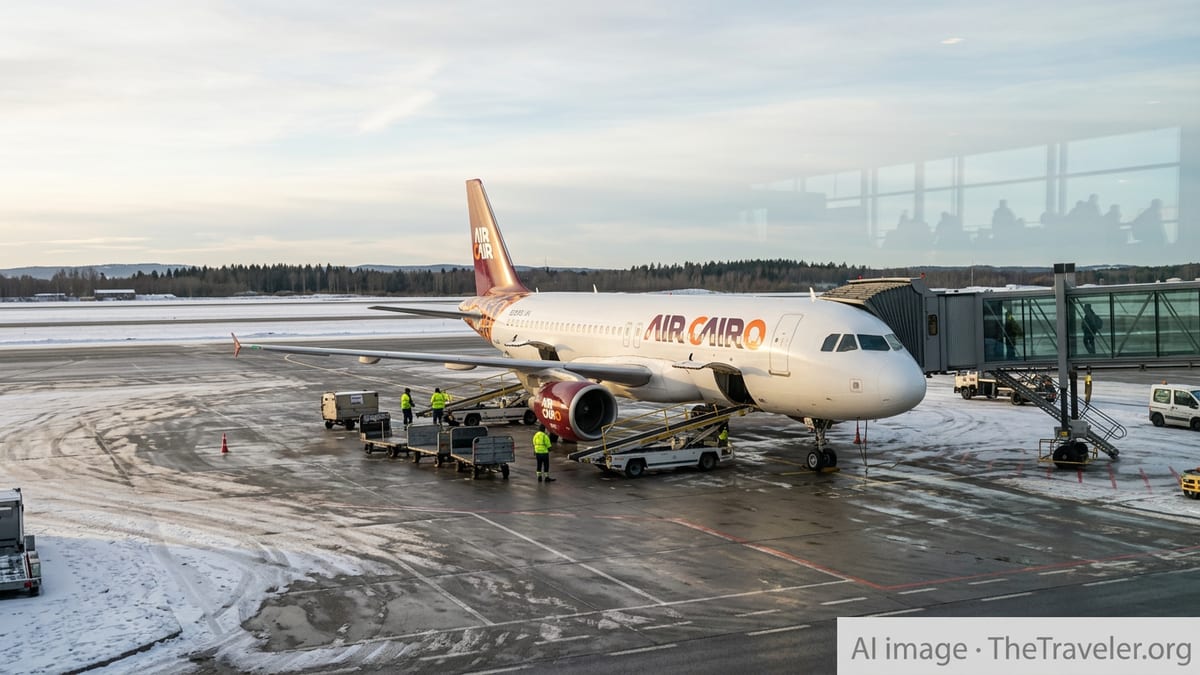
Wide Wave of Cancellations Hits Key European Routes
Operational data and live flight-status services for Saturday and Sunday indicate that Oslo Gardermoen experienced an unusual concentration of cancellations across multiple airlines serving major European hubs. Departures to London Heathrow, Amsterdam Schiphol, Rome Fiumicino, Copenhagen, Malaga and Dublin were among those affected, with more than 20 flights in total removed from the schedule over the course of the day.
The disruption involved a mix of Scandinavian Airlines (SAS) and Norwegian Air Shuttle services, alongside flights operated by other European network carriers and codeshare partners. Routes linking Oslo with London Heathrow and Amsterdam Schiphol, both critical connecting hubs for long haul traffic, appeared prominently in the list of cancellations, intensifying the impact for passengers with onward connections.
While Oslo Gardermoen routinely handles dense traffic to Nordic capitals and major cities around Europe, public aviation data shows that the airport has recently been operating in a generally high-demand environment, with strong flows to cities such as Copenhagen, Dublin and Malaga. The sudden removal of a cluster of departures on the same day therefore caused congestion at service desks and forced many travelers to replan their journeys at short notice.
Some of the cancelled flights were scheduled to serve popular leisure routes into southern Europe, including Malaga on Spain’s Costa del Sol and Rome Fiumicino in Italy, amplifying the disruption for early-summer holidaymakers heading out from Norway.
SAS and Norwegian Under Pressure As Summer Peak Approaches
The latest wave of cancellations at Oslo Gardermoen arrives at a sensitive time for the Scandinavian market. SAS has already drawn attention in recent weeks for proactive capacity cuts and selective route cancellations on European services in an effort to stabilize operations ahead of the summer rush, according to publicly available planning updates and travel-industry commentary.
Travel forums and consumer reports have highlighted a pattern of last-minute adjustments on some SAS routes, with passengers cited as receiving rebooking messages or discovering cancellations in airline apps shortly before departure. Although these examples often relate to long haul services via Copenhagen, they illustrate the strains on the carrier’s wider network and the knock-on risk for feeder flights from Oslo.
Norwegian Air Shuttle, a key competitor out of Gardermoen, has been rebuilding its network with a focus on short and medium haul routes after withdrawing from long haul flying. The airline operates a dense schedule from Oslo to European city-break and sun destinations, including Malaga and other Spanish airports. Any day with multiple cancellations from Norwegian therefore has an outsized effect on leisure travelers using the airport as their primary gateway.
The presence of additional carriers on affected routes, such as large European network airlines linking Oslo to their hubs at Amsterdam Schiphol and London Heathrow, broadened the operational impact. Passengers booked on codeshare tickets that combine SAS, Norwegian or other airlines across a single itinerary faced particularly complex rebooking scenarios.
Knock-On Effects for Connecting and Long Haul Passengers
The cancellations at Oslo Gardermoen did not only affect point to point travelers. With Heathrow, Schiphol and Fiumicino all serving as major connection platforms, the removal of departures from Oslo disrupted onward journeys to North America, Asia and other parts of Europe.
Industry data and recent commentary from European air traffic reports show that several of these hubs have been managing constrained capacity and periodic delay spikes. When outbound feeder flights from Oslo are cancelled, travelers can lose carefully timed connections onto long haul services, particularly in tightly scheduled itineraries that give only a short window for transfers.
Copenhagen, which is part of the core SAS network, plays a central role in feeding long haul flights, and cancellations on Oslo to Copenhagen services can undermine access to those onward routes. Travelers connecting via Dublin for transatlantic services or via Malaga and Rome for regional Mediterranean flights may likewise find that missing an initial leg out of Norway leaves only limited alternative options on the same day, especially at the start of the peak holiday season.
In practical terms, passengers whose Oslo departures were cancelled often had to be reprotected via alternative connection points or moved to flights on the following day. This not only impacts individual holiday plans but also increases load factors on nearby departures, making same-day recovery more difficult.
What Travelers From Oslo Should Expect and How to Respond
The cluster of cancellations at Oslo Gardermoen underscores how quickly conditions can change for travelers, even at well connected airports. Industry observers note that airlines across Europe are balancing tight staffing and fleet availability with strong seasonal demand, leaving little margin when operational issues arise.
For passengers with upcoming itineraries from Oslo, especially to London Heathrow, Amsterdam Schiphol, Copenhagen, Rome Fiumicino, Malaga and Dublin, publicly available travel guidance suggests closely monitoring booking details in the days and hours before departure. Flight-status tools and airline apps typically reflect schedule changes before airport departure boards, giving travelers more time to react.
Under European passenger-rights rules, travelers whose flights are cancelled may be entitled to rebooking, refunds and, in some cases, compensation, depending on the cause of the disruption and the timing of the notification. Consumer advocates regularly advise passengers to keep documentation of any cancellation notices and additional expenses, and to use official claim channels if they believe they qualify for compensation.
Given the current environment, many travel specialists recommend allowing more generous connection times, avoiding the last departure of the day where possible, and considering flexible fares that can be changed with lower penalties. For those flying from or via Oslo Gardermoen in the coming days, the events surrounding this latest round of cancellations serve as a reminder that early checks, backup plans and awareness of rights can significantly ease the impact of sudden disruptions.