


More news on this day
A freight train derailment near South Charleston has disrupted rail traffic and several nearby roads, prompting an intensive cleanup effort and renewed scrutiny of rail safety in a corridor that serves both heavy industry and interstate travelers.
Get the latest news straight to your inbox!
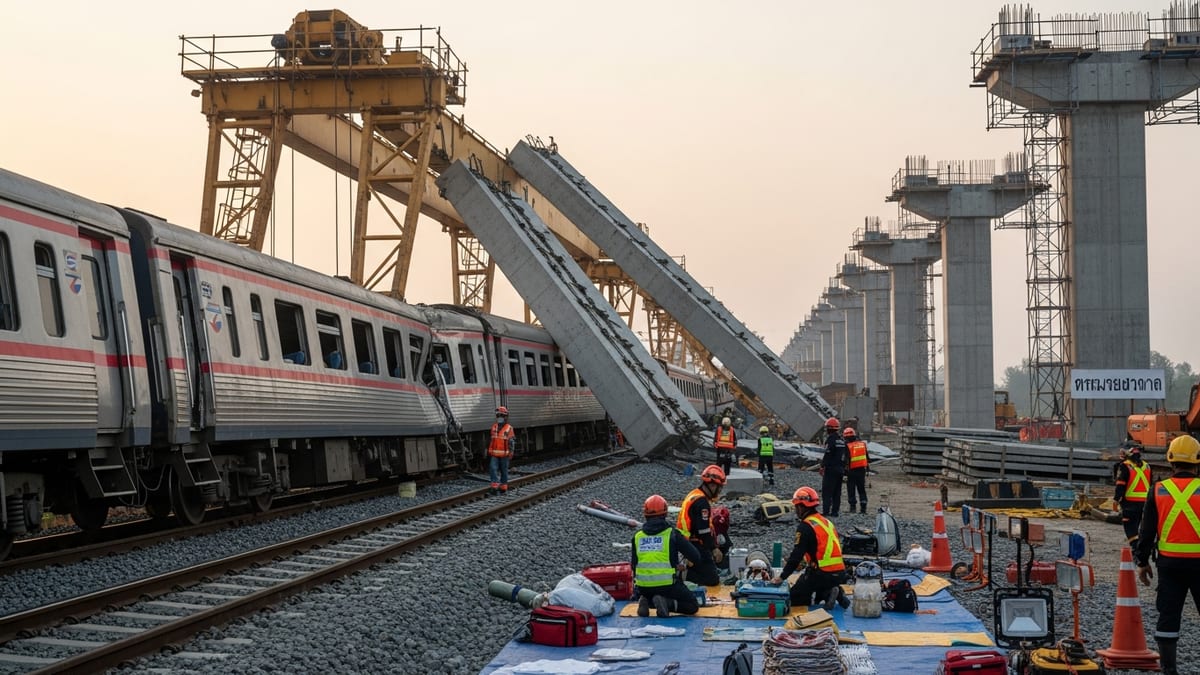
What is known about the derailment
Initial public reports indicate that multiple freight cars left the tracks near South Charleston, in the Kanawha Valley of West Virginia, affecting a section of line used primarily for heavy freight movements through the region. Early descriptions from local coverage suggest the incident occurred close to existing industrial sites and transportation infrastructure, a reminder of how closely rail corridors and communities sit side by side in this part of the state.
Published information so far points to the derailment involving a long manifest freight, a type of train that typically carries a mix of cargo rather than a single commodity. That mix can range from bulk materials and consumer goods to hazardous substances, and investigators commonly focus on train length, speed, track conditions and car types when piecing together how such events unfold.
Images and footage circulating in regional media show railcars tilted or on their sides along the right of way, with heavy equipment brought in to stabilize the scene and begin clearing debris. The visual pattern mirrors other recent derailments in the eastern United States, where strings of cars have piled up along curves or near bridges and road crossings and required days of intensive work before normal operations could resume.
Rail safety specialists often highlight that, although rail remains more fuel efficient than trucking per ton of freight moved, derailments of long trains can result in concentrated damage at a single location. The South Charleston incident is being viewed through that lens as officials and the public look for answers on how and why the cars left the tracks.
Hazardous materials concerns and environmental monitoring
One of the first questions surrounding any derailment in an industrial corridor is whether hazardous materials are involved. Publicly available information and early reporting around South Charleston describe tank cars among the derailed equipment, although detailed cargo manifests and the status of each car typically take time to review and release.
In similar incidents, emergency management agencies and environmental regulators have set up air and water monitoring around derailment sites to track potential releases, particularly when crude oil, chemicals or pressurized gases are in the train consist. Past accidents in West Virginia and neighboring states have underscored the risks posed by hazardous materials in rail transport, especially near waterways and residential areas.
Coverage of the South Charleston derailment notes a visible response presence with fire services, environmental contractors and railroad personnel staged around the affected area. Their immediate focus is usually to stabilize any compromised cars, contain leaks if they are detected, and establish safety perimeters to keep the public away from heavy equipment and potential chemical exposure.
Local residents and travelers are watching closely for updates on air quality readings, surface water testing and soil assessments, all of which tend to guide how long restrictions remain in place and what kind of long term remediation might be required. Publicly shared data and regular updates are a key part of rebuilding confidence after recent high profile derailments elsewhere in the country.
Impact on regional travel and tourism
While the derailment is first and foremost a transportation and public safety issue for South Charleston and nearby communities, it also has broader implications for travel across central West Virginia. The Kanawha Valley is threaded by major highways, freight lines and the Amtrak Cardinal route, which together support both local commuting and long distance trips into and out of the state.
Reports from passengers and rail watchers indicate that freight movements through the affected segment have been curtailed or rerouted while crews clear the tracks and inspect any damaged infrastructure. When a main freight corridor is disrupted, passenger services can also face schedule changes or bus substitutions, especially on long distance routes that share track with private freight railroads.
Drivers have reported congestion and detours on roads near the derailment site, reflecting the interdependence of rail and road networks. Even when no passenger trains are directly involved, grade crossings, frontage roads and highway ramps can be closed as equipment is brought in and wreckage is removed, affecting hotel guests, business travelers and residents alike.
For visitors using Charleston as a jumping off point to explore state parks, rafting rivers or mountain towns, the derailment adds a layer of uncertainty. Travel planners are advising would be visitors to allow extra time for airport transfers, to verify hotel access routes, and to confirm whether rail itineraries remain in service on their chosen dates.
Rail safety debates and infrastructure priorities
The South Charleston derailment has quickly become part of a wider conversation about rail safety, inspection practices and investment needs across the Appalachian region. Recent years have brought increased attention to the frequency of derailments nationally, especially those involving long manifest trains and hazardous cargo rolling through small towns and city edges.
Analyses by transportation researchers have highlighted how track condition, inspection intervals, train length and operating practices can influence derailment risk. Discussions often focus on whether more stringent standards, advanced monitoring technology, or operational limits on train length and speed could reduce the chance of similar events.
In West Virginia, rail corridors shadow major rivers and highways, and earlier planning documents have pointed to both the economic value and the vulnerability of these routes. The South Charleston incident is likely to add weight to calls for targeted infrastructure investments, including track renewal, bridge work and improved access for emergency responders along difficult to reach stretches of line.
Community groups and local leaders are also drawing connections between freight activity and quality of life issues such as noise, vibration and blocked crossings. A derailment of this scale tends to sharpen those debates, raising questions about how to balance the benefits of rail freight with the potential costs when something goes wrong.
What travelers should know in the coming days
For now, travelers with plans that pass through the Charleston area are being encouraged, through publicly available advisories and travel forums, to check their arrangements frequently and build flexibility into their schedules. Rail passengers can expect that timetables may change at short notice while the route is inspected and repaired.
Those driving along the Kanawha Valley corridor should pay close attention to local traffic reports and signage, as temporary closures around the derailment site may continue while heavy equipment remains in the area. Alternate routes may be slower than usual as they absorb detoured traffic from both local streets and nearby highways.
Hotels and tourism operators in and around Charleston are monitoring the situation as they head into late summer travel season. Many are steering guests toward confirmed open routes and suggesting that visitors check in ahead of arrival if they plan to arrive late at night, when some detours or lane restrictions can feel more disruptive.
Until rail traffic patterns return to normal and the full findings of the derailment investigation are made public, South Charleston will remain a focal point in discussions about infrastructure resilience and safe travel across one of the most heavily traveled valleys in West Virginia.