


More news on this day
A failure in the passport control system at Lanzarote’s César Manrique Airport on 4 May left dozens of Ryanair passengers bound for Edinburgh stranded on the island, intensifying scrutiny of Europe’s troubled new border checks.
Get the latest news straight to your inbox!
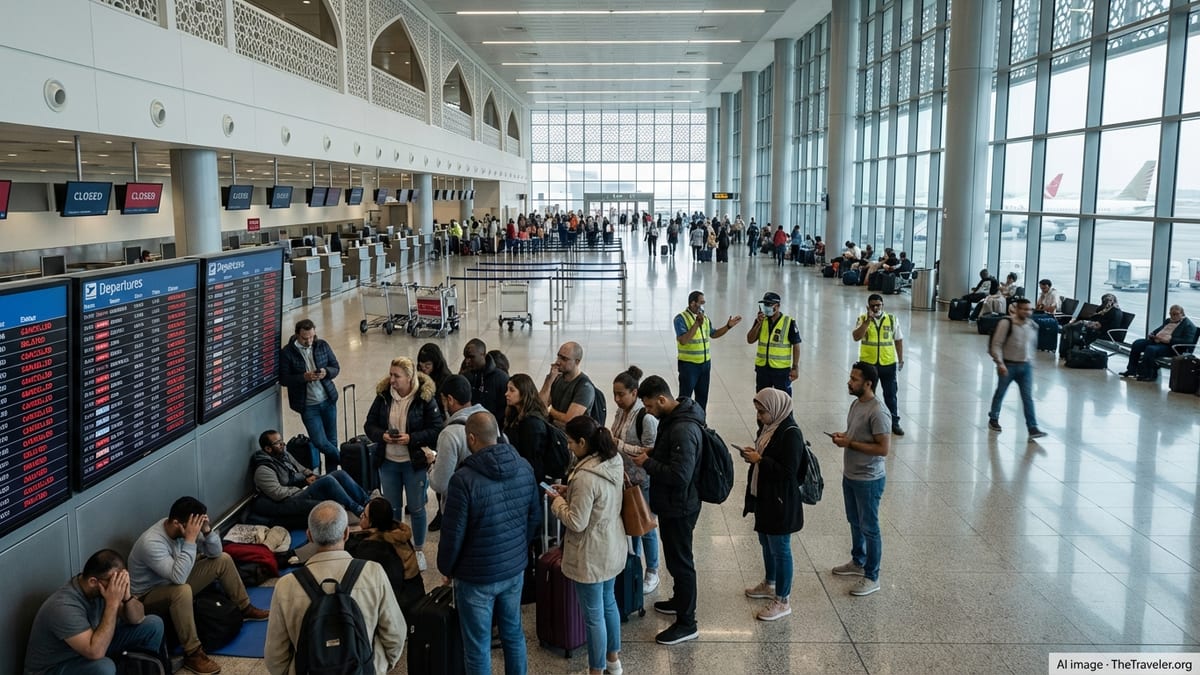
System collapse at César Manrique Airport
According to regional coverage from the Canary Islands, the disruption began on the morning of 4 May when the automated passport control system at César Manrique Airport in Lanzarote reportedly suffered a technical failure. The malfunction affected travelers departing for destinations outside the European Union, who were required to clear the under‑strain system before reaching their departure gates.
Reports indicate that a Ryanair service from Lanzarote to Edinburgh was among the worst affected. Local media and travel industry outlets describe a situation in which almost 70 ticketed passengers, many of them UK holidaymakers heading home, were still stuck in an unmoving passport queue as boarding closed and the aircraft departed without them.
Publicly available information suggests that the airport’s border control area struggled to process the volume of non EU passengers once the system faltered, creating a bottleneck between security and the departure gates. Travelers bound for countries such as the United Kingdom were reportedly unable to advance, even though they had arrived at the airport several hours before departure.
While the flight ultimately left on schedule, those held at passport control were left to seek alternative arrangements. Accounts shared with regional news outlets describe families and groups facing unexpected overnight stays, rebooking costs and uncertainty over compensation, highlighting the growing impact of systemic border control problems on individual journeys.
Link to EU’s new Entry/Exit System
The incident in Lanzarote comes as the European Union’s new Entry/Exit System, known as EES, is being rolled out across external border posts. The scheme uses biometric checks and automated kiosks to record the movements of non EU nationals entering and leaving the Schengen area, with the stated aims of tightening security and better tracking overstays.
However, travel and aviation media have documented repeated glitches, staffing gaps and long queues at several popular holiday airports since the start of the main rollout period in April. Reports from Spain, Portugal and France describe passengers facing waits of more than an hour at passport control, particularly on routes linking tourist destinations with the United Kingdom.
In Lanzarote, local reporting points to the failure of the automated system that underpins these checks as the trigger for Monday’s disruption. When the technology stalled, manual back up and staffing levels were reportedly insufficient to keep lines moving at the pace needed to protect departure times for outbound flights, including the Ryanair service to Edinburgh.
Travel industry commentary notes that EES is placing additional pressure on airports that already handle high volumes of leisure traffic from outside the EU. The combination of new biometric procedures, peak season demand and tight airline schedules is viewed as a vulnerable point where technical issues can quickly cascade into missed flights and stranded passengers.
Ryanair’s broader campaign on summer border disruption
The Lanzarote disruption has unfolded against a backdrop of increasingly vocal warnings from Ryanair about the readiness of European airports and border agencies for EES. In recent weeks, the low cost carrier has issued public statements urging governments in Spain, Portugal and France to temporarily suspend the system during the peak summer travel period.
In material released to European media, Ryanair has argued that passengers are already facing what it describes as hours long queues at passport control in several major holiday airports. The airline contends that system crashes and staffing shortages are leading to situations where travelers miss flights despite arriving at the airport in what was previously considered sufficient time.
Ryanair’s campaign has focused in particular on destinations heavily reliant on tourism, such as the Canary Islands and key coastal resorts in Spain and Portugal. The Lanzarote case, in which dozens of passengers missed a single Edinburgh flight due to a passport control issue, is being cited in travel sector commentary as an example of the type of disruption the carrier has been warning about.
National and regional authorities have so far maintained that EES is necessary to modernise border management, while acknowledging initial implementation challenges. Publicly available information suggests that some countries are exploring temporary workarounds, including increased staffing and limited use of manual processing, to ease pressure as the system beds in.
Impact on stranded passengers and consumer rights debate
The immediate impact for those left behind in Lanzarote has been practical and financial. Travelers unable to board the Ryanair flight reportedly had to queue at service desks, arrange new itineraries and, in some cases, secure last minute accommodation on the island. For families and groups at the tail end of their holidays, the disruption translated into additional days off work, rearranged school schedules and unexpected expenses.
The situation has also reignited debate over who bears responsibility when passengers miss flights because of airport or border control delays. Aviation consumer advocates note that European regulations distinguish between airline controlled disruptions and issues caused by air traffic management, weather or state authorities. When a delay stems from passport control problems, compensation frameworks are often less clear cut for affected travelers.
Commentary in travel law circles suggests that similar incidents elsewhere in Europe have led to disputes over refunds and rebooking fees. Some passengers have attempted to recover costs from airlines, while others have turned to travel insurance or card chargeback options. The Lanzarote episode is expected to add to the pressure on regulators and industry bodies to clarify rights in cases where passengers arrive at the airport in good time but are caught in bottlenecks before reaching the gate.
Consumer organisations are also using the case to underline longstanding advice that holidaymakers should allow extra time for border formalities when travelling between the United Kingdom and the European Union, particularly during holiday peaks. Yet the experience in Lanzarote suggests that, in the face of major system failures, even generous time buffers may not guarantee a smooth departure.
Canary Islands tourism on alert ahead of peak season
For the Canary Islands, the passport control failure at Lanzarote Airport is being seen locally as more than an isolated glitch. Tourism accounts for a significant share of the region’s economy, and British travellers represent one of its most important source markets. Incidents that leave planeloads of UK visitors stranded or delayed risk damaging the islands’ reputation for easy, low cost access.
Regional media in the Canaries have already highlighted concerns from tourism stakeholders about the cumulative effect of EES related disruption across multiple airports. Reports in recent days have drawn attention to long queues and intermittent system problems at other Spanish bases, including Malaga and several mainland coastal gateways that share similar passenger profiles with Lanzarote.
Travel sector analysts note that, while a single morning of disruption is unlikely to derail summer bookings, repeated stories of stranded passengers may influence traveller perceptions over time. Tour operators and airlines are therefore watching closely to see whether additional resources are deployed at key border points in the coming weeks, and whether technical reliability improves as staff become more familiar with the new system.
With the main summer season approaching, the Lanzarote incident is likely to intensify calls for closer coordination between airlines, airport operators and border authorities. How quickly and effectively those stakeholders respond may determine whether the experience of dozens of Ryanair passengers left in a passport queue on 4 May remains an isolated flashpoint or becomes a sign of wider challenges ahead.