

More news on this day
San Francisco International Airport experienced a difficult travel day on June 16 as operational data and flight-tracking services indicated more than 200 delayed departures and four cancellations, disrupting schedules for United Airlines, SkyWest Airlines and Air India passengers across domestic and international routes.
Get the latest news straight to your inbox!
Ground Delay Measures Ripple Through SFO Operations
Publicly available air traffic management advisories show that San Francisco International Airport was operating under a ground delay program on June 16, a tool used to meter traffic into busy airports when demand exceeds capacity. Such programs typically reduce the number of arrivals per hour, which can quickly cascade into departure delays as aircraft and crews fall out of position.
Data from federal aviation systems on June 16 pointed to a constrained operating environment around the Bay Area, with flow restrictions in effect and reduced arrival rates into San Francisco. While safety remained the priority, the combination of constrained airspace, low ceilings and periods of congestion meant airlines had to adjust schedules in real time, leading to extended gate holds and revised departure times for many services.
Ground delay programs generally translate into rolling knock-on effects across an airline’s network. With San Francisco serving as a major hub for United Airlines and an important station for SkyWest and Air India, the metering measures at SFO contributed to a significant buildup of delayed flights over the course of the afternoon and evening.
By late night, aggregated flight status information indicated roughly 210 delayed departures and four cancellations at SFO for June 16, placing the airport among the more disrupted major U.S. hubs for the day.
United and SkyWest Bear the Brunt of Schedule Disruptions
United Airlines, SFO’s largest carrier, experienced a high share of the delays as its hub-and-spoke model concentrated operations at the airport. Tracking data for June 16 showed a pattern of pushed-back departure times on United’s transcontinental and West Coast routes, including services to and from key markets such as Newark, Miami and other domestic gateways feeding into San Francisco.
Regional operator SkyWest Airlines, which flies under multiple major-carrier brands and supports United’s network at SFO, was also heavily exposed to the disruption. SkyWest-operated regional flights tend to operate with tight turn times; once the hub begins to run behind schedule, these shorter sectors can accumulate delays quickly as aircraft and crews rotate through multiple cities in a single day.
Historical consumer reports from the U.S. Department of Transportation show that late-arriving aircraft and congestion in the national aviation system are among the most common causes of delays for network carriers and their regional partners. Against that backdrop, the June 16 pattern at SFO, with a concentrated spike in late departures, fits a familiar profile of hub-level disruption amplified by complex scheduling.
The four cancellations recorded at SFO on June 16 were spread across carriers but contributed to additional strain as affected travelers sought reaccommodation on already crowded flights, further tightening seat availability on remaining departures.
Air India’s Long-Haul Passengers Face Added Uncertainty
Air India, which links San Francisco with major Indian cities through long-haul services, was among the international carriers affected by the June 16 irregular operations. Long-haul flights are particularly sensitive to departure timing because small shifts can complicate crew duty limits, onward connections and airport slot times at far-end destinations.
For travelers on routes between San Francisco and India, any delay can translate into extended overnight waits, missed domestic connections within India or altered ground transport plans. With limited daily frequencies on these ultra-long-haul services, same-day alternatives are often scarce, forcing some passengers into next-day departures when flights are fully booked.
Operational data for June 16 indicated that Air India’s schedules at SFO were not immune to the broader congestion picture, with delayed departures feeding into arrival banks at overseas hubs. While published information did not indicate widespread cancellations for the carrier that day, even moderate delays can have outsized consequences for long-haul itineraries spanning multiple time zones.
The uneven impact on international passengers highlights how hub disruptions can disproportionately affect travelers on once-a-day or less frequent routes compared with those on high-frequency domestic corridors offering more backup options.
Passenger Experience Strained by Rolling Delays
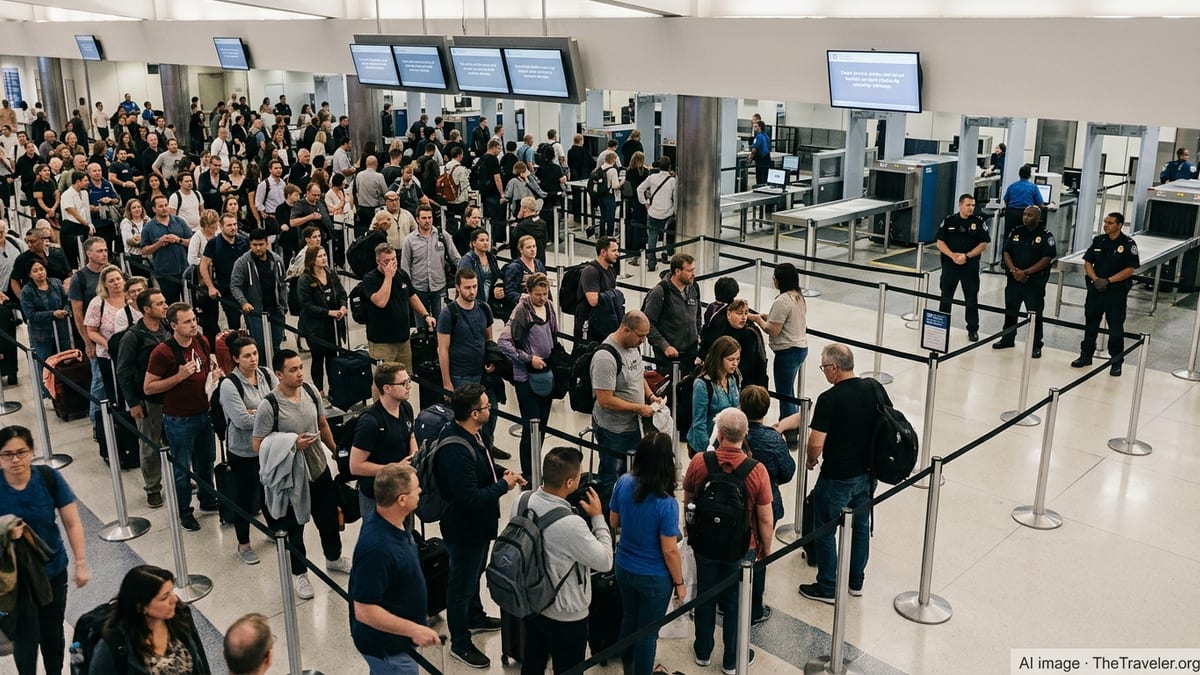
On the ground at SFO, the high volume of delayed flights translated into crowded gate areas, rebookings and extended waits. Publicly available airport departure boards and airline status tools throughout June 16 showed clusters of flights departing significantly behind schedule, particularly in the evening hours when earlier delays had propagated through the system.
Travelers relying on connecting itineraries into or out of San Francisco were especially vulnerable. When an inbound flight arrived late into SFO, passengers often faced tight or missed connections, prompting airlines to adjust routings or provide overnight arrangements where necessary. In hub operations like United’s, one late aircraft can affect hundreds of passengers across multiple onward segments.
Published consumer guidance from transportation authorities continues to emphasize the importance of buffer time for connections at congested hubs and the use of airline mobile apps and airport displays for real-time updates. The June 16 disruptions at SFO underscored that advice, as schedules printed earlier in the day often bore little resemblance to actual departure times by evening.
Despite the operational challenges, by the early hours of June 17 many of the delayed flights had departed, and air traffic patterns around SFO began to return closer to planned levels as the ground delay program wound down and overnight schedules took effect.
Broader Context for Bay Area Air Travel Reliability
The June 16 disruption at San Francisco fits into a broader pattern of variability in U.S. air travel performance. Federal statistics for recent years show that carriers generally complete more than three quarters of their flights on time, but peaks in weather, airspace congestion and staffing limitations can push daily delay totals at major hubs into the hundreds.
SFO’s coastal location and marine weather conditions regularly contribute to visibility and ceiling issues, which can trigger reduced arrival rates even on days without severe storms. Combined with its role as a primary West Coast gateway for transpacific and transcontinental flights, the airport is particularly exposed when constraints arise in the national airspace system.
United, SkyWest and Air India all play significant roles in connecting the Bay Area to the rest of the United States and key international markets. When disruption strikes at SFO, its effects ripple well beyond Northern California, affecting business travelers, leisure passengers and visiting friends and relatives traffic across multiple continents.
While June 16 will likely register as a single difficult operating day in annual statistics, for the thousands of travelers caught up in the 210 delays and four cancellations, it served as a sharp reminder of how quickly conditions at a major hub can shift and how reliant modern air travel is on finely tuned, interconnected schedules.