


More news on this day
Thousands of air passengers across Europe are facing severe disruption after a fresh wave of delays and cancellations rippled through major hubs in the United Kingdom, Netherlands, Spain, Germany and other countries, with more than 1,130 flights delayed and around 550 services cancelled, affecting carriers including Lufthansa, KLM, Wizz Air and several others.
Get the latest news straight to your inbox!
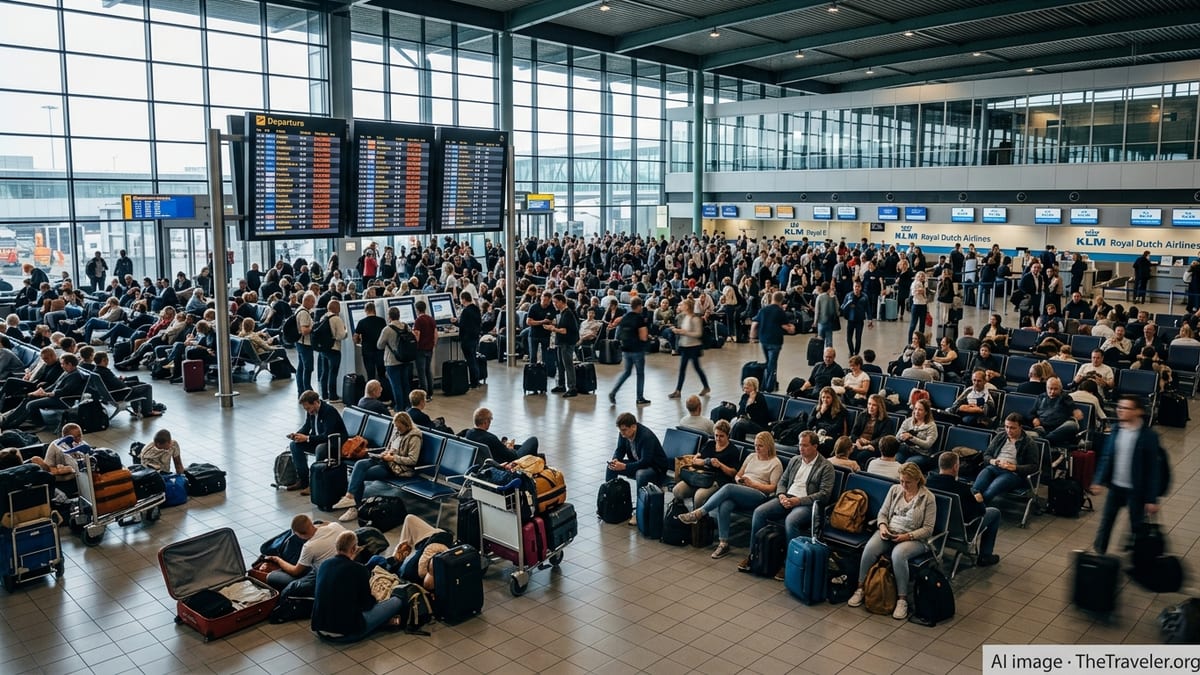
Major Hubs From Munich To Barcelona Buckle Under Pressure
Operational data and flight-tracking analyses indicate that disruption has concentrated around some of Europe’s busiest transfer and leisure gateways, including Munich, Amsterdam Schiphol and Barcelona El Prat. These hubs handle large volumes of connecting traffic, so any disturbance quickly cascades across wider networks and leaves passengers stranded far from their final destinations.
Reports from aviation tracking platforms show that recent storms sweeping in from the Atlantic, combined with staffing constraints at air traffic control centers, have triggered rolling delays that build through the day. On hard‑hit days this month, hundreds of services arriving to and departing from Germany and the Netherlands have departed late or not at all, with knock‑on effects for routes linking the UK, Spain and central and eastern Europe.
In Munich, one of Lufthansa’s primary hubs, earlier operational problems in March already led to more than 200 cancellations and over 800 delayed flights in a single day, illustrating how vulnerable the network remains to weather and staffing shocks. Disruption at Munich tends to reverberate into neighboring airports such as Frankfurt and Vienna as airlines attempt to reposition aircraft, crew and passengers.
Barcelona has also seen repeated waves of disruption during the current travel season. Previous power and infrastructure issues across the Iberian Peninsula have shown how quickly cancellations can mount at Spanish airports, and the latest operational pressures are again hitting short‑haul schedules serving UK and northern European cities at the start and end of busy holiday periods.
Lufthansa, KLM, Wizz Air And Others Face Mounting Disruptions
Publicly available information on airline operations shows that Lufthansa has been among the carriers hardest hit when German hubs seize up, particularly when industrial action overlaps with stormy weather. Earlier this spring, strikes and staffing shortages combined with poor conditions to force the cancellation of hundreds of flights and delay many more across Frankfurt and Munich, contributing significantly to the latest totals of more than 1,130 delayed and 550 cancelled services.
KLM has simultaneously been adjusting its European schedule from Amsterdam. The Dutch carrier recently confirmed cuts of around 160 flights over the coming month due to higher fuel costs, while separate weather‑related disruption at Schiphol in January and subsequent operational strains have led to further delays and cancellations affecting routes between the Netherlands, the UK and Spain.
Low‑cost operator Wizz Air has also been drawn into the turbulence, particularly on leisure routes linking central and eastern Europe with Spanish beach destinations and secondary UK airports. Network‑wide disruption means that even airlines not directly responsible for initial delays can struggle to find spare aircraft and crew once rotation plans unravel, creating long queues at customer service desks and leaving travellers waiting hours or days for rebooking options.
Other major carriers, including British Airways, easyJet and Air France, have reported elevated numbers of delayed flights on affected days as congestion at key European hubs distorts carefully timed schedules. With aircraft and crew out of position, relatively minor timetable changes in one country can translate into missed connections and overnight stays for passengers elsewhere in the network.
Weather, Strikes And Operational Strain Drive Flight Chaos
Analysts point to a combination of factors behind the latest spike in delayed and cancelled flights. A series of vigorous Atlantic weather systems has recently pushed across western and northern Europe, bringing strong winds, heavy rain and low cloud to the UK, the Netherlands and parts of Spain. Such conditions force air traffic controllers to increase spacing between aircraft and may temporarily close individual runways, sharply reducing capacity at already busy airports.
At the same time, several national aviation sectors remain locked in disputes over pay and working conditions. In Germany and Italy, strike action by airline and airport staff earlier in April led to the removal of hundreds of flights from schedules in a matter of days, and the after‑effects are still visible as carriers work through the backlog of disrupted aircraft rotations and crew duty hours.
Industry reports also highlight persistent staffing challenges in ground handling, security and air traffic control following the rapid rebound in demand after the pandemic. Many airports and service providers scaled back during the downturn and have struggled to recruit and train enough staff to handle today’s volumes. When severe weather or industrial action hits, these tighter staffing margins mean recovery takes longer and more passengers are left stranded.
Rising costs are adding another layer of strain. Elevated jet fuel prices linked to geopolitical tensions have prompted some airlines, including KLM, to pare back marginal routes within Europe. While these cancellations are planned rather than sudden, they reduce the flexibility carriers have to protect passengers when irregular operations elsewhere in the network disrupt their journeys.
Thousands Of Travellers Left Stranded Across The Continent
The cumulative impact of these disruptions is being felt most directly by passengers stuck in terminals across Europe. Travel rights organisations and consumer groups report that thousands of people have been left sleeping in airports or forced to arrange last‑minute accommodation in nearby hotels as they wait for alternative flights. Social media posts from travellers at hubs such as Amsterdam, Munich and Barcelona describe long queues at airline service desks and difficulty reaching call centers.
Missed connections are proving particularly painful for long‑haul passengers who rely on European hubs for onward travel to North America, Africa and Asia. When an initial short‑haul sector from the UK or Spain runs late or is cancelled, there may be limited remaining capacity on later flights the same day, forcing travellers to wait until the following day or reroute through different cities altogether.
Families returning from school holidays and city breaks, as well as business travellers heading to time‑sensitive meetings, are among those affected. With Easter and early spring breaks driving higher demand on many intra‑European routes, full flights leave airlines with fewer empty seats that could otherwise be used to re‑accommodate disrupted passengers at short notice.
Officials and industry bodies have previously warned that Europe’s air travel system remains fragile during peak periods, and the current pattern of rolling delays and cancellations appears to confirm that warning. Even without a single dramatic event, the accumulation of weather incidents, strikes and tight staffing has proven enough to strand substantial numbers of travellers in multiple countries at once.
What The Disruption Means For Upcoming Spring And Summer Travel
With the main summer holiday season still ahead, the latest episode of mass disruption is raising questions about how resilient European aviation will be in the coming months. Analysts note that passenger numbers are approaching or exceeding pre‑pandemic levels on many leisure routes, while infrastructure and staffing have not always kept pace with this recovery.
Travel commentators suggest that passengers planning trips in late spring and summer should prepare for the possibility of further irregular operations, particularly on itineraries that rely on tight connections at congested hubs. Longer layovers, early‑morning departures and flexible return dates may help reduce the risk of missed onward flights when schedules come under pressure.
Publicly available guidance on traveller rights under EU and UK regulations indicates that passengers whose flights are significantly delayed or cancelled may be entitled to assistance, rerouting or compensation in certain circumstances. However, access to that support can be slow when thousands of people are affected at once and airline staff are dealing with back‑to‑back disruption days.
For now, the wave of more than 1,130 delayed and roughly 550 cancelled flights serves as another reminder that European air travel remains vulnerable to a mix of severe weather, industrial tension and high operating costs. As airlines including Lufthansa, KLM, Wizz Air and their competitors adjust schedules and attempt to rebuild resilience, travellers are likely to face an unsettled start to the peak 2026 travel season.