


More news on this day
Severe flight disruptions involving an estimated 2,693 services on Air China and China Eastern have thrown travel across China’s busiest air corridor into turmoil, snarling operations at major hubs in Beijing, Shanghai and Guangzhou and leaving tens of thousands of passengers facing missed connections and overnight delays.
Get the latest news straight to your inbox!
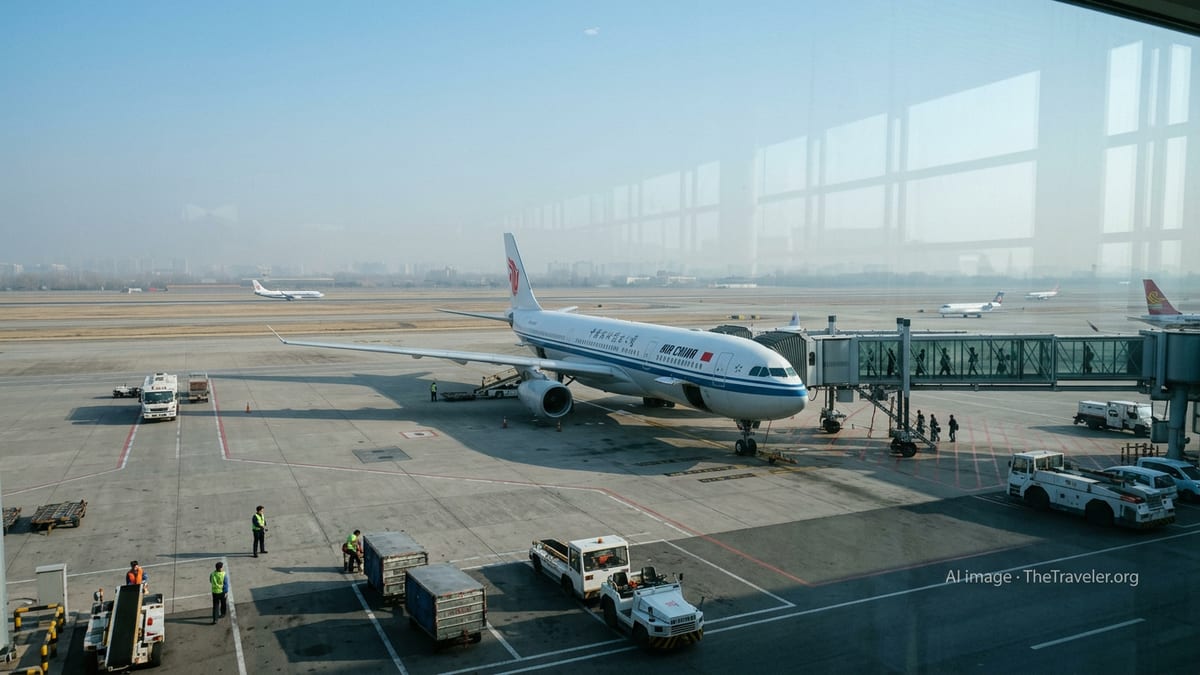
Major Hubs Struggle Under Wave of Delays and Cancellations
Publicly available aviation data and operational reports indicate that scheduled services linking Beijing, Shanghai and Guangzhou have been hit by an exceptional spike in delays, rolling rescheduling and cancellations. The disruptions are centered on trunk routes that normally rank among China’s most heavily trafficked, including Beijing to Shanghai, Beijing to Guangzhou and Shanghai to Guangzhou.
Real time tracking platforms show clusters of delayed or recently cancelled flights on Air China and China Eastern across these city pairs, with some services removed from near term schedules and others operating with extended ground holds. Flight history records for June highlight repeated irregular operations, including same day cancellations and late night arrivals that have rippled into subsequent rotations.
Operational databases also show that a number of flights between Beijing and Guangzhou, as well as Beijing and Chengdu that feed into Guangzhou and Shanghai connections, were cancelled or unscheduled on key days of the disruption period. These knock on effects have added pressure to already congested departure banks at peak evening and early morning waves in all three hubs.
While precise tallies vary by source and cut off time, aggregated figures from schedule trackers and disruption monitors point to roughly 2,693 flights on Air China and China Eastern being affected in recent days across the three metropolitan areas, either through outright cancellation, significant delay or re timing.
Weather, Congested Skies and Network Complexity Combine
Several overlapping factors appear to be driving the severe travel chaos. Recent heavy rainfall and thunderstorms across southern China, including in Guangdong province, have led to temporary airport closures, runway inspections and tightened air traffic control procedures. These measures have in turn slowed departures and arrivals at Guangzhou Baiyun and at secondary airports that feed traffic into the main coastal hubs.
At the same time, China’s busiest air corridors are operating close to capacity at the height of the summer travel build up. Beijing Capital, Beijing Daxing, Shanghai Pudong, Shanghai Hongqiao and Guangzhou Baiyun collectively handle thousands of daily movements, and any weather or operational constraint can quickly cascade across tightly timed slot sequences.
Network structures at Air China and China Eastern further magnify the impact. Both carriers run complex banks of flights through their primary hubs in Beijing and Shanghai, with narrow turnaround windows designed to maximize aircraft utilization and connect domestic routes with long haul services to Europe, North America and Australia. A disruption on a single domestic leg can therefore strand aircraft and crew away from their planned positions, forcing schedule reductions and last minute aircraft swaps across multiple routes.
Industry analyses published in recent months have also highlighted lingering staffing and resource constraints in parts of the Asia Pacific aviation system, particularly in ground handling and maintenance support. These constraints, while less visible than headline weather events, can contribute to longer recovery times once a major disruption wave begins.
Passengers Face Long Queues, Missed Connections and Limited Options
The operational turmoil has translated into long queues at check in, security and rebooking counters across the affected airports. Social media posts and traveler forums describe crowded departure halls, with passengers waiting hours to obtain updated itineraries or hotel vouchers after their flights were delayed late into the night or cancelled outright.
Travelers connecting through Beijing, Shanghai or Guangzhou on multi segment itineraries have been particularly hard hit. Missed onward connections to secondary Chinese cities and international destinations have forced many passengers onto next day services, with some reporting that alternative flights on their original carrier or alliance partners were fully booked.
Reports indicate that demand for last minute seats on competing airlines has surged, pushing up fares and limiting availability on near term departures. Some travelers attempting to switch from affected Air China and China Eastern flights to other regional or international carriers have encountered rapidly increasing prices and payment bottlenecks on online booking platforms.
Accommodation around major airports is also under pressure, with popular transit hotels and budget properties near terminals in Beijing, Shanghai and Guangzhou reporting high occupancy from stranded passengers. For travelers without comprehensive travel insurance, the combination of added hotel nights, meals and ground transport is significantly increasing the overall cost of their journeys.
Knock On Effects for Domestic and International Networks
The scale of the disruption is reverberating beyond the Beijing Shanghai Guangzhou triangle into wider domestic and international networks. Aircraft and crew displaced by delays or cancellations on trunk routes are arriving late into secondary cities, resulting in additional schedule adjustments on feeder flights that rely on these resources.
International services are feeling the strain as well. Long haul flights to Europe, the Middle East and North America typically depend on coordinated domestic arrivals from across China’s interior. When those feeder flights are delayed or cancelled, airlines must either hold departing long haul flights, rebook connecting passengers onto later services, or in some cases operate with empty seats despite strong underlying demand.
Publicly available booking and route data for Air China and China Eastern show a dense web of domestic routes funneling into Beijing and Shanghai from cities such as Chengdu, Kunming, Xi’an and Wuhan. Disruptions along these spokes, particularly at times of strong seasonal demand, can undermine the reliability of long haul departures and increase the risk of missed onward connections for international travelers.
Industry observers note that the cumulative effect of repeated disruption episodes can also erode traveler confidence over time, particularly among passengers planning complex multi stop itineraries or long haul journeys that rely on tight connection windows. Some consumers are already signalling a willingness to pay more for itineraries perceived as less vulnerable to cascading delays.
What Travelers Can Do If Their Flight Is Affected
For passengers currently booked on Air China or China Eastern services touching Beijing, Shanghai or Guangzhou, travel specialists recommend monitoring flight status frequently in the days and hours before departure. Flight numbers on key trunk routes may appear in schedules but subsequently be retimed or removed as airlines continue to adjust their operations.
Most major Chinese carriers offer rebooking and refund options when flights are significantly delayed or cancelled. Passengers are encouraged to check the latest conditions on their airline’s official channels and to keep documentation of any changes, as policies can differ depending on whether the cause is categorized as adverse weather, air traffic control restrictions or other operational factors.
Travel insurance with robust trip interruption and delay coverage can help offset out of pocket costs for hotels, meals and alternative transport when plans unravel. Policyholders should review claim requirements carefully, including time thresholds for eligibility and the types of proof required for reimbursement.
Given the scale of the current disruption wave and the possibility of further weather related constraints as the summer season progresses, some travel planners suggest allowing longer connection times through China’s major hubs and considering earlier departures on the day of important events, such as business meetings or cruise departures, to build in additional buffer.