


More news on this day
A new accident on Mexico’s Interoceanic Railroad in southern Oaxaca, occurring just months after a deadly passenger derailment, is raising renewed concerns over safety on the high-profile corridor linking the Pacific and Gulf coasts.
Get the latest news straight to your inbox!
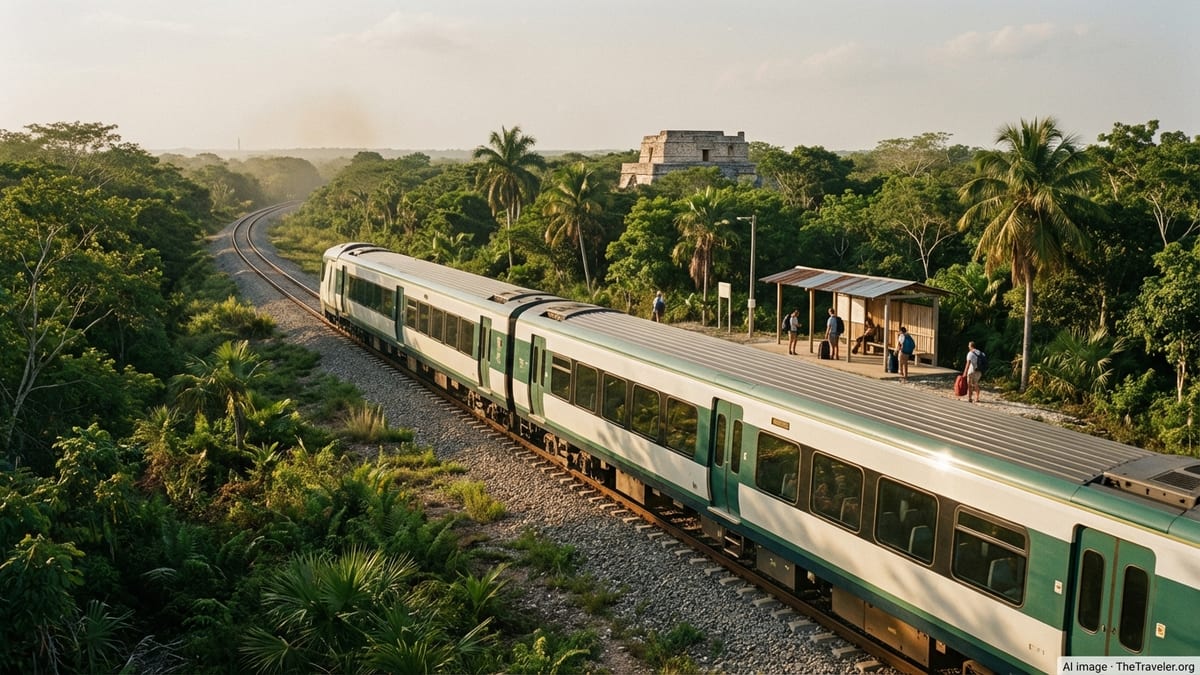
Freight wagon derails near site of 2025 disaster
Recent reports from Oaxaca describe a freight wagon of the Interoceanic Railroad leaving the tracks on the night of 14 July 2026 along the Line Z corridor in the Isthmus of Tehuantepec, in the municipality of Asunción Ixtaltepec. Early coverage from national outlets indicates that the incident involved a cargo consist rather than a passenger service, and that the derailment was limited to a single wagon.
According to publicly available information, the mishap occurred in the same general area where a passenger train crashed in late December 2025, a stretch of line that has become a symbolic focal point for debate over the ambitious interoceanic rail project. Initial accounts suggest that the wagon partially left the rails but did not topple completely, allowing crews to stabilize the consist and begin clearance work within hours.
Government-linked statements and local media reports converge on the point that there were no injuries or fatalities in the latest accident and that the event was contained on railway property. However, images and descriptions circulating in Mexican media underscore that the derailment again affected Line Z, the very link that has been under reconstruction and heightened scrutiny since the fatal crash at the end of 2025.
Coverage from business and national newspapers notes that the line is currently handling freight services under the supervision of the Mexican Navy, with passenger operations on this section still suspended. The July 2026 derailment therefore primarily disrupted cargo movements along the corridor, while also adding to a record of incidents that is drawing wider attention from the traveling public and tourism sector.
Deadly December 2025 derailment still casts a long shadow
The new accident comes less than a year after a catastrophic derailment on 28 December 2025, when an Interoceanic passenger service on Line Z left the tracks in Oaxaca, killing at least 13 to 14 people and injuring close to 100, according to aggregated figures from Mexican and international coverage. That crash, which occurred near the community of Nizanda, immediately halted tourist and regional passenger services along the Isthmus corridor.
Subsequent government communiqués and press reports indicate that federal investigators later attributed the 2025 derailment to excessive speed on a curve with a reduced limit, placing the focus on operational practices and adherence to safety protocols. The finding deepened public debate over whether the rapid rollout of new services along rehabilitated tracks had outpaced investment in training, signaling and risk management.
Mexican government statements published earlier in 2026 detailed a compensation and reparations program for victims and their families, including financial support and follow-up assistance. Those updates, reported widely by national media, were framed as part of a broader response that also includes infrastructure checks, technical reviews and a staged restart of service.
For travelers, the December 2025 crash transformed perceptions of what had been marketed as a scenic and strategic link between coasts. Travel features that once highlighted views over tropical lowlands and access to lesser-known towns now routinely reference the derailment and the continuing service suspension on key stretches, reminding would-be passengers that the corridor remains a work in progress.
Passenger services paused as authorities recalibrate timeline
Since the fatal crash, published information from federal agencies and national newspapers shows that passenger services on Line Z between Coatzacoalcos and Salina Cruz have been largely suspended, with alternative road transport offered on some tourist itineraries. Freight trains have continued to use parts of the route, but often under restricted speeds and intensified monitoring, creating a patchwork operating pattern.
Recent coverage has cited federal planning documents and public remarks from senior officials indicating that regular passenger operations on the isthmus line may not fully resume until early 2027. Reports highlight that the restart is contingent on track improvements, modifications to the route in specific sections and the installation or upgrading of signaling and control systems.
In the meantime, tourism promoters along the Gulf and Pacific coasts are adjusting. Some tour operators now emphasize combined itineraries that use buses or domestic flights to bridge the gap left by the interrupted rail link. Local business groups in Oaxaca and Veracruz, quoted in regional outlets, have expressed concern that each additional incident, even non-fatal ones, could erode traveler confidence in eventually returning to the train.
At the same time, infrastructure and transport specialists contributing to Mexican media analyses argue that rail projects of this scale often experience technical and operational setbacks during early years. From this perspective, the key test for the Interoceanic Railroad is whether each incident leads to measurable improvements in standards, training and oversight rather than becoming part of a recurring pattern.
Flagship project under renewed scrutiny from public and press
The Interoceanic Railroad forms the backbone of the Interoceanic Corridor of the Isthmus of Tehuantepec, a flagship infrastructure initiative designed to create a land bridge between the Pacific port of Salina Cruz and the Gulf port of Coatzacoalcos. Positioned as a strategic alternative to longstanding maritime routes, the corridor has also been promoted domestically as a catalyst for tourism and regional development in Oaxaca, Veracruz and neighboring states.
Since the December 2025 derailment, however, media coverage inside and outside Mexico has increasingly framed the project through the lens of safety and risk management. National newspapers, business outlets and international broadcasters alike have revisited earlier minor incidents on the line, compiling timelines that suggest a pattern of operational challenges in 2025 even before the fatal crash.
The latest freight derailment has amplified that narrative. News stories and opinion columns now commonly reference “another” or “new” accident on the Interoceanic line, implicitly tying the July 2026 incident to the unresolved questions left by last year’s disaster. Commentators have focused in particular on whether the combination of older rights-of-way, tropical weather conditions and intensive construction activity has created vulnerabilities that require more robust engineering responses.
For Mexico’s travel and tourism sector, the reputational stakes are significant. The Interoceanic route had been envisioned as a showpiece for rail-based tourism, complementing other high-profile projects in the country’s southeast. Repeated accidents risk shifting that narrative toward one centered on disruption and caution rather than ease of movement between coasts.
Implications for travelers and the future of rail tourism in southern Mexico
In practical terms, the immediate impact of the July 2026 accident on travelers is limited, given that scheduled passenger services on the affected section were already suspended in the wake of the 2025 derailment. Visitors planning overland trips across the Isthmus are still being advised by tour providers and travel guides to confirm whether segments are covered by buses or by rail, and to expect changes as reconstruction progresses.
Nevertheless, the perception of repeated incidents can weigh heavily on traveler sentiment. Industry observers writing in Mexican travel and business media suggest that even once trains return to the line, rebuilding confidence will likely require transparent communication about safety upgrades, visible investment in modern rolling stock and signaling, and the establishment of clear operational limits adapted to the region’s geography.
For domestic tourism, the Interoceanic Railroad remains an attractive concept: a single journey linking two oceans, with access to cultural sites, nature reserves and coastal towns. The question raised again by the recent derailment is not whether such a route has potential, but how quickly and convincingly operators can demonstrate that lessons from past accidents have been absorbed into daily practice.
Until that happens, the Interoceanic route will occupy an ambivalent place in Mexico’s travel landscape, symbolizing both the promise of expanded rail tourism and the risks that emerge when high-profile projects move from blueprint to reality amid intense public scrutiny.