


More news on this day
Air travel across Australia and New Zealand is facing a new wave of disruption as a mix of severe weather, fuel constraints and staffing pressures triggers widespread cancellations and delays for Qantas, Jetstar, Virgin Australia, Air New Zealand, Sounds Air and other carriers across Auckland, Wellington, Christchurch, Melbourne, Sydney and Brisbane.
Get the latest news straight to your inbox!
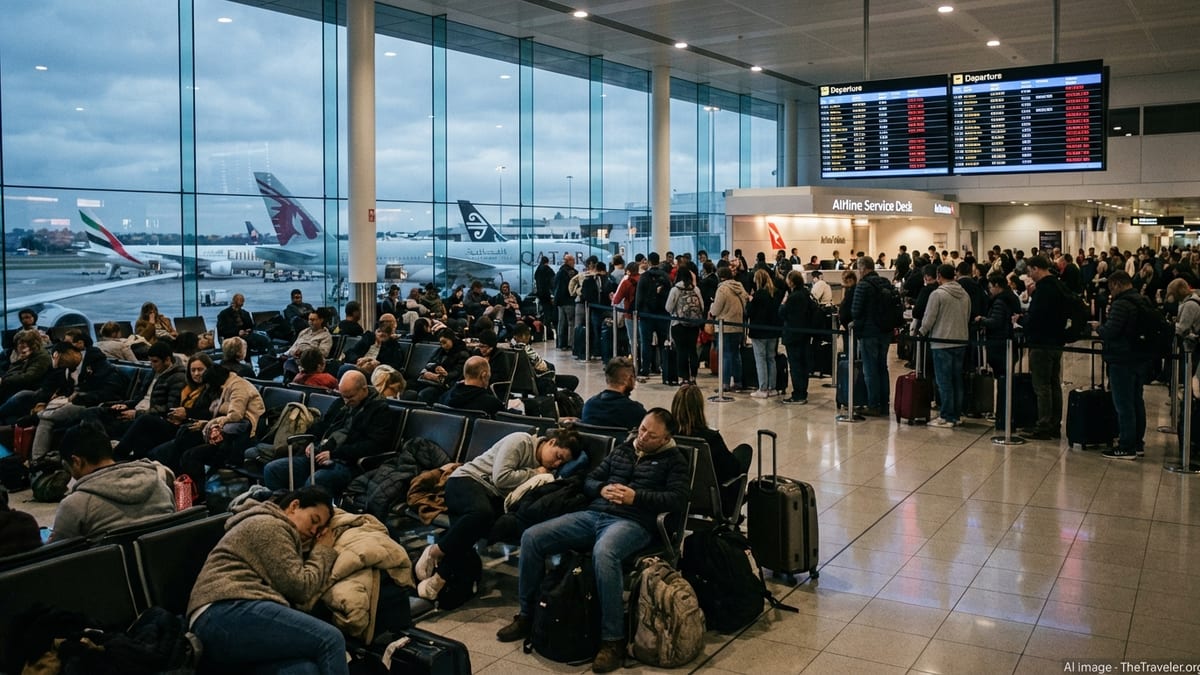
Stormy weather and operational strains hit key gateways
Recent storm systems sweeping across New Zealand’s lower North Island have placed particular pressure on Wellington, where strong winds and rough seas have prompted repeated cancellations and diversions in recent weeks. Publicly available reports describe flights being grounded alongside ferry services as gusts and swell made operations increasingly difficult, disrupting links between the capital and other centres.
Air New Zealand has warned that high winds into and out of Wellington can force last minute changes to schedules, while regional operators such as Sounds Air are especially exposed when conditions deteriorate on short-haul routes. Smaller aircraft and tight turnarounds leave little margin when weather windows close, contributing to clusters of cancellations through the day when a system moves across the Cook Strait region.
In Auckland and Christchurch, heavy rain bands and low cloud have also contributed to delays and occasional cancellations, particularly for early morning and late evening departures. As the main international gateway, Auckland’s disruptions ripple across trans Tasman services to Sydney, Melbourne and Brisbane, affecting both Australian and New Zealand carriers that rely on tight connections through the hub.
Across the Tasman, Sydney, Melbourne and Brisbane are experiencing their own congestion as thunderstorms and low visibility conditions periodically slow traffic flows. When weather issues coincide on both sides of the Tasman, airlines have few options to reposition aircraft, amplifying the impact on passengers.
Fuel costs, maintenance and staffing tighten capacity
Beyond immediate weather impacts, the flight schedules linking Australia and New Zealand are also being reshaped by longer running operational and economic pressures. Earlier this year, Jetstar announced reductions on some services between Auckland and major Australian cities, citing higher jet fuel prices and the need to rationalise capacity on selected routes. Public coverage indicated that selected flights between Auckland and Sydney, Auckland and Brisbane, and several domestic New Zealand sectors would be trimmed, reducing the buffer available when disruptions occur.
Air New Zealand has separately highlighted ongoing fleet maintenance and engine issues that constrain its ability to add extra flights at short notice. Local reporting in New Zealand described plans to cancel hundreds of services over several months as the airline cycles aircraft through required work and adapts to global supply challenges, affecting an estimated tens of thousands of passengers. While most of these changes are planned in advance, any additional unplanned cancellations can quickly overwhelm rebooking options during busy periods.
In Australia, scrutiny of on time performance and cancellation rates has intensified as regulators and consumer groups track reliability data for the major domestic carriers. Official statistics show that cancellation rates fluctuated over the past year across Qantas, Jetstar and Virgin Australia, with individual months where some routes recorded noticeably higher levels of disruption. When these patterns intersect with busy school holiday or long weekend periods, even a modest percentage of cancelled flights can translate into thousands of stranded passengers at major airports.
Smaller regional airlines, including Sounds Air in New Zealand and various Australian operators flying under larger brands, face similar constraints in fleet size and staffing. When a single aircraft is out of service or a crew becomes unavailable, there are often limited backup options, leading to cancellations on routes that may have only one or two daily services.
Trans Tasman links under pressure as demand stays strong
The network connecting New Zealand’s main centres with Australia’s east coast has largely recovered in terms of demand, with routes such as Auckland to Brisbane and Auckland to Sydney ranking among the busiest international corridors for airports like Brisbane. Airlines including Qantas, Jetstar, Virgin Australia and Air New Zealand continue to compete strongly on these sectors, while also feeding passengers onto long haul connections through Sydney and Melbourne.
Scheduling data published by route-tracking platforms indicates that multiple daily services operate on key city pairs such as Sydney to Auckland and Wellington to Sydney, shared between Qantas, Jetstar and Air New Zealand. However, with fleets and crews still finely balanced after years of pandemic-related upheaval, the system remains sensitive to disruption. When one carrier trims frequencies because of fuel costs or maintenance, remaining services on all airlines can quickly become heavily booked, limiting options for reaccommodation when irregular operations occur.
Seasonal peaks further complicate planning. Ski season demand into Queenstown and winter escapes from New Zealand to warmer Australian cities both draw heavily on the same pool of aircraft used for business travel between Auckland, Wellington, Christchurch, Sydney, Melbourne and Brisbane. If aircraft are delayed by weather at a leisure destination, the knock-on effect may be felt on peak business flights the following morning.
Recent route announcements and resumptions, including the return of some long haul and partnership services involving Virgin Australia, suggest airlines are still actively reshaping their networks. That leaves scheduling teams threading a narrow path between maximising revenue and maintaining resilience when storms or technical issues hit.
Passenger experiences show uneven impact across carriers
Travellers across Australia and New Zealand have taken to social platforms and discussion forums in recent months to describe a patchwork of experiences with delays, cancellations and rebooking processes. Posts discussing Jetstar, Qantas, Virgin Australia and Air New Zealand report everything from relatively smooth handling of disrupted journeys to long queues, late-night cancellations and limited information at airports.
In New Zealand, some passengers recount domestic services between Christchurch, Wellington and Auckland being cancelled only a few hours before departure, occasionally attributed to weather even when other carriers continued flying on similar routes. Others note that airlines can differ in their approach, with some more likely to cancel early to protect on time statistics and others more inclined to delay and attempt to operate later in the day.
Australian travellers describe repeated disruptions on busy trunk routes such as Melbourne to Brisbane or Brisbane to Sydney, with evening flights reportedly vulnerable when schedules are already tight. In several accounts, travellers compare options among Qantas, Jetstar and Virgin Australia when faced with a same-day cancellation, weighing direct alternatives against overnight stays and significant fare differences on remaining seats.
Regional passengers, including those relying on Sounds Air or connections to smaller New Zealand centres, often have fewer alternatives when a flight is cancelled. With limited same-day capacity, travellers may be forced to wait for the next available departure on the same airline or undertake lengthy ground journeys to reach larger hubs where more options exist.
What travellers can do as disruption continues
With weather systems likely to continue affecting Wellington and other coastal airports through the Southern Hemisphere winter, and airlines still fine-tuning their fleets and schedules, further disruption across Australia and New Zealand is possible in the coming weeks. Travel industry analysts note that the combination of strong demand and constrained capacity means even isolated problems can cascade quickly through the network.
Consumer groups and aviation commentators commonly recommend that passengers build additional time into itineraries, particularly when connecting between domestic and international flights in hubs such as Auckland, Sydney or Melbourne. Booking earlier departures in the day, where possible, and monitoring airline apps or airport information screens closely can help travellers respond faster when schedules change.
Publicly available airline policies show that most major carriers in Australia and New Zealand provide options to rebook or obtain refunds when a flight is cancelled, although entitlements vary by fare type and reason for disruption. For weather-related events or air traffic control restrictions, compensation beyond a new flight is often limited, while cancellations attributed to factors within an airline’s control may open the way to additional support.
As passengers navigate another unsettled period for trans Tasman and domestic travel, the pattern emerging from recent weeks points to an industry still working to rebuild resilience. With Qantas, Jetstar, Virgin Australia, Air New Zealand, Sounds Air and other operators all under pressure, travellers across Auckland, Wellington, Christchurch, Melbourne, Sydney, Brisbane and smaller centres are likely to remain alert to the possibility of last minute changes every time they head to the airport.