


More news on this day
Rail service through Fairfield, Connecticut, was disrupted after a person died by electrocution on the roof of a Metro-North train at the town’s downtown station, according to multiple regional news reports.
Get the latest news straight to your inbox!
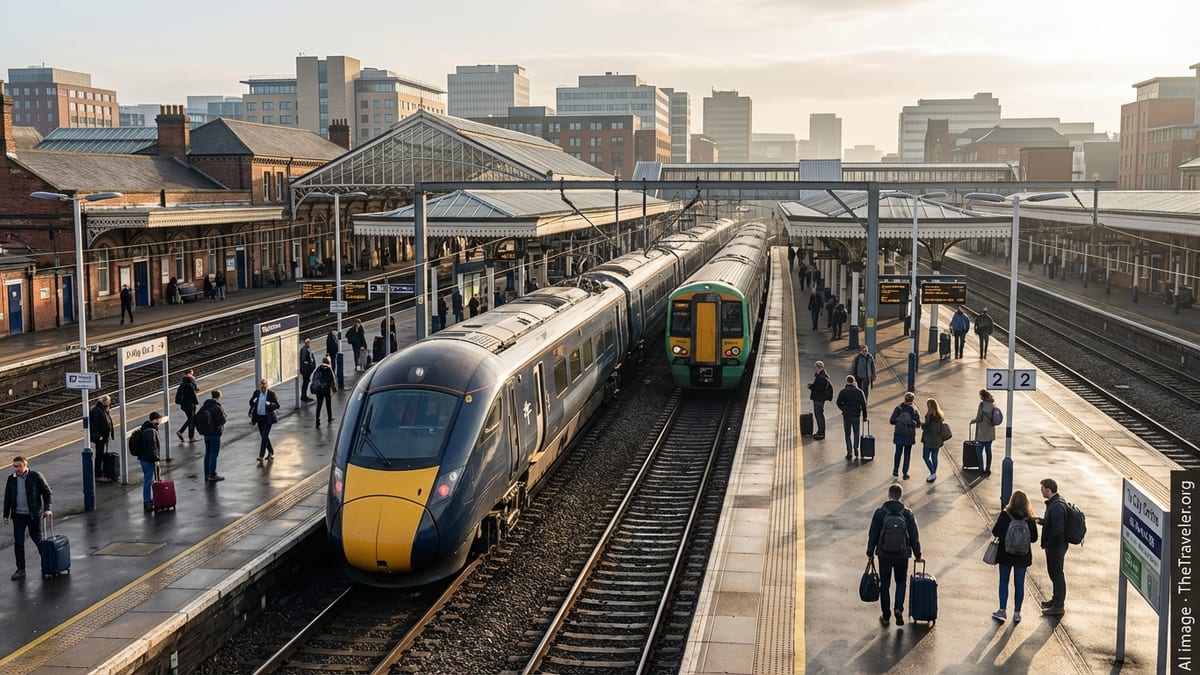
Incident at Fairfield’s downtown rail hub
Publicly available information from regional outlets indicates that emergency crews were called to the area of the Fairfield downtown station on the New Haven Line after reports that an individual had climbed onto the top of a train and suffered an apparent electrocution. Initial coverage describes the incident as unfolding on a train positioned at or near the platforms used by Metro-North Railroad commuter services.
Reports suggest the person was on the roof of a rail car when contact was made with high-voltage electrical equipment that powers the train. On this busy stretch of track, trains are supplied by overhead catenary lines carrying thousands of volts, making any contact from the roof of a railcar extremely dangerous.
Local coverage notes that the victim was pronounced dead after emergency responders arrived on scene. The individual’s identity and precise age had not been publicly released at the time of early reports, and there were no immediate indications of injuries to passengers or crew inside the train.
The circumstances surrounding how and why the person accessed the roof of the train remained under review. Early descriptions emphasize that the incident did not involve a train collision or derailment, but rather a fatal encounter with the electrical system used to power the rail service.
Service disruption for New Haven Line commuters
The electrocution triggered significant operational impacts on the New Haven Line, one of the busiest commuter corridors in the United States. Coverage from transportation-focused reports indicates that trains were held in place while power was cut in the immediate area so that first responders and rail personnel could safely reach the scene.
Rail operators frequently suspend or reroute trains in such situations, both to allow emergency access and to permit technical staff to inspect overhead wires and rolling stock for any damage. Early information from rider alerts pointed to delays and possible bypassing of Fairfield and nearby stations as service was gradually restored following the response.
For travelers caught in the disruption, the incident added unexpected delays to weekday journeys between New Haven and New York City. Some riders reported using neighboring stations or alternative transportation while normal patterns of service were adjusted. The episode underscores how a single incident involving high-voltage equipment can ripple through a wider commuter network.
Past events along the corridor, including infrastructure failures and earlier safety incidents, have shown that overhead power interruptions can take time to diagnose and resolve. In this case, investigators were expected to examine both the train and the catenary system to confirm there was no ongoing risk to subsequent services.
Risks of climbing on or near electrified trains
Published coverage of rail safety issues in the region and abroad consistently highlights the life-threatening hazards of climbing onto trains in electrified territory. Overhead catenary systems and associated equipment can carry tens of thousands of volts, and in many cases fatal injury can occur without direct physical contact, as electricity can arc across a small gap.
Rail safety campaigns in the United States and Europe have documented multiple cases in which individuals attempting to ride on roofs, take photographs, or access elevated vantage points on trains suffered electrocution or severe burns. These incidents often involve young people or trespassers who may underestimate the reach and intensity of the electrical field around power lines and pantographs on train roofs.
Experts who study rail safety note that train-surfing and unauthorized climbing have become particular concerns in the age of social media, where dangerous stunts can be shared widely. Even stationary trains at a platform can present a severe risk if someone reaches the roof near energized wires, leading to a sudden and often unsurvivable shock.
In the Fairfield case, available reporting did not immediately indicate any connection to social media trends or intentional thrill-seeking. However, the incident aligns with a broader pattern seen in other rail systems where individuals who enter restricted areas around high-voltage equipment face an extreme likelihood of catastrophic injury.
Local context and station environment
Fairfield’s downtown station is a key stop on the New Haven Line, serving commuters from coastal Connecticut who travel toward New York City and intermediate destinations. The station layout includes elevated platforms alongside multiple tracks, with overhead catenary lines strung above the rail corridor to power electric trains.
State transportation documents describing the station emphasize typical safety features such as signage warning of high voltage, restricted access zones, and physical barriers intended to keep passengers off the tracks and away from equipment. However, like many older commuter stations, certain areas may be accessible if individuals deliberately leave designated passenger spaces, climb structures, or exploit gaps in fencing.
In recent years, authorities and rail operators throughout the Northeast have renewed attention to station safety following a series of unrelated incidents on the corridor, including trespassing, medical emergencies, and infrastructure issues. The electrocution at Fairfield adds to that record and may prompt further review of how to deter roof access on stopped trains.
Local residents and regular riders are accustomed to seeing warnings about staying behind yellow platform lines and avoiding tracks, but incidents involving train roofs are less common and can be more difficult to anticipate. The event is likely to feature in internal safety assessments focused on station design, surveillance coverage, and the visibility of high-voltage warnings.
Ongoing investigation and safety messaging
According to regional news accounts, local police and other investigative bodies were expected to review surveillance footage, witness statements, and technical data from Metro-North to reconstruct the sequence of events leading up to the electrocution. Such reviews typically look at whether any criminal trespass occurred and whether operational procedures were followed.
Investigations of this kind often examine train positioning, the status of overhead power, and the length of time between the first report of a person in danger and the shutdown of electrical systems in the affected section. Findings can inform adjustments to staff training, station patrols, and messaging to riders about restricted areas.
Rail safety campaigns across North America routinely emphasize that passengers should never attempt to climb trains, poles, or equipment, even when a train appears to be idle at a platform. High-voltage infrastructure around electrified lines is designed for reliable power delivery, not for incidental human contact, and small misjudgments of distance or height can be fatal.
As Fairfield and the wider commuting community absorb the details emerging from this incident, transportation advocates are likely to highlight the importance of heeding posted warnings and respecting physical barriers around the rail corridor. For thousands of daily riders, the event serves as a stark reminder that the conveniences of fast electric rail travel rely on an invisible electrical environment that can be deadly when approached without caution.