


More news on this day
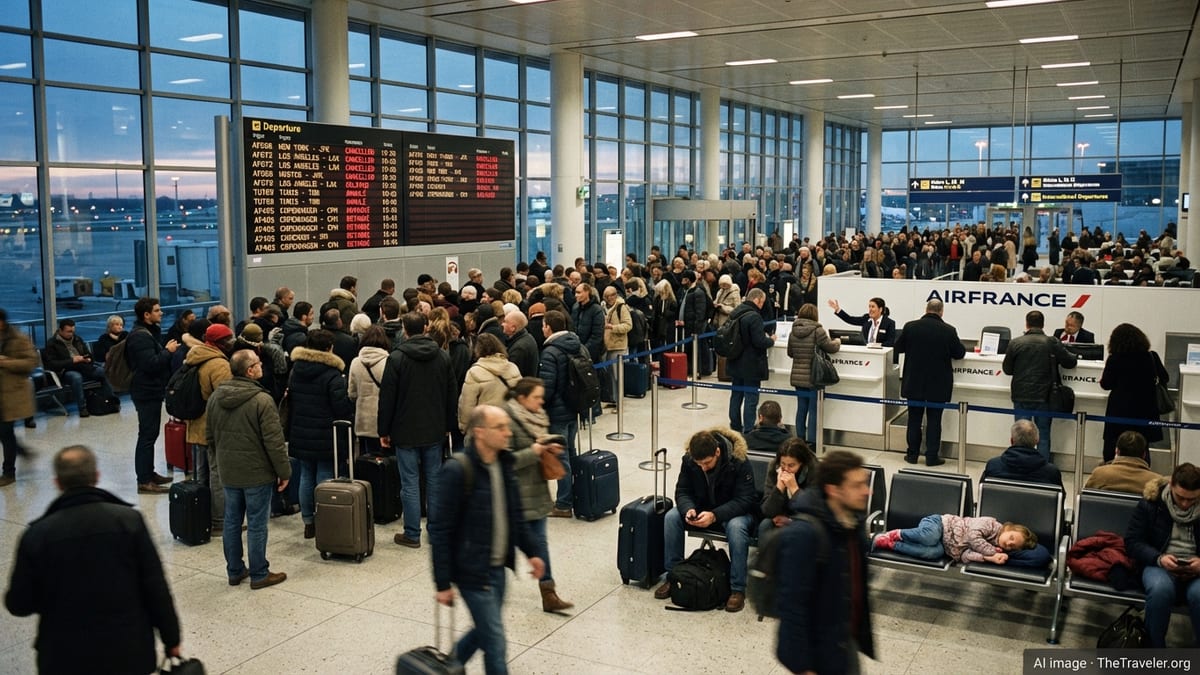
Thousands of passengers across France have been left stranded after a fresh wave of disruption hit key hubs including Paris Charles de Gaulle, Paris Orly, Nice Côte d’Azur and Marseille Provence, with publicly available data indicating 849 flight delays and 56 cancellations affecting major carriers such as Air France, British Airways, Emirates, Lufthansa and easyJet in a single day of turbulence.
Get the latest news straight to your inbox!
Major French Hubs Among Europe’s Worst Affected
Operational data compiled from European airport tracking platforms shows that France’s two main Paris gateways, Charles de Gaulle and Orly, ranked among the most affected airports in Europe on the day of disruption, joining other congested hubs such as Madrid, Amsterdam and London Heathrow. Paris Charles de Gaulle alone accounted for a sizable share of late departures and arrivals, while Paris Orly also reported extensive knock-on delays.
Across the four highlighted French airports, a combined 849 flights were reported delayed and 56 cancelled, according to aggregated figures circulating in industry-focused coverage of the day’s air traffic performance. The pattern placed France at the center of a wider European network crunch that rippled through both short haul and long haul schedules.
In Paris, congestion at Charles de Gaulle’s sprawling terminals amplified the impact, as late‑running aircraft arriving from elsewhere in Europe cascaded into missed takeoff slots for outbound flights. At Orly, where a large proportion of services are intra-European and domestic, even modest schedule slips quickly translated into hours of disruption for passengers on connecting itineraries.
Further south, Nice Côte d’Azur and Marseille Provence also reported disruption, particularly on routes linking the Mediterranean coast with Paris and major European capitals. While the absolute number of cancellations at these coastal airports remained lower than in Paris, the delays were sufficient to strand large numbers of point‑to‑point leisure travelers at the height of the busy travel period.
Air France, British Airways, Emirates, Lufthansa and easyJet Hit Hard
Air France, which operates an extensive network from Charles de Gaulle and a significant presence at other French airports, was among the carriers most heavily affected by the disruption. Publicly available tallies referenced in trade and consumer travel reports suggest that the airline recorded more than one hundred delays and a notable share of the 56 cancellations logged across Europe that day.
Other full‑service carriers, including British Airways, Lufthansa and Emirates, also saw schedules disrupted. Long haul services operated by these airlines depend heavily on precise coordination with feeder flights bringing passengers into European hubs. When short haul operations between cities such as Paris, Amsterdam, Frankfurt and London go off schedule, aircraft rotations and crew duties on intercontinental routes are quickly affected.
Low‑cost airline easyJet, which maintains a strong presence at French and neighboring airports, likewise reported significant delays. Industry monitoring indicated that its operations at Paris and other major European hubs were hampered by the same constraints facing legacy carriers, with aircraft and crews stuck out of position due to earlier congestion.
The cumulative impact across multiple airlines meant that individual disruptions rapidly compounded. Passengers holding through‑tickets on one carrier as well as those piecing together separate point‑to‑point journeys on low‑cost airlines all faced a similar reality: long queues, rolling departure time changes and, in many cases, an unplanned night in the terminal or at a nearby hotel.
Weather, Capacity Constraints and Air Traffic Management Pressures
While no single cause has been identified as solely responsible for the 849 delays and 56 cancellations reported, recent coverage of European aviation has underscored the fragile balance between weather, capacity and air traffic management across the continent. Storm systems and strong winds affecting parts of France and neighboring countries in recent months have already forced temporary suspensions at airports such as Bastia, Nice and Marseille, highlighting how quickly conditions can deteriorate.
Even when local weather at Charles de Gaulle, Orly, Nice or Marseille remains within operational limits, adverse conditions elsewhere can disrupt the flow of aircraft into and out of France. If an inbound jet from another European hub departs late due to ground holds or runway capacity reductions, the return leg out of a French airport inevitably suffers, tightening an already crowded schedule.
On top of weather‑related challenges, recurring strains on European air traffic control capacity continue to affect flight planning. Industry groups and airline associations have repeatedly warned that staffing shortages and structural bottlenecks in certain airspace sectors can trigger widespread knock‑on effects. When traffic levels rise toward peak travel periods, relatively minor delays quickly snowball into broader disruption across multiple countries, with France’s high‑volume airports particularly exposed.
Operational adjustments such as temporary runway works at Paris airports and the rebalancing of traffic between Orly and Charles de Gaulle have added another layer of complexity. Airlines have been asked at times to consolidate or reroute services, compressing already packed schedules and leaving little room for recovery when irregular operations occur.
Thousands of Passengers Scramble for Alternative Routes
For travelers, the numbers translated into long waits at departure gates and transfer counters. Reports from passenger forums and travel advisories described crowded terminals, with seats in public areas fully occupied and lengthy lines forming at airline service desks as people sought rebooking options or meal and hotel vouchers.
Those with onward connections beyond Europe faced particularly difficult choices. Missed links to destinations in North America, Africa, the Middle East and Asia led many passengers to seek rerouting through alternative hubs such as London, Frankfurt or Rome when seats were available. Others were forced to delay departures by a day or more, waiting for spare capacity to open up in tightly booked long haul cabins.
At leisure‑focused airports such as Nice and Marseille, disrupted flights to and from Paris, London and other major cities left tourists and business travelers weighing whether to alter hotel reservations, rental car bookings and onward rail journeys. In some cases, travelers chose to abandon air itineraries altogether and switch to high‑speed rail or intercity coach services, particularly on domestic routes where ground transport offered a viable alternative.
With thousands stranded across France and beyond, social media posts and user‑generated travel reports highlighted the importance of monitoring flight status in real time and maintaining flexible plans when routing through congested hubs during busy periods.
What Travelers Can Do Under EU261 and Practical Tips
The disruption once again drew attention to passenger rights under the European Union’s air travel regulations, commonly referred to as EU261. Publicly available guidance from consumer organizations explains that, depending on the length of delay, distance flown and reason for disruption, travelers departing from EU airports may be entitled to meals, hotel accommodation, rerouting assistance and, in some circumstances, fixed‑sum financial compensation.
Where delays or cancellations stem from factors considered within an airline’s control, such as certain operational or staffing issues, compensation may be available in addition to a refund or rebooking. When disruption is primarily caused by extraordinary circumstances such as severe weather or air traffic control strikes, airlines are generally still required to provide care and assistance, but financial compensation may not apply.
Travel experts regularly advise passengers to retain boarding passes, booking confirmations and any written notices about delays or cancellations, as these documents can support later claims. Keeping receipts for meals, transportation and accommodation arranged during an unplanned layover is also recommended if travelers intend to seek reimbursement where rules allow.
In the wake of the latest day of mass delays and cancellations across France, consumer advocates emphasize that advance preparation remains essential. Booking longer connection windows at busy hubs, understanding refund and rebooking conditions before departure, and maintaining up‑to‑date contact details with airlines can all help reduce the risk that an unexpected disruption at Charles de Gaulle, Orly, Nice or Marseille will derail an entire trip.