


More news on this day
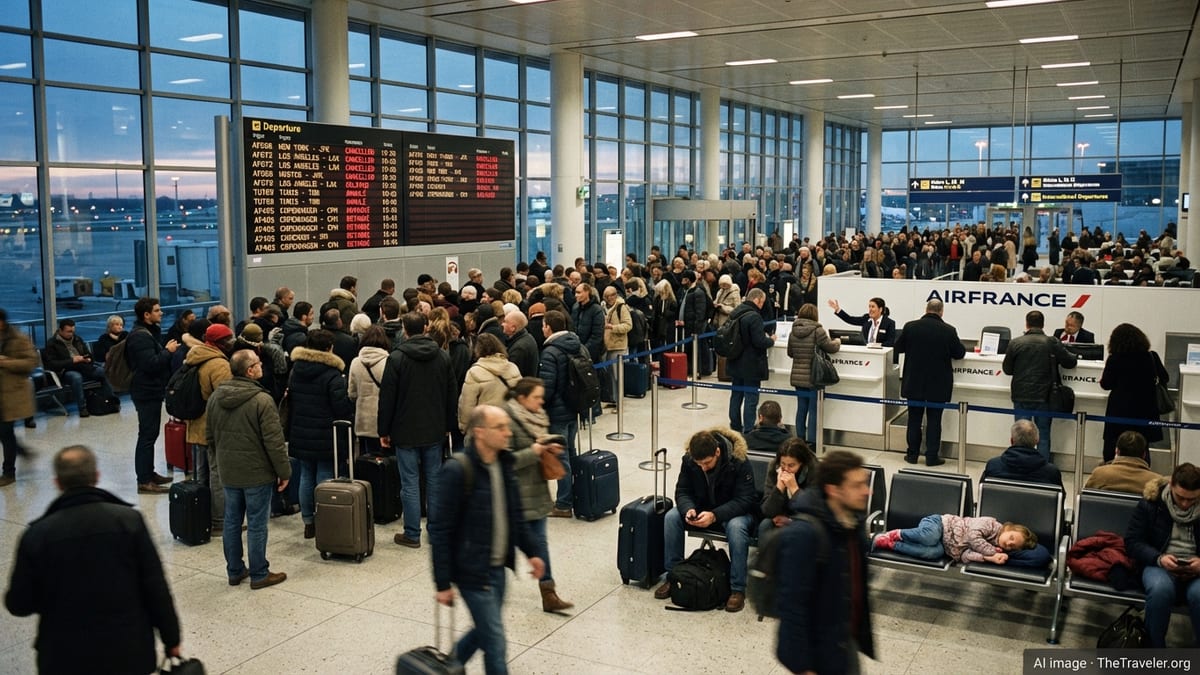
Paris Charles de Gaulle Airport, one of Europe’s busiest global hubs, faced a fresh wave of disruption on June 26 as operational data showed 274 delayed services and six cancellations affecting Air France, British Airways, Air India, Air Canada and several other carriers, leaving passengers stranded across major European, North American, African and Asian routes.
Get the latest news straight to your inbox!
Operational Data Shows Widespread Disruption Across the Hub
Publicly available tracking data for June 26 indicates that Paris Charles de Gaulle (CDG) experienced unusually high levels of disruption, with 274 delayed flights and six outright cancellations recorded across the day. While the total number of cancellations remained relatively low compared with previous mass disruption events, the heavy concentration of delays created severe knock-on effects for connecting passengers using CDG as a transfer point.
Reports indicate that Air France bore the brunt of the disruption, accounting for all six cancellations and more than a hundred of the delayed services. However, other major international airlines including British Airways, Air Canada, Air India, Air China, Cathay Pacific, Hainan Airlines, Avianca, AeroMéxico and several European and regional operators also recorded late departures or arrivals to and from Paris.
As the delays accumulated through the day, routine schedule buffers were quickly exhausted. Aircraft rotations, crew duty time limits and congested taxiways all contributed to further slippage, turning what initially appeared to be a manageable series of operational issues into a network-wide problem across multiple long haul and short haul routes.
Data compiled by flight-tracking platforms shows that, although only a small minority of flights were canceled, the ripple effect extended to hundreds of services that arrived or departed significantly behind schedule, in some cases by several hours.
Impact on Long Haul Links to North America, Africa and Asia
The disruption at CDG on June 26 was felt most acutely by long haul travelers relying on the airport’s role as a global connection point. Available operational information shows that North American services linking Paris with major gateways such as New York, Chicago, Toronto and Montreal faced departure or arrival delays, even where outright cancellations were avoided.
Transatlantic travelers were not alone in experiencing difficulties. Published coverage and schedule data suggest that services between Paris and key African destinations, including West and Central African capitals, as well as selected Asian routes operated by both European and Asian carriers, were affected by the congestion. Even where flights ultimately departed, delays in feeder services from elsewhere in Europe meant that connecting passengers often missed their originally planned onward flights.
Although there were no cancellations reported on United States bound flights during the main disruption window, the cumulative delays disrupted itineraries that depended on tight transfer times. Passengers arriving late into CDG from across Europe frequently found their onward aircraft already boarded or closed, prompting last minute rebookings, overnight stays and rerouting via alternative hubs such as London Heathrow, Amsterdam Schiphol or Frankfurt.
For travelers starting their journeys in Paris, delayed departures to destinations in India, China and other parts of Asia also produced uncertainty. Some airlines opted to hold departing flights slightly longer to accommodate connecting passengers, while others departed close to the revised schedule, leaving late-arriving travelers to search for later alternatives.
Short Haul Network Gridlock Spills Over to Global Passengers
Analysts note that CDG’s dense short haul network across Europe, North Africa and the wider Mediterranean region can multiply the impact of even a relatively modest number of delays. Many long haul flights depend on a bank of inbound European services feeding passengers into the hub within a narrow time window, a system that works efficiently under normal conditions but is vulnerable to cascading disruption.
On June 26, regional flights operated by Air France and partner airlines to and from cities such as Dublin, Copenhagen, Bucharest, London and Luxembourg encountered schedule changes and late arrivals. In isolation, delays of 20 to 60 minutes on these segments might be manageable, but when combined across dozens of flights they eroded the connection margins built into CDG’s daily timetable.
The result was a series of missed connections affecting passengers traveling onward to intercontinental destinations. Travelers reported being moved to later departures, in some cases via different hubs or partner airlines, while luggage handling systems struggled to keep pace with the constantly shifting passenger flows. For some, the disruption meant unplanned overnight stays near the airport while waiting for seats on the next available long haul service.
Industry observers point out that once a hub enters this kind of rolling delay pattern, recovery can take several hours or longer. Aircraft and crew may end up in the wrong locations, and the highly choreographed sequence of arrivals and departures that keeps a major international airport running smoothly becomes increasingly difficult to restore within the same operating day.
Knock On Effects for Airlines and the Summer Travel Season
The timing of the latest disruption comes at a sensitive moment for the European aviation sector. Late June marks the ramp up to the peak summer holiday season, when airlines and airports operate close to full capacity and flexibility to absorb irregular operations is limited. At CDG, where Air France and alliance partners run extensive long haul networks, a single day of widespread delays can affect thousands of passengers and strain operational resources.
According to publicly available information from passenger rights organizations, travelers experiencing long delays or cancellations on flights departing the European Union may be eligible for compensation under EU air passenger regulations, depending on the cause of the disruption and the length of the delay. However, determining eligibility can be complex, particularly when delays stem from a mix of factors such as air traffic control restrictions, weather variations in other regions, or technical issues within airline operations.
For airlines, days like June 26 carry both immediate and longer term implications. In the short term, carriers face increased costs related to rebooking passengers, providing meals and accommodation where required, and repositioning aircraft and crews. Over the longer term, repeated episodes of disruption risk eroding traveler confidence in tight connections through major hubs, encouraging some passengers to opt for point to point services or alternative transfer airports.
Travel industry analysts are watching closely to see whether the latest CDG disruption proves to be an isolated operational spike or an early warning sign of a more challenging summer period, as traffic rises and staffing, infrastructure and airspace constraints converge.
Advice for Affected and Future Passengers
Consumer advocates recommend that passengers caught in the June 26 disruption retain all boarding passes, booking confirmations and receipts for any additional expenses incurred, such as meals or hotel stays. These records can be important when submitting claims to airlines or third party services specializing in passenger rights and compensation.
Travel planners suggest that passengers with upcoming itineraries through Paris consider building in slightly longer connection times where possible, especially when traveling on separate tickets or combining different airlines. While CDG is generally structured to handle tight transfers, the latest episode shows how quickly a series of relatively small operational issues can combine to threaten even well planned connections.
For those yet to travel, checking real time flight status information directly with the airline before leaving for the airport, and monitoring departure boards and notifications during layovers, remains essential. Rebooking options are often more plentiful earlier in the disruption cycle, so identifying problems quickly can make a significant difference to the range of available alternatives.
As airlines and airport operators work to stabilize operations following the latest wave of delays and cancellations at Paris Charles de Gaulle, travelers are being reminded that the interconnected nature of global aviation means that issues at a single hub can rapidly affect journeys spanning multiple continents, from European city breaks to long haul trips across North America, Africa and Asia.