


More news on this day
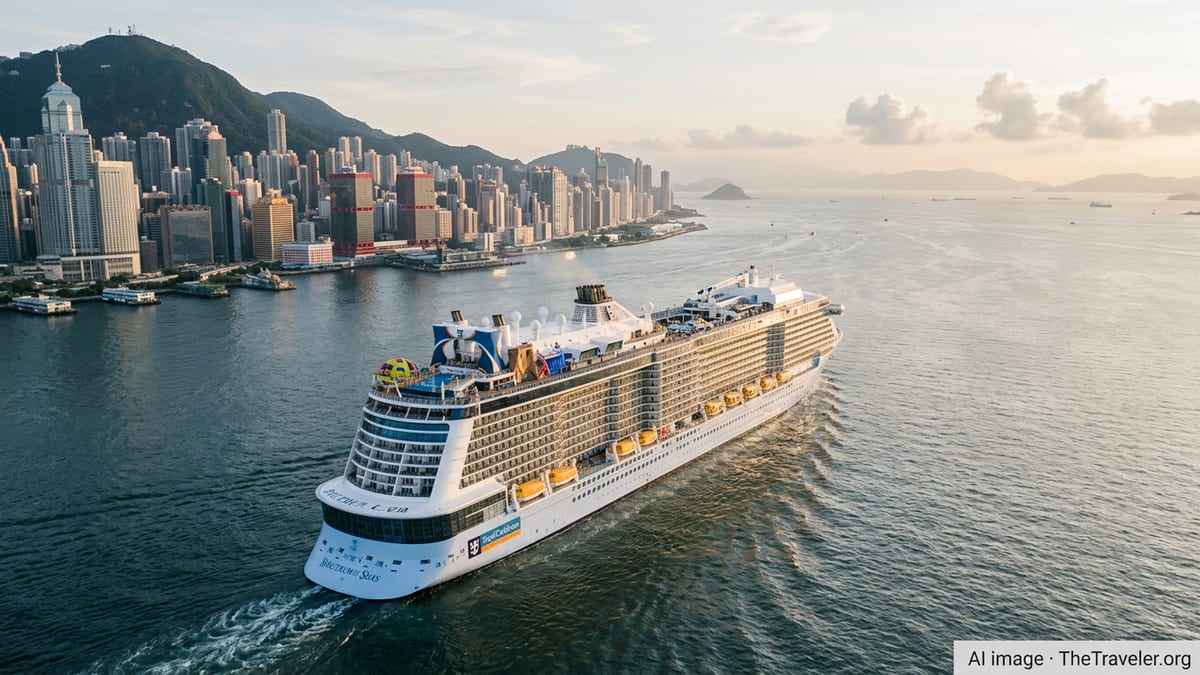
Royal Caribbean is modifying several upcoming Spectrum of the Seas sailings in Asia, with voyages from China among those seeing itinerary changes as cruise lines across the region respond to shifting geopolitics, port access limitations and operational pressures.
Get the latest news straight to your inbox!
Shanghai-Based Sailings See Itinerary Swaps and Cancellations
Publicly available schedules and agency listings for Spectrum of the Seas show a busy deployment from Shanghai in 2026, with short sailings to South Korea and Japan and longer "Best of Japan" voyages. However, recent updates shared through travel agents and passenger communications indicate that some of these Japan-focused routes are being altered, shortened or replaced with alternative ports.
Regional cruise forums and booking sites referencing Spectrum of the Seas departures from Shanghai in mid and late 2026 point to certain Okinawa and other Japan calls being removed, with select cruises revised to visit South Korean ports such as Busan or to operate different combinations of sea days and closer-to-China calls. Some longer Japan itineraries appear to be preserved, while shorter runs with politically sensitive destinations are more likely to be adjusted.
Comments from affected passengers on cruise discussion boards describe a mix of outright voyage cancellations and route changes on Shanghai-based departures, sometimes with revised invoices issued after reservations were made. These reports suggest that Royal Caribbean is selectively reshaping the China program around ports that can be operated with more certainty, rather than implementing a blanket suspension of the ship’s Shanghai season.
Royal Caribbean’s published deployment material for China continues to promote Spectrum of the Seas as a key player in the market, but standard disclaimers note that all itineraries remain subject to change without notice. The evolving pattern of small but significant modifications around Shanghai highlights how dynamic the operating environment has become for international cruises sailing from mainland China.
Geopolitical Tensions Shape Access to Japan Ports
The latest round of adjustments to Spectrum of the Seas sailings out of China appears closely tied to the wider political climate in Northeast Asia, where relations between Beijing and Tokyo have periodically strained travel links. Travel forums tracking Asia cruises note that some China-originating itineraries that once highlighted multiple Japanese ports are now more likely to be routed toward South Korea or focused on domestic and near-neighbor cruising.
Passengers comparing original booking confirmations with revised route maps have pointed out that certain marquee Japanese destinations, including Okinawa and Ishigaki, have disappeared from some Shanghai departures, even as similar ports remain on sailings starting from Hong Kong or other regional gateways. Observers posting on cruise communities suggest that sailings from Hong Kong may be viewed as less exposed to rapid policy shifts in the China Japan relationship, making those voyages comparatively more stable for itineraries that rely heavily on Japanese ports.
The rebalancing of ports for Spectrum of the Seas mirrors earlier periods when geopolitical disputes or maritime security concerns led to route changes in East Asia. Cruise lines working the region have historically had to navigate visa rules, short-notice regulatory moves and occasional public calls for travel curbs, all of which can affect the practical feasibility of docking in particular Japanese ports on given dates.
For travelers, the outcome is an increasingly fluid map. Sailings marketed months in advance as Japan intensive experiences may still reach the country, but with fewer calls or with substitutions that prioritize ports considered less sensitive. In many cases, these decisions are being implemented after initial bookings, underscoring how itinerary assurances in this part of the world have become more conditional.
Broader Pattern of Cruise Route Adjustments Across Asia
The changes involving Spectrum of the Seas come amid a broader wave of itinerary revisions across Asia and beyond, as cruise companies juggle geopolitics, health concerns, maritime safety and port capacity. Reports from cruise passengers on a range of ships operated by different brands describe missed ports, swaps between country pairs and the addition of extra sea days when scheduled calls become impracticable.
In the wider region, heightened military activity around Taiwan, periodic airspace and maritime advisories, and evolving public health screening practices have all added layers of complexity to routing. Trade publications and naval reviews tracking security developments in the Western Pacific note sustained large scale exercises and simulations of blockades, which, even without directly targeting civilian vessels, contribute to a more cautious approach by passenger lines mapping future seasons.
Asia is not alone in experiencing such volatility. In the Caribbean and other popular cruise regions, recent seasons have seen ports temporarily dropped due to security incidents, infrastructure limitations or local unrest, with replacements found at alternate destinations or through rebalanced itineraries. The experience of passengers rerouted from one island or coastal city to another has become a common topic on cruise forums, illustrating a global pattern of flexibility that now extends to Asia’s resurgent market.
Against this backdrop, Royal Caribbean’s adjustments on Spectrum of the Seas align with a risk management strategy seen across the industry, where maintaining vessel utilization and preserving core markets take precedence over adherence to specific port lists. By reshaping routes while keeping ships in key homeports, lines attempt to balance commercial commitments with operational prudence.
Impact on Passengers and Booking Strategies
For travelers booked on Spectrum of the Seas, the practical consequences of these itinerary shifts vary from minor timetable tweaks to significant changes in the character of a voyage. Some guests report losing marquee ports they selected the sailing for, while others see their cruise transformed into a more sea day focused experience or a route centered on different countries than originally advertised.
Passenger accounts on cruise communities indicate that those affected are receiving updated confirmations reflecting new ports and schedules, sometimes accompanied by offers of rebooking, fare adjustments or onboard credit, depending on the extent of the alteration and the cruise line’s policies. The scale of compensation, when offered, typically reflects whether the change is framed as a response to safety, regulatory or operational issues beyond the company’s control.
Experienced cruisers commenting on these developments often stress the importance of treating specific ports of call as aspirational rather than guaranteed, particularly for itineraries involving geopolitical flashpoints or countries with frequently changing entry conditions. Many recommend prioritizing the ship experience itself and considering route flexibility when making long lead bookings in Asia.
Travel planners are also advising clients to build more adaptable land arrangements around Asian cruises. That can include refundable airfare where feasible, hotel stays that are not tightly dependent on particular port timings, and a willingness to pivot to alternative onboard activities or excursions if a headline destination is dropped at short notice.
Asia Cruise Market Remains Central Despite Volatility
Despite the recent itinerary adjustments for Spectrum of the Seas and similar changes across competing brands, industry communications and deployment plans continue to treat Asia, and China in particular, as a strategic growth market. Royal Caribbean has outlined multi year deployment for Spectrum of the Seas and other ships in the region, including future seasons homeported in Chinese ports and additional offerings aimed at regional travelers.
Marketing materials for upcoming years highlight Shanghai, Hong Kong and other Asian gateways as leading embarkation points, with itineraries spanning Japan, South Korea, Southeast Asia and select longer repositioning voyages. Trade coverage of these plans suggests that cruise companies are banking on sustained demand from Chinese and regional guests, even as they adjust specific routes in response to policy or security flare ups.
Analysts focusing on the cruise sector note that Asia’s cruise rebound has been uneven since pandemic era shutdowns, with some homeports reopening earlier and more predictably than others. This unevenness has left lines like Royal Caribbean balancing investments in new marketing campaigns and port infrastructure partnerships with the reality that certain routes may need to be redesigned with little warning.
In this environment, Spectrum of the Seas serves as a case study of how a major global operator is trying to keep a flagship vessel active in China while continually fine tuning where it sails. For travelers considering an Asia cruise, it underscores the benefit of staying informed about potential changes, reading the fine print on itineraries and preparing for the possibility that the map they board with may not be identical to the one they first booked.