


More news on this day
Recent flash flooding in Green Bay has forced temporary operational changes at one Green Bay Metro Fire Department station, prompting route adjustments for emergency vehicles and new travel advisories across parts of the city.
Get the latest news straight to your inbox!
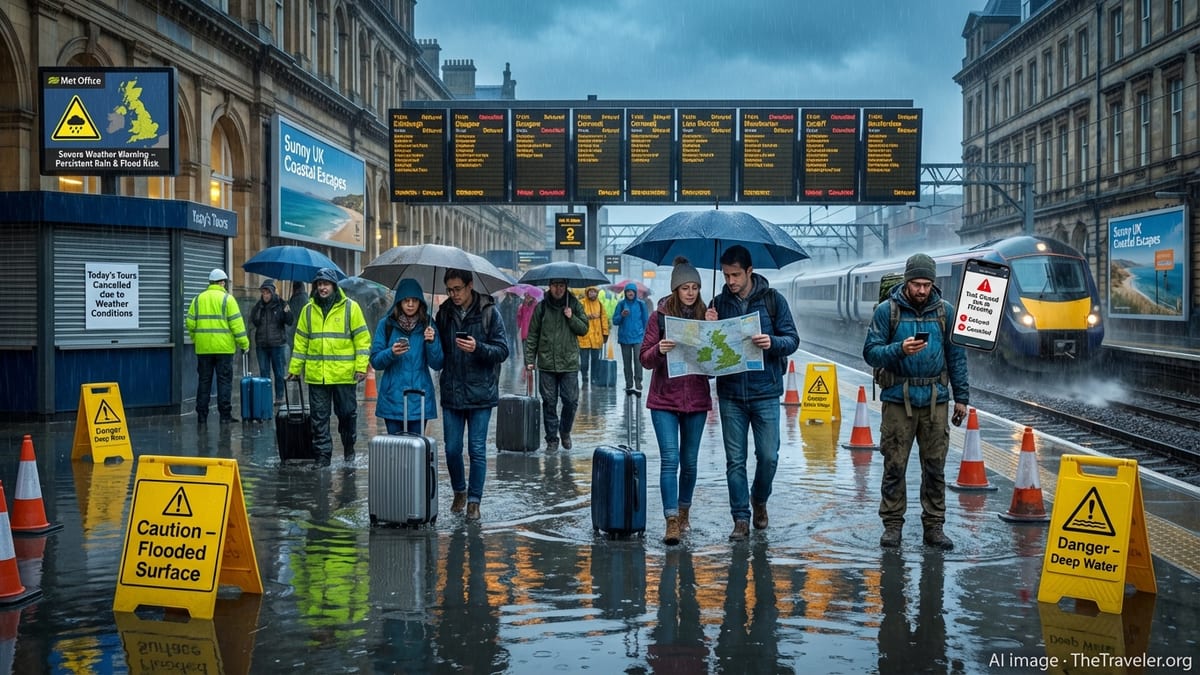
Flash flooding disrupts normal fire station operations
Publicly available information from local broadcasters and municipal updates indicates that an intense thunderstorm in late June dropped more than two inches of rain on Green Bay in under an hour, triggering significant flash flooding on key arterials. Coverage from regional outlets describes water rising to knee depth in some corridors, with vehicles stalled at intersections such as Shawano Avenue, Military Avenue, Mason Street and Oneida Street as runoff overwhelmed storm sewers.
In response to rapidly changing conditions, at least one Green Bay Metro Fire Department station on the west side has had to temporarily adjust or suspend regular on-site operations due to access problems around the building and the surrounding road network. Images distributed by wire photo services show a Green Bay Metro Fire Department battalion chief taping off a flooded section of Shawano Avenue, with apparatus staged away from the deepest water to maintain an escape route.
While the core functions of the department continue, travel patterns for engines and ambulances are being modified. Reports indicate that emergency vehicles have been re-routed around submerged underpasses and low-lying stretches, lengthening response paths and requiring crews to stage in alternative locations until floodwaters recede and streets can be safely reopened.
Local television coverage notes that firefighters fielded dozens of calls within a matter of hours as hail, ponding water and downed power lines affected multiple neighborhoods. Temporary disruption at an affected station is being managed within this broader surge in demand, illustrating the pressure sudden urban flooding can place on critical services.
Access, safety and coverage while a station is offline
When a fire station is forced to close or partially suspend operations because of flooding, departments typically rely on neighboring stations to cover its first-due territory. Industry publications documenting recent closures in other U.S. cities describe how incident commanders rebalance the grid, shifting apparatus and personnel so that response-time gaps remain as small as possible while still accounting for blocked roads and hazardous conditions.
In the Green Bay case, publicly available mapping of the street flooding suggests that some of the most heavily impacted corridors are precisely those used by emergency vehicles to reach residential areas and commercial districts. With a station’s immediate access routes under water, temporarily moving units to higher ground or to alternate facilities allows engines to depart more quickly when calls come in, even if they are technically operating out of a different bay or staging area.
Travelers and local residents are being reminded through news coverage and municipal advisories that they may see different apparatus patterns for a period of time. A neighborhood that is normally served from a nearby house may instead see a rig arriving from farther across town, particularly if the shortest route crosses a flooded viaduct or a segment where barricades remain in place.
Emergency planners frequently stress that these temporary shifts are designed to avoid placing both responders and the public in additional danger. Driving heavy fire engines through standing water can conceal hazards such as open manholes or washed-out pavement, so routing changes and station closures are viewed as a preventive safety measure rather than a reduction in service.
Impact on residents, commuters and visitors
The same storm system that disrupted the fire station’s access routes also created travel headaches across Green Bay. Local news reports describe motorists stranded in rising water and multiple urban streets closed as crews worked to move stalled vehicles and clear debris from storm drains. Public transit alerts and highway department notices in the broader region reference detours and temporary closures connected to flood-damaged pavement and shoulders.
For residents, the temporary changes in fire station operations come on top of advice to check basements for seepage, move valuables and chemicals to higher shelves, and prepare for possible short-notice evacuations in known flood-prone zones. Earlier spring and summer advisories in the Green Bay area emphasized that properties near the Fox and East Rivers, as well as low-lying neighborhoods away from the main channels, can be at risk when heavy rainfall converges with already saturated ground.
Visitors and travelers passing through the city are being encouraged via public coverage to allow extra time, heed barricades and avoid attempting to drive through water-covered roadways. With emergency vehicles already negotiating alternative routes due to a temporarily sidelined station, additional stalled cars or fender-benders in flooded areas would only further complicate access for fire and medical crews.
Travel-related services such as intercity buses or regional shuttles have not reported widespread cancellations connected directly to the fire station impacts, but detours around flooded sections and ongoing utility work may slightly lengthen journey times. Travelers crossing the region by car are advised to watch for residual lane closures where flooding undermined pavement or washed debris onto the roadway.
Longer-term questions about flood resilience
The temporary shutdown and relocation of fire station activity has renewed public discussion about how Green Bay prepares for extreme weather. The city’s floodplain management materials note that the community has a long history of flooding tied to the bay, rivers and local drainageways, and that updated federal flood maps were adopted in 2023 to better reflect evolving risk. Those documents highlight that intense rainfalls can create flooding in locations that are not traditionally viewed as being in the floodplain.
Urban development over former wetlands and natural retention areas has been a recurring topic in local forums, where residents share personal accounts of flooded streets and homes. The late-June deluge, with its rapid accumulation of water and resulting disruption to a critical fire station, has added a tangible new example of how infrastructure, land use and emergency services intersect when storms arrive at the wrong moment.
Travel-news observers note that destination cities around the Great Lakes and Upper Midwest are increasingly grappling with similar questions. When emergency facilities are situated close to riverbanks, low-lying intersections or aging stormwater systems, even a temporary station closure can have ripple effects on tourism, logistics and local confidence. Cities are beginning to weigh options that include elevating new stations, redesigning access roads, or investing in higher-capacity drainage in corridors vital to emergency response.
For now, Green Bay Metro Fire Department’s adjustments serve as a case study in how a modern fire service keeps functioning when nature briefly sidelines one of its bases. As crews continue to respond across the city and engineers assess where floodwaters hit hardest, the experience is likely to inform future planning for both emergency facilities and the streets that connect them.