


More news on this day
Travelers at Phoenix Sky Harbor International Airport faced widespread disruption today as live tracking data showed 118 flights delayed and at least seven canceled, affecting major domestic routes and multiple U.S. airlines.
Get the latest news straight to your inbox!
Ripple Effect Across Major U.S. Carriers
Publicly available flight-tracking dashboards for Phoenix Sky Harbor on June 13 indicate that delays are affecting a broad cross-section of airlines, including American Airlines, Southwest, Delta, United, and Alaska. The disruptions are concentrated in the morning and midday departure banks, creating bottlenecks that are spilling into the afternoon schedule.
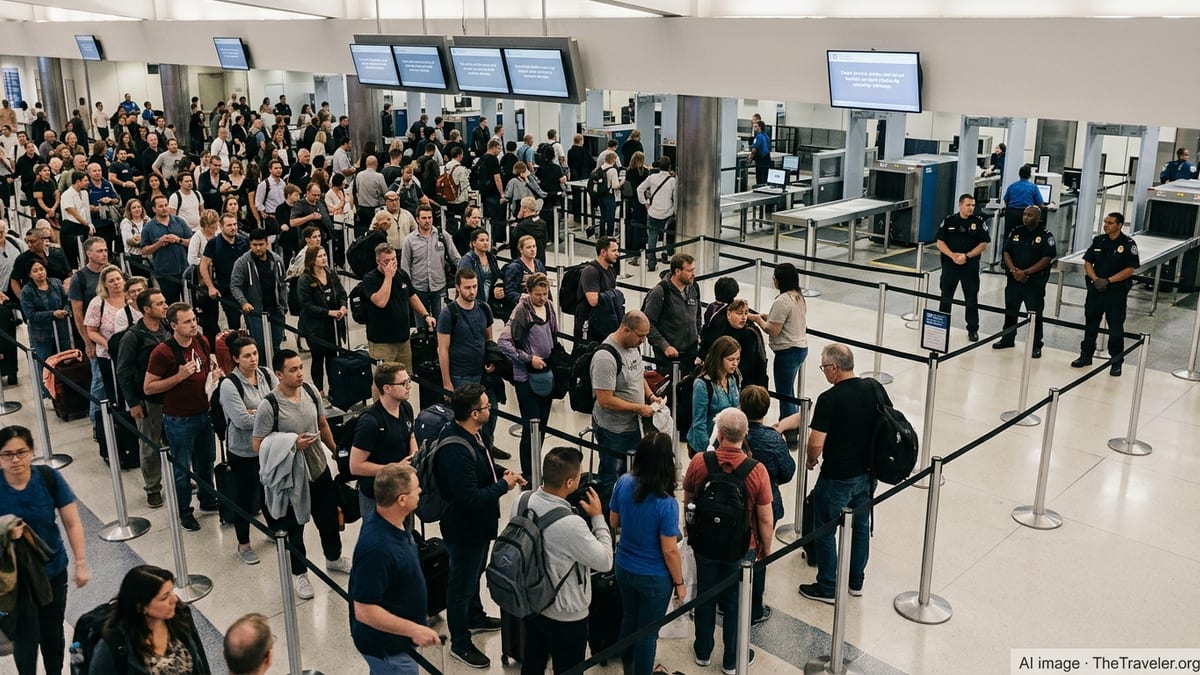
Data aggregators that monitor Phoenix operations show an on-time departure rate hovering in the low 80 percent range, below typical clear-weather performance levels for the airport. While the majority of flights are still operating, the elevated number of delayed departures means passengers are experiencing longer waits at gates, tighter connections, and increased congestion at security checkpoints and boarding areas.
The delays are not limited to a single carrier or terminal. Reports indicate scattered schedule changes across both legacy and low-cost airlines using Phoenix as a hub or focus city, including American and Southwest, as well as airlines operating smaller but growing networks such as Delta, United, and Alaska. For travelers, this has translated into a day where even routine short-haul segments require closer attention to flight status updates.
In addition to 118 delayed flights, at least seven cancellations have been recorded, with some services scrubbed outright and others consolidated or retimed. Passengers on canceled services are being shifted to later departures or rerouted through alternate hubs, where seats permit.
Key Routes to Los Angeles, Dallas, Chicago, and Denver Hit Hard
The impact is particularly visible on high-frequency domestic corridors linking Phoenix with Los Angeles, Dallas, Chicago, and Denver. These routes are shared by several major airlines, so disruption on even a handful of rotations can quickly cascade through the schedule.
Los Angeles is among the busiest destinations from Phoenix, served by multiple daily flights on American, Southwest, Delta, United, Frontier, and Alaska. With such dense scheduling, a delay early in the day can cause aircraft and crews to arrive late for subsequent legs, magnifying disruption for travelers trying to connect onward along the West Coast or to international departures from Southern California.
Similar patterns are evident on flights to Dallas, where American’s hub operations, combined with Southwest’s large presence at Dallas Love Field, rely heavily on timely arrivals from Phoenix. Any slippage in Phoenix departure times can put pressure on already tight connection windows in Texas, resulting in missed onward flights and the need for rebooking.
Services to Chicago and Denver, both key connecting hubs in the central United States, are also feeling the strain. These routes are important for linking Phoenix with the Midwest, Mountain West, and transcontinental traffic to the East Coast. Passengers bound for cities such as Minneapolis, Detroit, or New York via Chicago, or for smaller Rocky Mountain destinations via Denver, are advised by airline websites and travel platforms to monitor their itineraries closely and build in extra time where possible.
Operational and Weather Factors Behind the Disruptions
While no single overriding cause has been clearly identified in public information, several factors commonly contribute to days like this at large U.S. airports. Phoenix Sky Harbor is a major hub for American Airlines and a key operation for Southwest, and published data from the U.S. Department of Transportation show that hub-and-spoke networks can be particularly sensitive to weather and congestion elsewhere in the country.
Even when local conditions in Phoenix are relatively stable, thunderstorms, low visibility, or air traffic control programs at other major hubs can trigger ground delay programs and flow restrictions that ripple back through the system. When a departure slot is pushed back at an East Coast or Midwest hub, aircraft and crews scheduled to operate later flights from Phoenix may arrive late, forcing knock-on schedule adjustments throughout the day.
Industry discussion, as reflected in traveler reports and airline performance statistics, highlights how closely linked today’s operations are across hubs such as Dallas, Chicago, Denver, and Los Angeles. A round of delays in one region can reduce the availability of spare aircraft and crew in another, leaving airlines with fewer options to recover from even minor disruptions.
Phoenix is also entering the peak summer travel period, when passenger volumes climb and schedules are tightly packed. In such conditions, relatively small timing shifts can have outsized effects, pushing flights from “on time” into moderate or significant delay categories as gate space, runway capacity, and staffing are stretched.
What Travelers at Phoenix Need to Know Today
For passengers flying out of Phoenix Sky Harbor today, the most immediate challenge is uncertainty about departure times and connections. Airline and airport information channels emphasize the importance of checking real-time status before leaving for the airport and again after passing security, since gate changes and rolling delays are common on days with elevated disruption.
Travelers with connections through Los Angeles, Dallas, Chicago, or Denver are particularly vulnerable to missed onward flights. Many airlines encourage customers to use mobile apps or airport self-service kiosks to rebook if a delay makes a connection impossible, rather than waiting to reach a staffed counter. Same-day standby options, when available, can also help passengers secure earlier or alternative flights, especially on trunk routes with multiple daily frequencies.
Those whose flights are among the seven recorded cancellations face more complex logistics. Depending on seat availability and the timing of the cancellation, re-accommodation may involve overnight stays or significant rerouting through secondary hubs. Consumer advocates and government materials on air travel rights advise passengers to keep boarding passes, receipts, and written communications from airlines, which can be useful when seeking refunds or compensation under carrier policies.
At the airport itself, reports from frequent flyers suggest that lines at customer service and rebooking counters grow quickly when a cluster of delays hits. Travelers are advised to factor in additional time for navigating terminals, obtaining updated boarding passes, and, where necessary, arranging new ground transportation or lodging at their destination.
Broader Context for Phoenix as a Growing Hub
Despite today’s disruptions, Phoenix Sky Harbor generally maintains a reputation for relatively high on-time performance compared with some larger coastal hubs. Aggregated statistics for the first half of 2026 indicate that many carriers at Phoenix typically achieve on-time departure rates above 80 percent on normal operating days, with average delays measured in minutes rather than hours.
City of Phoenix aviation data underscore the airport’s rising role in the national network, with steady year-on-year growth in passenger traffic and a broadening mix of airlines serving both domestic and international routes. American Airlines and Southwest remain the dominant players, but carriers including Delta, United, and Alaska have all increased their presence, creating more choice but also adding complexity when irregular operations occur.
For travelers, the events of June 13 highlight how even a generally reliable airport can experience sizable disruption when network conditions tighten. As Phoenix continues to expand as a connecting point between the West Coast, the Mountain West, and the rest of the country, days with elevated delays and scattered cancellations may become a more familiar feature of peak travel seasons.
In the near term, passengers scheduled to fly from Phoenix later today and into the evening are being urged by publicly available information sources to track their flights closely, consider arriving early, and prepare for the possibility of longer-than-usual waits. Those with flexible plans may find it worthwhile to explore alternative departure times or dates, particularly on the most heavily affected routes to Los Angeles, Dallas, Chicago, and Denver.