


More news on this day
With hotter than average temperatures forecast across France, major rail works scheduled around Paris and airports operating near pre-pandemic capacity, travelers heading to the French capital this summer face a perfect storm of delays, cancellations and heat-related disruption.
Get the latest news straight to your inbox!
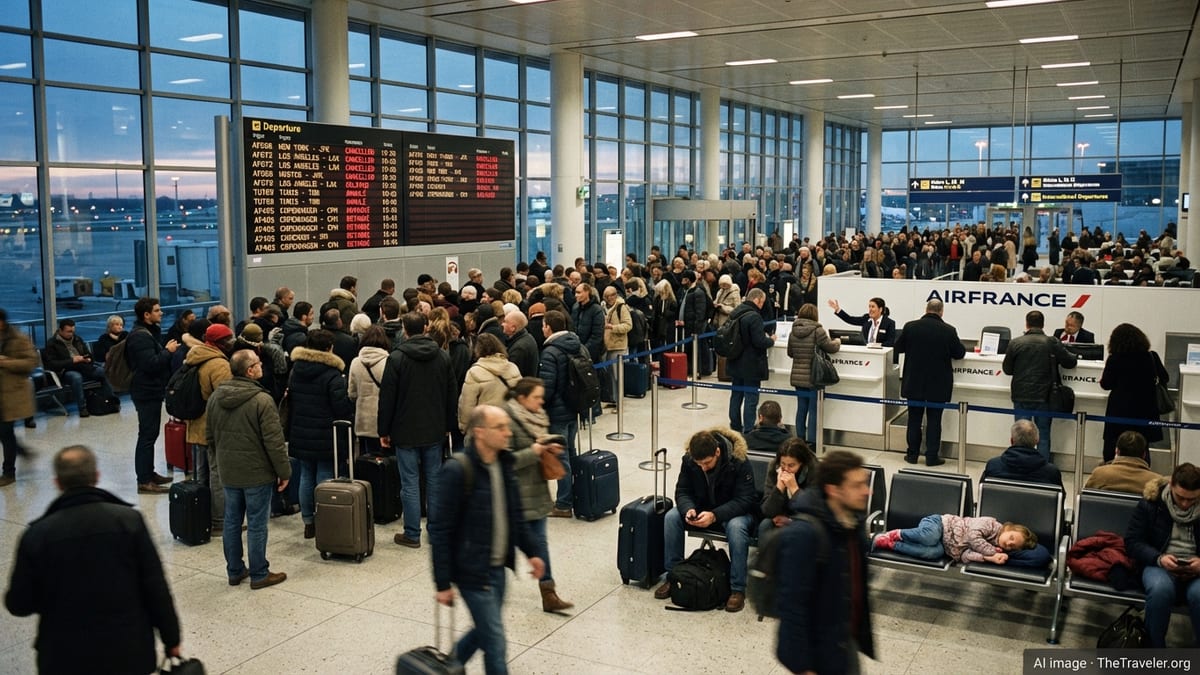
Why Summer 2026 Is So Disruptive for Travel in France
Forecasts from French and European forecasters indicate that summer 2026 is likely to be warmer than seasonal norms across much of France, raising the probability of repeated heatwaves and heat alerts. Public health bulletins this month have already highlighted early intense hot spells affecting large parts of the country, including the Paris region, with night-time temperatures staying high and putting extra pressure on transport systems and travelers.
Rail infrastructure and rolling stock are particularly sensitive to prolonged heat. Recent French media coverage has described how sections of the intercity network saw train cancellations during late May because older equipment struggled to operate reliably in extreme temperatures. Similar patterns have been observed in past summers, with slower running speeds, temporary speed restrictions and occasional line closures introduced as a safety measure when tracks or overhead lines reach critical thresholds.
At the same time, network operators are pushing ahead with an exceptional volume of track and signaling upgrades across the country in 2026. Public documents on rail investment describe extensive maintenance and modernization works on high-speed lines and conventional routes, including corridors serving Paris and popular holiday destinations. These projects are concentrated in off-peak periods such as nights and summer weekends, which can still collide with key tourist travel dates.
On the aviation side, Paris Charles de Gaulle and Paris Orly are operating close to or above 2019 passenger volumes, according to recent corporate and financial reporting from the airport operator. That recovery, combined with crew shortages in parts of the aviation sector and tighter air-traffic control capacity on busy days, increases the risk of delays, long queues at security and baggage issues during peak holiday weekends.
Navigating Paris Airports During Peak Disruption
For visitors flying into Charles de Gaulle or Orly, the most immediate challenge is congestion inside the terminals themselves. Recent airport updates show that both hubs now routinely experience heavy traffic around early morning long-haul arrival banks and late afternoon and evening departure waves, especially on Fridays, Saturdays and Sundays. Queues at check-in and security can lengthen rapidly when even one flight is delayed or disrupted.
Travel industry guidance for this summer stresses the importance of arriving at the airport earlier than many passengers might be used to. For long-haul and non-Schengen flights, three hours in advance is now a common baseline during busy periods, with an extra buffer advisable when traveling with checked baggage, children or mobility needs. For short-haul and intra-Schengen routes, two hours is often sufficient outside peak waves, but passengers are being urged to monitor airline messages closely in case individual carriers recommend more time.
Heat can further complicate operations. While terminals are air-conditioned, higher outdoor temperatures can increase the likelihood of minor technical issues with ground equipment and can affect the pace of baggage handling and turnaround activities on the apron. Publicly available information from past hot spells in France indicates that air-conditioning systems in some older terminal sections and transit buses can struggle during peak heat, making it sensible for travelers to carry water, light clothing layers and sun protection even for airport transfers.
Getting from the airport into Paris may also require more planning than usual. Construction on rail links in the wider Île-de-France region and periodic evening or weekend closures on sections of the regional RER network have been flagged by local transport planners for summer 2026. When rail connections are reduced, taxis and ride-hailing services can become saturated, leading to long waits at ranks. Visitors who can, may wish to schedule arrivals earlier in the day and check in advance whether shuttle buses, coaches or hotel transfer services are running to their accommodation area.
Heatwaves in the City: Health, Comfort and Mobility
National and regional bulletins issued in early June report that France entered summer with a series of early heat episodes, with several departments already placed under orange-level alerts. Health agencies warn that such conditions can have serious impacts, particularly for older people, children and those with pre-existing conditions, but they also change how residents and visitors move around cities like Paris.
Recent coverage of public transport ridership during heatwaves in the capital points to noticeable drops in usage on some of the hottest days, with estimates of up to around one fifth fewer passengers on certain lines as commuters alter their routines or work from home. However, those who must still travel, including many tourists with fixed schedules, face crowded platforms at peak times and trains that may not be fully air-conditioned, especially on older metro stock and in some suburban rolling stock.
City authorities and transport operators have expanded so-called heatwave plans compared with previous years, increasing access to cooled spaces, promoting drinking water points and outlining procedures to maintain operations during very hot days. Public information campaigns recommend avoiding travel at the hottest hours of the afternoon where possible, seeking shade when changing lines at large hubs such as Châtelet, and paying close attention to service alerts because high temperatures can trigger speed restrictions on some rail sections.
For visitors, adapting plans can make a major difference. Early-morning sightseeing and evening activities are generally more comfortable, while indoor attractions with climate control, such as museums or department stores, can provide respite in the middle of the day. Booking timed-entry tickets where available reduces the amount of time spent queuing outdoors, and choosing accommodation with reliable cooling helps ensure rest between excursions.
Rail Works, Slower Trains and Summer Timetable Pitfalls
Beyond weather-related disruption, planned rail works are one of the most significant sources of travel uncertainty for tourists moving around France in the coming months. Official notices and open transport data highlight maintenance and modernization programs affecting several key corridors, including routes north of Paris and sections of lines used by regional TER services. Between early July and late August, for example, work on the network in the northern suburbs is due to modify timetables and reduce capacity on a number of regional lines that connect with major stations used by visitors.
High-speed services are also affected in places. Recent regional reporting from southeastern France describes works on the high-speed line between Lyon and Marseille, where TGVs are being temporarily diverted onto classic tracks over short sections, with speed limits significantly reduced. These kinds of adjustments add minutes to journey times and can cause knock-on delays when services are tightly scheduled in peak holiday periods.
Intercity and night-train services are in a period of transition as operators introduce new rolling stock and adjust timetables. Public information from the national rail operator notes that some overnight routes have only been operating five days a week in recent years because of extensive works on conventional lines, with weekend services occasionally rerouted onto high-speed tracks where possible. While these changes are aimed at improving long-term reliability and comfort, they can make summer planning more complex in the short term.
Travelers are therefore being encouraged by rail websites and consumer media to treat journey times advertised far in advance as indicative rather than guaranteed. Timetables for the weeks ahead are often updated closer to the date to reflect the final configuration of works, and last-minute engineering issues can still cause additional amendments. Building flexibility into itineraries, especially when connecting to flights or cruises, is one of the most effective ways to reduce stress.
Practical Strategies for Tourists to Keep Trips on Track
Against this backdrop of heat, rail works and busy airports, the most useful tools for visitors are preparation and flexibility. Publicly available guidance from transport operators and tourism bodies consistently recommends checking trip details repeatedly in the days before departure, as well as on the morning of travel. This applies to flight numbers, train reservations, platform allocations and any shuttle or transfer services arranged through hotels or tour operators.
Allowing extra time between connections is particularly important this year. Travelers planning to land at Charles de Gaulle and catch a same-day train from Gare du Nord or another Paris station may want to schedule a longer layover than they would have in previous summers, to account for possible queues at border control, baggage delays or slower-than-expected journeys into the city. When long-distance rail tickets are flexible, choosing departures later in the day, or staying overnight in Paris before continuing, can provide welcome insurance.
Heat management should be part of every itinerary. Health agencies and meteorological services advise people to drink water regularly, avoid heavy meals and alcohol in the hottest hours and watch for signs of heat exhaustion. For tourists, this also means packing light, breathable clothing, carrying a refillable bottle and planning rest stops in shaded squares, parks or indoor venues. Families traveling with children or older relatives may wish to book accommodation close to public transport and avoid neighborhoods that require long walks in direct sun.
Finally, having a contingency plan can turn disruption into a manageable inconvenience rather than a crisis. If a high-speed train is canceled, knowing in advance which slower intercity or regional services might provide an alternative route, even with extra changes, can keep a trip moving. If an evening metro line is closed for works, recognizing nearby bus routes or bike-share options gives travelers more options. With realistic expectations and a bit of advance research, visitors can still enjoy Paris and the rest of France this summer despite the challenging conditions.