


More news on this day
Hundreds of flights were canceled and thousands more delayed across the United States as a wave of disruptions swept through airports in California, Florida, Virginia, Pennsylvania, North Carolina, Michigan, Ohio and other states, affecting passengers booked on American, PSA, Southwest, United and several additional carriers.
Get the latest news straight to your inbox!
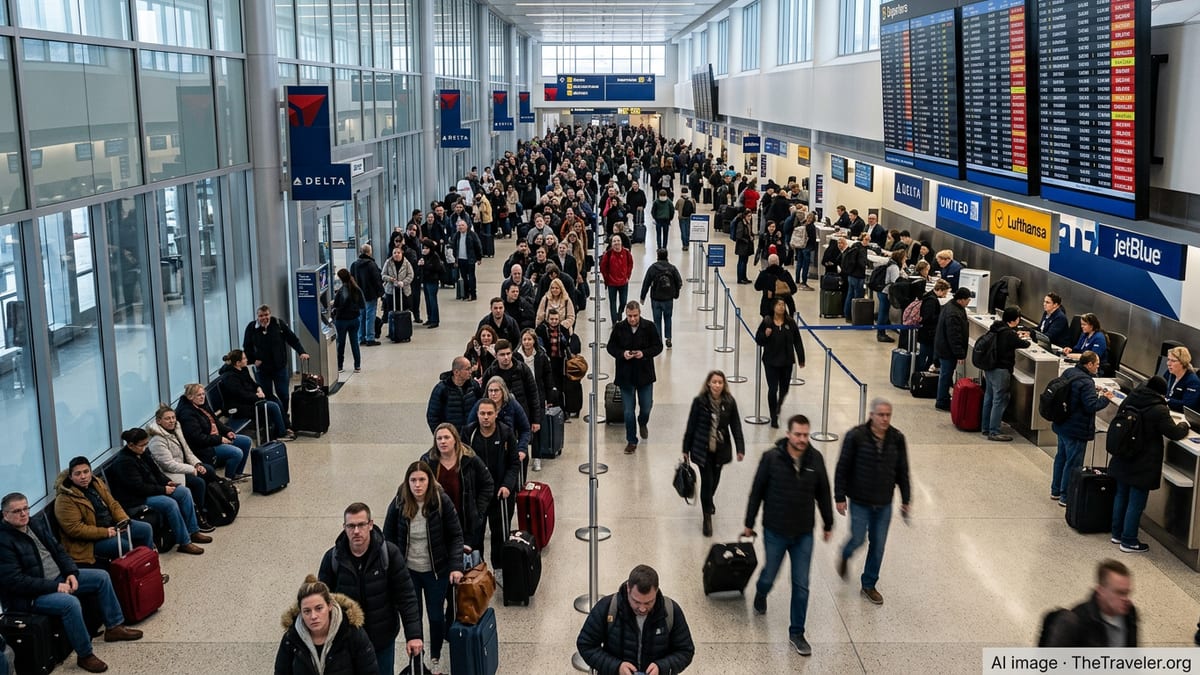
Widespread Disruptions Across Key U.S. States
Publicly available flight tracking data for today indicates that at least 341 flights within, into, or out of the United States have been canceled, with around 2,500 more facing delays. The impact is being felt most acutely at major and mid sized airports in California, Florida, Virginia, Pennsylvania, North Carolina, Michigan and Ohio, along with a scattering of additional hubs nationwide.
In California, high traffic gateways such as those serving the San Francisco Bay Area and Southern California have reported clusters of late departures and arrivals, with knock on effects on connections across the country. Earlier periods of heavy delay at West Coast hubs have been linked in recent weeks to low cloud, marine layers and thunderstorms, and similar weather conditions combined with busy summer schedules are again contributing to congestion.
Florida airports, including large tourist gateways and regional fields, are also reporting elevated levels of delay. Seasonal thunderstorms, high passenger volumes and tight aircraft utilization are amplifying minor timetable slips into longer waits at the gate and on the tarmac. Passengers heading to and from leisure destinations have encountered rolling delays that ripple into evening schedules.
Further north, airports in Virginia, Pennsylvania, North Carolina, Michigan and Ohio are posting a mix of cancellations and extended delays. These states sit along key domestic corridors, so disruptions there can quickly affect the broader network, compounding problems for both local travelers and those simply connecting through.
Major Airlines and Regional Partners Affected
American Airlines, Southwest Airlines and United Airlines are among the most visible carriers affected by today’s disruptions, reflecting their large share of the domestic market. Flight status boards show a combination of outright cancellations and lengthy delays for each of these airlines, particularly at their primary hub and focus cities.
PSA Airlines, a regional carrier that operates flights on behalf of American, has been part of the turbulence. As a feeder airline linking smaller and mid sized markets in states such as Ohio, North Carolina, Virginia and Pennsylvania to large hubs, any disruption in PSA’s schedule can make it harder for passengers to reach onward long haul and cross country flights. Regional operations are often more vulnerable to weather and air traffic control constraints because they tend to operate into a larger number of smaller airports.
Other regional and low cost airlines are also being pulled into the disruption pattern as shared airspace, congested runways and limited gate availability create bottlenecks. When a hub airport reduces arrival or departure rates due to storms or low visibility, all carriers operating there can be required to space flights out or temporarily hold them on the ground, magnifying the effect beyond a single airline.
In recent years, Department of Transportation data has shown that some large mainline and regional carriers historically experience higher cancellation rates than others, particularly during periods of challenging weather or operational strain. Today’s figures, while only a snapshot, align with that broader pattern of uneven impact across the industry.
Weather, Airspace Constraints and Operational Strain
Several overlapping factors are contributing to today’s disruption picture. Summer style thunderstorms and unsettled conditions in multiple regions are limiting the capacity of key airports and airways, compelling traffic managers to slow the flow of arrivals and departures to maintain safety margins. When these measures are in place, even minor schedule slippage can cascade through the day.
Air traffic management advisories indicate that some major hubs have been subject to ground delay programs or temporary ground stops during peak periods, restricting the number of flights that can depart for those airports at any given time. When departure slots are curtailed, airlines may be forced to push back estimated times or, in more challenging cases, cancel flights altogether if crews or aircraft will no longer be in the right place later in the day.
Operational strain within airlines is also playing a role. Tight aircraft rotation plans, limited spare aircraft and crew schedules approaching regulatory limits can make it difficult to recover once delays build up in the morning and early afternoon. A late arriving aircraft can trigger a domino effect across several subsequent flights, especially on busy routes linking the East and West Coasts or major hubs in the Midwest and Southeast.
Industry data tools that aggregate real time status reports show that total delays nationwide today have climbed into the several thousands, a level that typically corresponds with a mix of weather, congestion and airline specific issues rather than a single underlying cause. Passengers can experience that complexity simply as long lines and uncertain departure times, even though the root drivers vary from flight to flight.
How Travelers Are Feeling the Impact
For travelers, the most immediate effects of the 341 cancellations and 2,509 delays are missed connections, last minute rebookings and extended waits in crowded terminals. Passengers on early morning flights that were canceled have been scrambling for open seats later in the day, while those holding afternoon and evening tickets have been monitoring status updates closely as schedules continue to shift.
Airports in hard hit states, including large facilities in California and Florida and important connectors in Virginia, Pennsylvania, North Carolina, Michigan and Ohio, have seen longer lines at check in desks and customer service counters as people seek alternative routings. Self service tools and airline apps are handling much of the rebooking load, but capacity on popular routes can quickly become constrained when dozens of flights are disrupted at once.
Travelers heading to weddings, cruises and business events are among those facing difficult choices about whether to proceed with their original plans or adjust dates and destinations. With aircraft loads already high during peak travel periods, same day alternatives can be limited, particularly for groups or families seeking to stay together on a single flight.
Some consumer advocacy platforms note an uptick in interest from passengers trying to understand their rights when flights are significantly delayed or canceled. While compensation rules differ by country and by the reason for disruption, the current wave of delays has renewed attention on what support airlines provide in terms of meal vouchers, hotel stays and refunds in specific circumstances.
What Passengers Can Do Next
With cancellations and delays still evolving, travelers are being urged by publicly available guidance to keep a close eye on their flight status using official airline channels and airport information displays. Same day schedule changes are common on days with widespread disruption, and a flight listed as on time in the morning may slip later as conditions change.
Experts who track aviation performance often recommend building extra time into itineraries on days with elevated disruption levels, particularly when making tight domestic to international connections. For those yet to start their trips, options such as rebooking to earlier departures, choosing nonstop flights where possible, or routing through less congested hubs can sometimes reduce the risk of becoming stranded mid journey.
Travel insurance and credit card travel protections are also receiving renewed attention from frequent flyers. Some policies may cover additional expenses such as hotels and meals when delays extend overnight, though the exact coverage depends on the terms of each plan and the cause of the disruption.
As the day progresses, flight status data will clarify whether cancellations continue to rise or if airlines are able to slowly restore schedules closer to normal. For now, passengers across California, Florida, Virginia, Pennsylvania, North Carolina, Michigan, Ohio and beyond are navigating a challenging day of travel shaped by a complex mix of weather, airspace limits and operational pressures.