


More news on this day
Travelers at Houston’s William P. Hobby Airport faced a difficult travel day as dozens of departures were delayed across multiple airlines, disrupting key routes to Dallas, Orlando, Phoenix and San Diego and forcing many passengers to hastily rework their plans.
Get the latest news straight to your inbox!
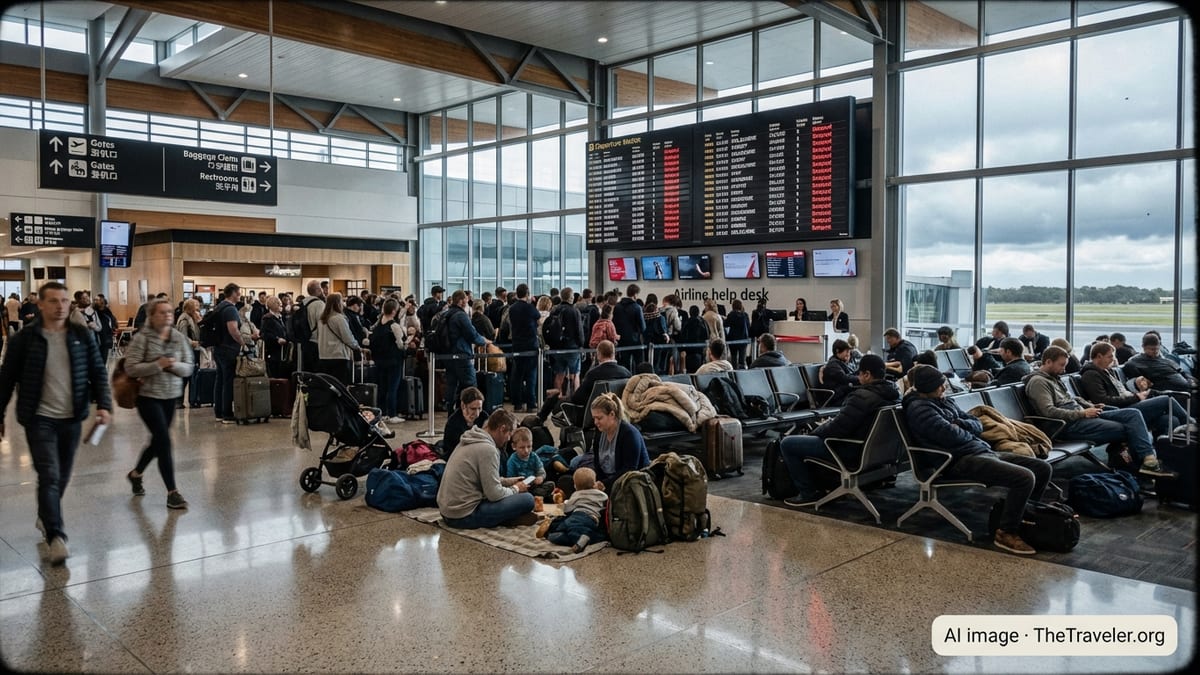
Multiple Airlines Log Dozens of Late Departures
Publicly available flight board data for William P. Hobby Airport on Sunday indicates at least 36 flights were listed with notable delays, along with several additional services newly delayed during the day’s operations. The disruptions spanned peak morning and afternoon departure banks, with some knock-on effects into the evening.
The latest boards show Southwest Airlines, the airport’s dominant carrier, accounting for the largest share of late departures. Regional operators such as Envoy Air and PSA Airlines, along with low cost carrier Avelo Airlines and other U.S. operators, also reported delayed flights in and out of the airport. The pattern mirrors broader performance trends tracked by federal transportation statistics, where these carriers regularly appear among the busiest operators by daily departures.
While most of the delays at Hobby were measured in under two hours, some services experienced rolling schedule changes as aircraft and crews cycled through the system. The combination of primary delays and downstream schedule adjustments contributed to a fluid situation for travelers trying to keep up with changing departure times.
Operational data suggests at least seven additional departures moved from on time to delayed status during the course of the day, underscoring how quickly conditions can shift at a mid sized hub airport handling hundreds of daily movements.
Key Leisure and Business Routes Hit: Dallas, Orlando, Phoenix, San Diego
The delays were especially visible on some of Hobby’s highest demand domestic routes. According to current network information, Southwest and other carriers link the airport with major destinations such as Dallas Love Field, Orlando, Phoenix and San Diego, routes that serve a mix of business, connecting and leisure travelers.
On the Dallas corridor, which typically sees frequent shuttle style service, delayed departures can quickly cascade into missed connections and tighter aircraft rotations at both ends of the route. Similar patterns apply to Orlando, where family and theme park travel is highly schedule sensitive, and where late afternoon or evening delays may impact next day itineraries.
Flights between Hobby and Phoenix and San Diego are also important links in broader West and Southwest networks. When those services push back late, aircraft arriving from Texas can be out of place for their next scheduled departures along the Pacific coast, increasing the risk of further schedule adjustments in subsequent legs.
Route maps published by airlines show Hobby as a key point in a mesh of connections touching many of the same cities that have experienced high traffic and congestion in recent years. That makes punctual operations in Houston critical for keeping wider networks on schedule.
Weather, Congestion and National System Strains
The precise causes of Sunday’s delays at Hobby have not been attributed to a single factor, but recent federal reports on U.S. airline performance highlight a familiar mix of contributors. Aviation consumer data from the Department of Transportation describes how non extreme weather, airport congestion, air traffic control programs, and late arriving aircraft are frequent sources of schedule disruptions across the industry.
In those reports, national aviation system issues and late arriving aircraft are consistently cited as major delay categories for large carriers such as Southwest, as well as regional operators including Envoy and PSA. When aircraft arrive late from a previous flight, the delay often propagates into their next departure, which can explain clusters of late flights within certain departure banks at hub and focus airports.
Seasonal weather can also play a role, even when conditions are not deemed severe. Low clouds, thunderstorms in surrounding airspace, or strong winds may require spacing arriving and departing traffic farther apart, reducing the effective capacity of runways and terminal airspace and creating queues on the ground and in the air.
Industry coverage over the past year has further pointed to air traffic controller staffing constraints and broader system pressures as underlying reasons why modest disruptions in one region can create ripple effects nationwide. In that environment, a busy operation at Hobby can quickly feel the impact of bottlenecks elsewhere in the network.
Passenger Experience: Missed Connections and Rebookings
For travelers, the practical effect of Sunday’s delays was a familiar mix of missed connections, shorter connection windows, and last minute itinerary changes. Passengers connecting through Dallas, Orlando, Phoenix or San Diego faced particular challenges when delayed departures from Houston narrowed already tight layovers at those onward hubs.
Travel forums and social media posts from recent months illustrate the kinds of scenarios many passengers encountered, including multi hour waits, rolling delay announcements and occasional same day cancellations after a series of schedule pushes. While those accounts relate to a range of airlines, including Southwest and Avelo, they reflect the broader experience of travelers navigating irregular operations across the U.S. system.
Customer service policies vary by carrier, but publicly available contract information generally outlines that travelers on significantly delayed domestic flights may be eligible for refunds, flight credits or accommodations in certain circumstances. However, the specifics often depend on whether the cause is considered within the airline’s control, such as maintenance or crew scheduling, or categorized as a national system or weather related disruption.
Given the number of delayed departures at Hobby, many travelers appear to have opted to rebook onto later services or alternative routes, especially where multiple daily departures exist between Houston and major destinations like Dallas and Orlando.
What Travelers Can Do During Ongoing Disruptions
Industry guidance and consumer advocacy groups consistently recommend several steps for passengers when delays accumulate at airports like Hobby. Monitoring flight status frequently, using both airline apps and airport displays, can help travelers respond quickly if departure times change or if a flight moves from delayed to on time.
Rebooking options are typically more flexible when a disruption is first announced, particularly on routes with frequent service such as Houston to Dallas or Orlando. Passengers who proactively request a different departure, even by a small margin, may secure more favorable alternatives before seats fill up on subsequent flights.
When delays appear likely to exceed several hours, travelers are often advised to review the airline’s published customer service commitments and contract of carriage to understand what forms of compensation or assistance might apply. For some carriers, meal vouchers, hotel accommodations or transportation reimbursement may be available when disruptions are within the airline’s control, though policies differ significantly between legacy, low cost and ultra low cost operators.
With William P. Hobby Airport serving as a key node in multiple domestic networks, the pattern of 36 existing delays and several newly delayed flights underscores how susceptible even routine travel days can be to operational strains. For now, publicly available data indicates that flights are continuing to operate, but with a margin of unpredictability that travelers are increasingly learning to factor into their plans.