


More news on this day
Travelers connecting through Doha on Wednesday faced mounting disruption at Hamad International Airport after a cluster of operational issues left around 60 flights delayed and one service canceled, affecting Qatar Airways and partner airlines on routes linking Doha with London, New York, Paris, Mumbai, Dubai, and Bangkok.
Get the latest news straight to your inbox!
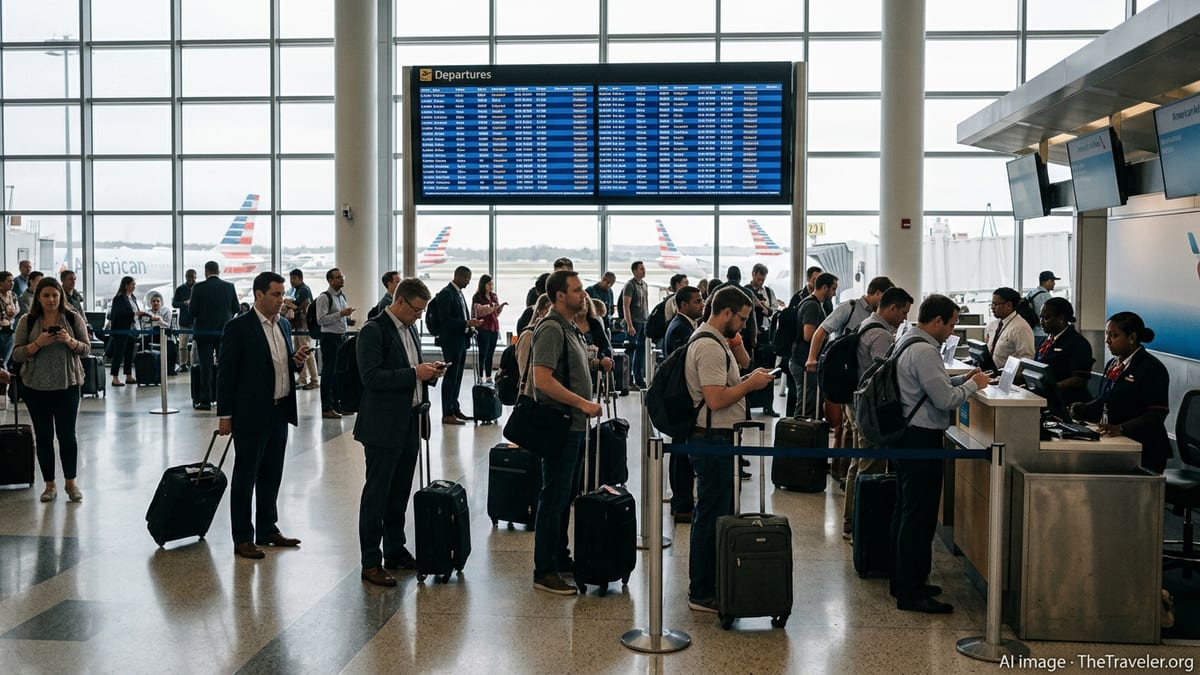
Wave of Delays Across Key Long Haul and Regional Routes
Publicly available flight tracking data for June 24 shows a pronounced build-up of delays on both departing and arriving services at Hamad International Airport. The latest snapshot indicates around 60 affected flights, with delay durations on many Qatar Airways services stretching beyond 45 minutes and in some cases surpassing the one-hour mark. One scheduled service has been marked as canceled, adding to the disruption facing passengers in transit through the Doha hub.
The impact is most visible on high-demand international routes that form the backbone of Qatar Airways’ global network. Services between Doha and London, New York, and Paris have registered rolling delays, which can cascade through the day as aircraft and crews rotate between long haul and regional sectors. Regional and short haul sectors to Mumbai and Dubai, along with a series of Southeast Asia connections to Bangkok, have also experienced schedule slippages, complicating tight transfer itineraries for connecting travelers.
Operational summaries published by airport and aviation data providers emphasize that schedules remain subject to adjustment or cancellation for a range of reasons, including airspace constraints, crew and aircraft availability, and congestion during peak transfer waves. For many passengers using Doha as a transit point between Europe, Asia, and the Americas, these irregular operations translate into missed connections, altered routings, or extended dwell times in the terminal.
While the majority of today’s flights at Hamad International Airport continue to operate, the concentration of delays on such heavily booked corridors magnifies the overall disruption. Even a single canceled flight at a large hub can require hours of rebooking and aircraft reassignment, especially when surrounding services are already operating close to capacity at the start of the northern summer travel period.
Background: A Network Still Normalizing After Regional Airspace Shocks
The latest wave of disruption comes as Qatar’s aviation sector continues to normalize operations following months of regional airspace instability earlier in 2026. Published coverage on Middle East airspace developments notes that Qatari and neighboring airspace experienced periods of closure and rerouting in late winter, prompting broad schedule reshuffles across carriers relying on Doha as a transfer hub.
Over recent weeks, Qatar Airways and Hamad International Airport have signaled through public updates that they are steadily rebuilding connectivity, with the airline aiming to serve more than 150 destinations and the airport reporting a gradual restoration of partner airline operations. However, available guidance has consistently underlined that flight schedules remain vulnerable to late changes driven by operational, regulatory, or safety considerations.
Aviation analysts point out that such a recovery phase often runs close to the limits of fleet and staffing flexibility. When networks are rebuilt at pace, day-to-day irregularities such as minor technical checks, inbound delays from other regions, or shifting air traffic control constraints can produce knock-on effects across multiple routes. The multi-continental profile of Hamad International’s traffic means any one bottleneck can quickly be felt from Europe and North America to South Asia and Southeast Asia.
Hamad International Airport, regularly cited in industry rankings among the world’s leading hubs, has also been accommodating the resumption of services by several international partner airlines. As these carriers layer additional frequencies into already busy transfer banks, the system’s resilience can be tested whenever disruptions occur during peak connection windows.
Passenger Experience: Missed Connections and Longer Layovers
For travelers on the ground today, the practical impact of the disruption is most acutely felt in longer connection times, missed onward flights, and uncertainty around rebooking options. Public dashboards tracking Doha arrivals and departures indicate that even when individual sectors are only slightly delayed, the tightly timed nature of many itineraries through Doha can leave passengers with little margin for schedule slippage.
On routes such as Doha to London and New York, where many passengers connect from South Asian and Southeast Asian origins, a delay on an inbound sector from Mumbai or Bangkok can jeopardize the onward transatlantic leg. In some cases, passengers may be automatically reprotected onto later flights, while others may need to be rerouted via alternate partner hubs, depending on seat availability and fare conditions.
Travel forums and recent commentary around Qatar Airways operations in 2026 have highlighted travelers’ concerns about minimum connection times, particularly during this period of network rebuilding. Publicly shared experiences suggest that even modest delays have, at times, been sufficient to disrupt connections that previously would have been considered achievable. Today’s pattern of delays at Hamad International is likely to reinforce calls from frequent flyers for more conservative scheduling during peak travel months.
Inside the terminal itself, a spike in delayed departures can result in crowded gate areas and increased demand for customer service desks. While Hamad International’s facilities, including extensive seating and airside amenities, are designed to handle high transfer volumes, passengers facing extended layovers often report that clear, timely information about revised departure times and rebooking remains the most critical factor in managing travel stress.
Guidance for Affected Travelers Heading to and from Doha
Public advisories issued in recent months for Qatar Airways customers continue to stress that passengers should avoid arriving at the airport without a confirmed, up-to-date booking. Given the latest round of delays at Hamad International Airport, travelers are encouraged to verify their flight status as close to departure time as possible through airline apps or official customer communication channels.
Travel planners suggest allowing additional buffer time for connections through Doha, particularly when itineraries involve long haul sectors to London, New York, or Paris, where missed departures can mean several hours or even a full day before the next available seat. Where possible, choosing slightly longer scheduled connection windows can provide extra protection against the kind of 30 to 60 minute delays currently being recorded across segments of today’s timetable.
Passengers already en route to Doha may find that rebooking options differ depending on where a delay originates and whether the affected ticket was purchased directly from the airline or via a travel agency. Publicly available guidance notes that some travelers holding flexible or recently adjusted tickets may be able to change dates or routes without additional fees during defined disruption periods, although policies can vary by fare type and point of sale.
Travel insurance with coverage for delays and missed connections may also help offset costs such as meals, hotel stays, or alternative transport arrangements for those facing extended disruptions. Insurance providers typically require documentation of delays or cancellations, so travelers are generally advised to retain boarding passes, delay notifications, and any written confirmation of schedule changes.
Outlook for Operations at Hamad International Airport
The pattern of roughly 60 delayed flights and one cancellation at Hamad International Airport on June 24 underscores how sensitive large hub operations remain during the current phase of network rebuilding in the Gulf region. Industry reporting suggests that airlines operating through Doha are still refining schedules and aircraft rotations as airspace conditions stabilize and demand grows into the summer travel months.
Looking ahead, aviation observers expect Hamad International and its primary tenant, Qatar Airways, to continue adjusting timetables, frequency levels, and connection banks in an effort to improve on-time performance while accommodating a broader route map. Based on recent operational updates, the trend over the coming weeks is likely to be one of incremental normalization rather than immediate, disruption-free operations.
Travelers with upcoming itineraries through Doha are therefore likely to encounter a mix of mostly routine operations punctuated by intermittent days of heightened disruption similar to today’s pattern. The extent of impact on any given journey will depend on route, time of day, and the tightness of planned connections.
For now, the events at Hamad International Airport highlight the continued importance for travelers of monitoring flight status, building flexibility into itineraries, and preparing for occasional irregular operations as one of the world’s leading transfer hubs works to restore a more reliable schedule across its global network.