


More news on this day
Delta Air Lines is preparing to launch a new nonstop route between Atlanta and Riyadh in October 2026, a move expected to significantly deepen air connectivity between the United States and Saudi Arabia as demand for business, religious and leisure travel continues to grow.
Get the latest news straight to your inbox!
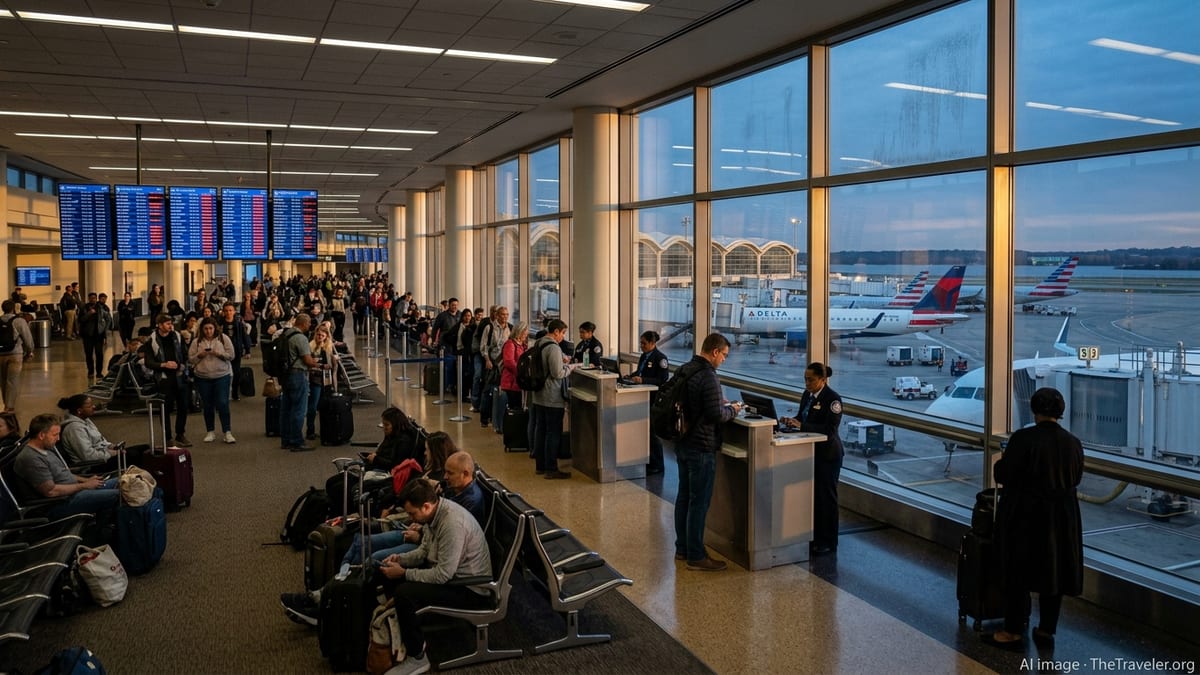
New Nonstop Link Between Atlanta and Riyadh
Publicly available schedule information for Delta Air Lines indicates that the carrier plans to inaugurate nonstop service between its Atlanta hub and Riyadh’s King Khalid International Airport in late October 2026. The planned route would represent a new nonstop link between the southeastern United States and the Saudi capital, reflecting a broader realignment of long haul networks toward Gulf and Middle East destinations.
The Atlanta–Riyadh launch follows a series of strategic moves by Delta in the Saudi market. The airline has outlined its intention to connect North America with Riyadh as part of a wider push to tap into fast-growing traffic flows between the United States and the Gulf region. Industry observers note that the new flight would join Delta’s broader transatlantic and transcontinental portfolio that already uses Atlanta as a primary gateway for connecting traffic from across the United States.
Operational details such as weekly frequency and exact departure times have not yet been fully reflected in public timetables, but capacity forecasts suggest the route is likely to be operated by a widebody aircraft capable of supporting both premium and high density economy cabins. Analysts expect the flight to be timed to feed into Delta’s domestic network on the U.S. side and into Saudi and regional services on the Riyadh side, maximizing connectivity in both directions.
Strategic Cooperation With Riyadh Air and Saudi Partners
The planned Atlanta–Riyadh service builds on a strategic cooperation agreement signed in July 2024 between Delta Air Lines and Riyadh Air. According to published corporate information, that memorandum of understanding laid the groundwork for a long term partnership designed to expand connectivity and premium travel options between North America, Saudi Arabia and beyond. The agreement envisages coordinated networks, future codeshares and aligned customer experience standards.
Riyadh Air, a Saudi full service carrier scheduled to begin operations in 2025, has been positioned as a central pillar of Saudi Arabia’s aviation ambitions. The airline is intended to transform Riyadh into a global hub with a wide network of intercontinental and regional routes by the end of the decade. In that context, a Delta operated nonstop service from Atlanta is viewed by industry specialists as a logical bridge that would feed traffic into Riyadh Air’s developing network once full commercial cooperation is implemented.
In parallel, Delta has pursued a separate codeshare arrangement with Saudia, the established Saudi flag carrier, giving Delta customers access to multiple Saudi destinations beyond Riyadh. This layered approach to partnerships suggests a strategy focused on building flexibility and scale in the Saudi market, with Riyadh emerging as a focal point for future connectivity from the United States.
Rising Demand for U.S.–Saudi Arabia Travel
The new Atlanta–Riyadh flight is being introduced at a time when Saudi Arabia is working to triple passenger volumes and attract significantly more international visitors by 2030. Government targets and airline fleet orders indicate an expectation of strong growth in both inbound and outbound travel, supported by infrastructure expansion at Riyadh’s main airport and large scale tourism and business projects across the kingdom.
For U.S. travelers, Riyadh’s emergence as a hub potentially offers more one stop itineraries to destinations across the Gulf, Indian subcontinent and parts of Africa. Analysts point to increased corporate travel linked to energy, infrastructure, technology and financial services, alongside steadily growing demand for religious travel to Saudi Arabia and leisure trips tied to newly promoted tourism regions.
On the U.S. side, Atlanta’s role as one of the world’s busiest hubs means the new service can draw passengers from dozens of domestic and regional cities, including many without existing one stop access to Saudi Arabia. Travel industry data show that one of the most effective ways to stimulate new demand is to introduce nonstop or single connection options that substantially reduce journey time compared with itineraries requiring multiple transfers.
Implications for Competition and Connectivity
The launch of an Atlanta–Riyadh route positions Delta more directly in competition with Gulf carriers and European airlines that currently dominate U.S.–Saudi traffic through their respective hubs. While some of those operators provide extensive one stop options, a nonstop link from Atlanta is expected to appeal to time sensitive corporate travelers and high yield passengers who value reduced travel time and fewer connections.
At the same time, the service complements rather than replaces one stop options through Europe and the Gulf. Airline network planners often describe such routes as part of a hybrid strategy, where nonstop flights on key trunk sectors sit alongside connecting services in order to capture different segments of demand. For travelers in secondary U.S. markets, the ability to connect via Atlanta onto a single overnight flight to Riyadh may simplify itineraries that previously required routing through multiple hubs.
Industry commentary also highlights the symbolic dimension of a nonstop U.S.–Saudi service operated by a major American carrier. As air connectivity deepens, there is potential for expanded trade missions, educational exchanges and tourism promotion campaigns focused on new visitor segments in both countries. Airlines typically respond to positive route performance with incremental frequency increases or upgauging of equipment, so analysts will be watching closely how the Atlanta–Riyadh route performs in its first full year of operation in 2027.
Looking Ahead to the 2026 Launch
With the first flight targeted for October 2026, travel planners and corporate buyers are expected to begin incorporating the Atlanta–Riyadh option into their schedules well ahead of launch. Advance publicity around the route, combined with the ramp up of Riyadh Air’s operations in 2025 and 2026, is likely to raise awareness of Riyadh as a connecting hub among North American travelers who may be more familiar with other Gulf gateways.
Observers note that aircraft selection, cabin configuration and onboard product will play a significant role in how the route is received. Delta has made premium cabins and upgraded economy experiences a core part of its long haul strategy, and the Atlanta–Riyadh deployment is expected to align with that positioning. Competitive fares, reliable operational performance and well timed connections on both sides will also be crucial to building a sustainable customer base beyond the initial novelty period.
As airlines finalize their northern winter 2026 schedules, further adjustments to timings and frequencies are still possible. However, industry data currently available indicate that Delta’s Atlanta–Riyadh service is poised to become a central element in the evolving air bridge between the United States and Saudi Arabia, reflecting both commercial opportunity and the broader reshaping of global aviation flows through the Gulf and Middle East.