


More news on this day
Rail investigators in the United Kingdom report that the driver killed in last week’s major train collision near Bedford passed a red signal moments before impact, casting new light on the circumstances surrounding a crash that injured more than 100 people on one of the country’s busiest main lines.
Get the latest news straight to your inbox!
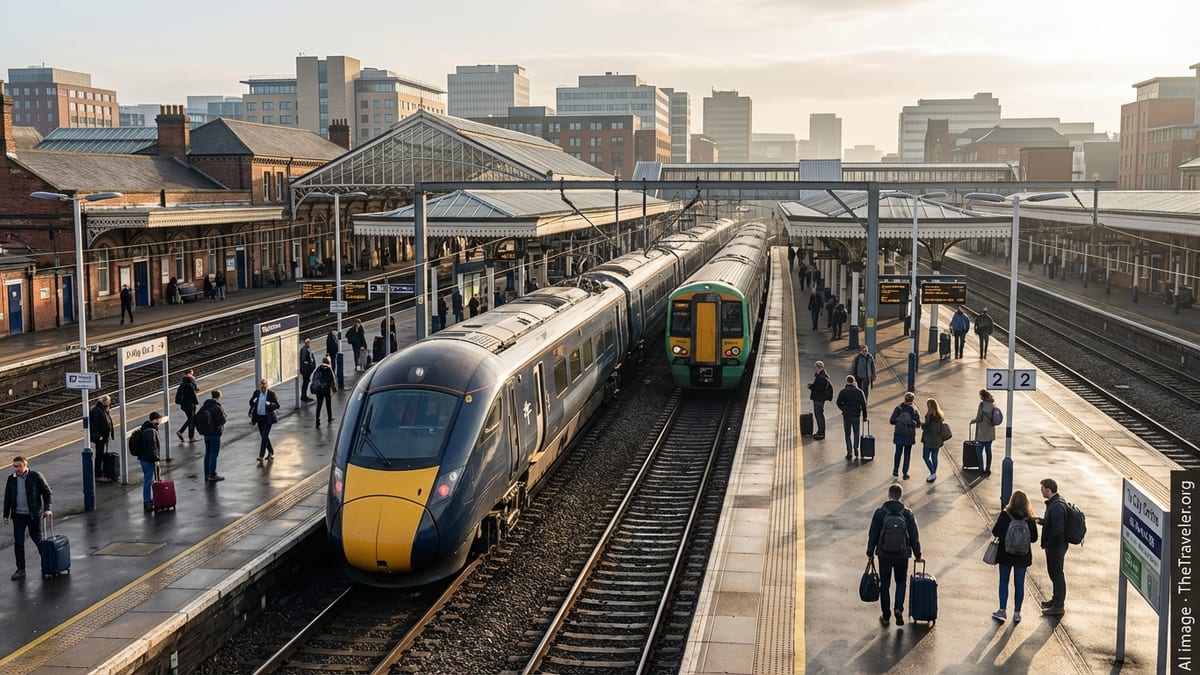
Interim report sheds light on Bedford collision
An interim summary from the Rail Accident Investigation Branch indicates that the southbound East Midlands Railway service involved in the Bedford-area crash on Friday 19 June continued past a signal that was displaying a red aspect shortly before it struck the rear of a stationary train ahead. Early analysis of data recorders suggests the brakes on the moving train were applied only seconds before the collision.
The incident occurred on the Midland Main Line near Elstow, just south of Bedford, on a section of track carrying frequent services to and from London St Pancras. According to published coverage, the London-bound train driven by 60-year-old Shaun Burton collided with another passenger service that had stopped on the same line, resulting in severe damage to the leading vehicles.
Publicly available information from emergency responders and transport agencies indicates that more than 160 people were on board the two trains. Over 100 passengers required medical assessment, with dozens taken to hospital and several remaining in critical condition in the days after the crash.
Investigators stress that their findings at this stage focus on establishing factual sequences and technical evidence. The early statement that the red signal was passed immediately prior to the crash is being treated as a key line of inquiry rather than a final conclusion on responsibility.
Driver identified as questions grow over safety systems
Reports name the driver who died as veteran railwayman Shaun Burton, described in public tributes as an experienced and well-regarded colleague. He was operating the rear train that struck the stationary service, and is believed to have died in the cab at the front of his train.
Coverage from national and regional outlets indicates that brake controls were placed into an emergency application around nine seconds before impact, giving investigators a narrow window to reconstruct events in the cab. Specialists are now examining whether visibility, train speed, distraction, or other human-factor issues may have influenced the driver’s response as his train approached the red signal and the stationary train beyond it.
The case is drawing particular attention because Britain’s rail network generally records very low casualty rates, with fatal multi-train collisions now relatively rare. Commentators note that when such events do occur, scrutiny often focuses both on the individual at the controls and on the broader system designed to prevent a single error from leading to disaster.
As floral tributes are placed near the route and rail staff observe moments of silence, industry figures and passenger groups are calling for caution about apportioning blame until the full technical investigation is complete. The Rail Accident Investigation Branch does not determine legal liability, and its role is to identify underlying causes and safety lessons.
Focus on signal protection and train-control technology
The revelation that the red signal was passed has turned attention to the protection systems fitted on this stretch of the Midland Main Line. Modern UK main lines are typically equipped with safety technology designed to warn drivers as they approach restrictive signals and, in some cases, automatically intervene if a stop signal is passed at speed.
According to technical commentary cited in specialist rail publications, investigators are examining whether the signal concerned was fitted with Train Protection and Warning System equipment, and if so, how it performed. This system can trigger an automatic brake application if a train approaches a red signal too fast or passes it without authority, significantly reducing the risk of a high-speed impact.
Publicly available material indicates that the train’s on-board data recorders, signal logs and trackside equipment are being analysed to determine whether any warnings were given, whether they were acknowledged and how the braking sequence unfolded. The distance between the red signal and the point of collision, together with the known speed of the train, will be critical for calculating how much time was available to react.
Experts observing the investigation note that past UK accidents involving signals passed at danger have sometimes been linked to gaps in protection coverage, configuration issues or equipment that did not behave as expected. The Bedford collision is therefore seen as a significant test of how effectively technology is being deployed on intensively used routes.
Impact on passengers and rail services along the Midland Main Line
The crash caused widespread disruption on one of the principal routes linking London with the East Midlands and northern England. Recovery teams faced a complex operation to remove damaged rolling stock, repair track and overhead power systems, and ensure the line could reopen safely.
Reports from railway operators state that services were heavily curtailed over the weekend following the collision, with long-distance and commuter passengers advised to avoid travel or use alternative routes. Replacement buses and diversions added hours to some journeys, and timetable changes continued into the following week as infrastructure checks progressed.
For those on board the trains, accounts gathered by media outlets describe scenes of confusion and fear in the immediate aftermath, with passengers thrown from seats, windows smashed and belongings strewn through carriages. Many described making their way along darkened coaches and walking beside the track to reach assembly points established by emergency services.
Hospitals across the region reported treating a wide range of injuries, from broken bones and head trauma to cuts and bruises. Rail companies have indicated that welfare support and compensation processes are being put in place for those affected, including passengers who escaped with minor physical injuries but experienced significant shock.
Next steps in a detailed and lengthy investigation
The Rail Accident Investigation Branch has opened a full inquiry into the Bedford collision, a process that typically runs for many months and culminates in a detailed public report. The interim finding about the red signal is expected to be followed by further updates as evidence is analysed and potential safety recommendations are drafted.
Investigators will review training records, rostering information, cab ergonomics, track layout and signalling design, as well as organisational factors such as maintenance regimes and risk assessments. They are also likely to compare the incident with previous UK and European cases where trains have passed stop signals and collided with other services, looking for recurring patterns.
Published commentary from rail safety analysts suggests that potential outcomes could include recommendations on the fitment or upgrade of automatic protection systems, revisions to operating rules, or changes to how drivers are briefed on particular locations with complex signalling. If issues are uncovered with infrastructure design or equipment reliability, infrastructure managers may be asked to make targeted improvements.
While separate regulatory and, if necessary, criminal inquiries will determine any legal consequences, the technical investigation is expected to shape how the industry understands and manages the risk of a single train passing a red signal on a busy main line. For passengers and rail workers alike, the hope is that the lessons drawn from Bedford will reduce the chances of another such tragedy on Britain’s railways.