

More news on this day
Hundreds of travelers moving through Brazil’s busiest air corridor between São Paulo and Campinas are facing cancellations, rolling delays, and missed connections after a cluster of disruptions involving GOL Linhas Aéreas, Azul Brazilian Airlines, and EuroAtlantic Airways grounded several flights and slowed operations on major routes.
Get the latest news straight to your inbox!
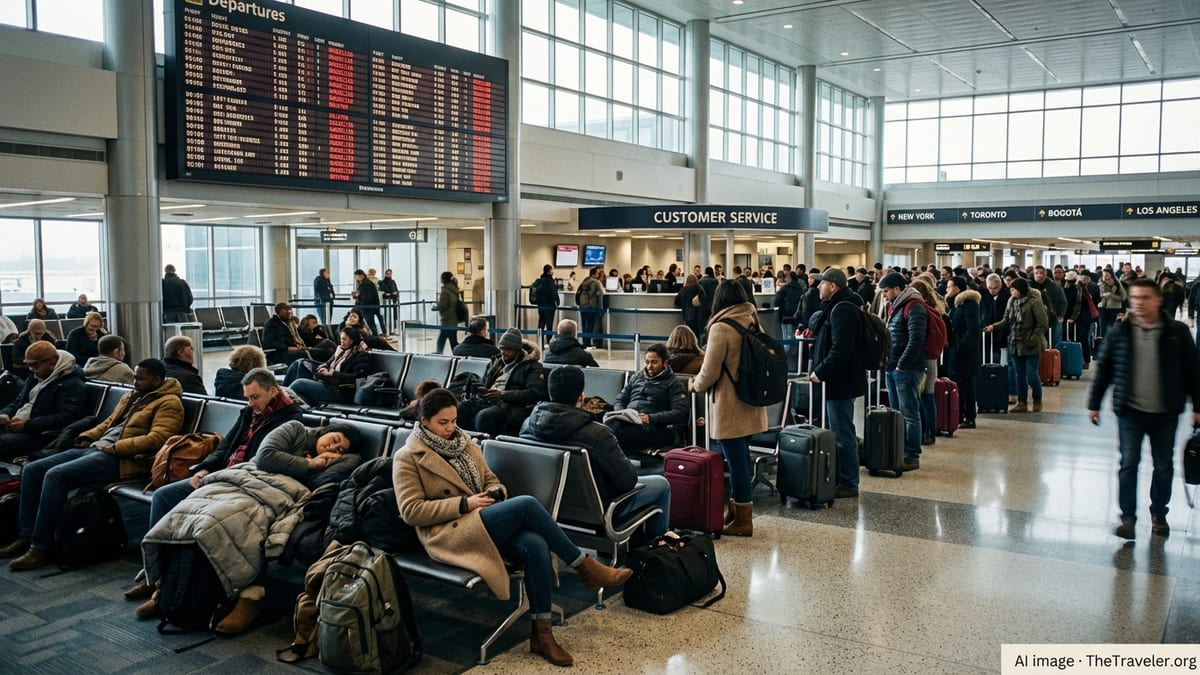
Grounded Flights Disrupt Brazil’s Busiest Air Corridor
Reports from Brazilian aviation trackers and local media indicate that at least six flights operated by or in partnership with GOL Linhas Aéreas, Azul Brazilian Airlines, and EuroAtlantic Airways were grounded over the past 24 hours, triggering knock-on delays across key hubs. The disruptions are concentrated at São Paulo’s Guarulhos and Congonhas airports and at Viracopos International Airport in Campinas, a primary base for Azul.
According to publicly available flight-status data, several Azul departures and arrivals at Viracopos have experienced extended delays, while select GOL operations touching São Paulo’s airports have seen schedule changes and late arrivals. EuroAtlantic, which typically appears in Brazil as a wet-lease and charter operator on long-haul sectors, has also seen at least one service held on the ground, affecting passengers connecting onward via São Paulo.
The cancellations and groundings have led to a tightening of capacity on some of Brazil’s highest-demand domestic routes, including links between Campinas, São Paulo, and other major cities such as Brasília, Rio de Janeiro, and Recife. With multiple carriers affected at once, travelers have reported difficulty finding same-day alternatives on comparable routes.
While the number of grounded flights remains limited in the context of the airlines’ overall schedules, the timing and location of the disruptions along Brazil’s busiest air corridor have amplified the impact for passengers trying to move between domestic and international networks.
Technical Issues and Operational Constraints Behind the Delays
Publicly available information points to a mix of technical and operational issues behind the current wave of disruptions. In Campinas, Azul has faced particular scrutiny after a recent high-profile incident in which a long-haul flight from Viracopos to the United States was forced to return to the airport shortly after departure due to reported technical concerns. That episode added pressure to an already tight schedule at the carrier’s main hub.
Flight-tracking platforms show that Azul’s long-haul services out of Viracopos, including routes to North America and Europe, have experienced irregular operations in recent days, with some flights departing late and others held on the ground for additional checks. These long-haul aircraft are often rotated through other key routes, meaning a delay on one sector can cascade into further disruptions in the domestic network.
GOL, which operates a dense schedule from São Paulo’s Guarulhos and Congonhas airports, has also been contending with timetable adjustments as Brazil enters a busy travel period. Public data on recent GOL services through São Paulo indicates pockets of late departures and arrivals, and at least one flight associated with the carrier’s network has been grounded for operational reasons, constraining available seats on short-haul links.
EuroAtlantic Airways, which typically appears in Brazil operating long-haul flights on behalf of other carriers or for charter programs, has seen a grounded service disrupt connections for travelers relying on São Paulo as a gateway. When a widebody flight of this type is delayed or cancelled, the impact can be outsized, affecting several hundred passengers at once and complicating rebooking efforts.
Heavy Passenger Impact at Guarulhos, Congonhas, and Viracopos
The concentration of disruptions at Guarulhos, Congonhas, and Viracopos has heightened the impact on passengers, since these three airports form the backbone of Brazil’s aviation system. Guarulhos is the country’s primary international hub, Congonhas handles a high volume of business-focused domestic traffic, and Viracopos serves as Azul’s main base and a key cargo and passenger gateway.
Travelers transiting Guarulhos and Viracopos have reported missed onward connections as delayed arrivals from regional cities arrive too late to meet long-haul departures to Europe and North America. In practice, a late domestic sector into São Paulo can strand passengers who are ticketed on separate itineraries, leaving them to rebook at their own expense or wait for scarce availability on later flights.
At Congonhas, where runway and airspace constraints already demand precise scheduling, even a small number of late or grounded aircraft can quickly ripple through the timetable. Recent congestion has left some travelers facing extended waits in the terminal, particularly during peak morning and late-afternoon departure banks when GOL and Azul both operate frequent shuttle-style services to Rio de Janeiro and Brasília.
Campinas’ Viracopos Airport has seen similar knock-on effects. With Azul dominating the schedule there and using the airport as a central hub, any technical or operational setback can create long queues at check-in and customer service counters as passengers seek rebooking options or information on re-routed flights.
Knock-on Effects for Domestic and International Connections
The grounded flights and rolling delays are creating complex knock-on effects throughout Brazil’s domestic and international networks. Passengers traveling from secondary Brazilian cities into São Paulo and Campinas for same-day connections onto long-haul flights are among the most exposed to disruption, particularly when itineraries involve multiple carriers.
Publicly available reports from travelers and aviation forums describe situations in which passengers arriving late into São Paulo lose onward connections to Europe or the United States, especially when their domestic legs are operated by GOL or Azul and their long-haul segments are on foreign airlines. Separate tickets and tight connection windows increase the risk of missed flights, additional hotel costs, and the need to reroute through alternative hubs.
International flights operated in partnership with EuroAtlantic or using EuroAtlantic aircraft under contract can also be affected when a single grounded widebody disrupts a weekly or multi-weekly schedule. Given that these services often connect Brazil to secondary European gateways, alternatives may be limited, forcing passengers to backtrack to larger hubs or wait for the next available departure.
Within Brazil, the immediate effect for many travelers is longer travel times and less predictability. When multiple carriers in the same corridor are managing technical checks, capacity constraints, or operational ripple effects at once, spare seats on competing flights become harder to find, narrowing rebooking options even for passengers with flexible tickets.
What Travelers Should Watch in the Coming Days
Given the current pattern of disruptions, publicly available information suggests that travelers planning to pass through São Paulo or Campinas in the coming days should allow extra time for connections and be prepared for schedule changes. Monitoring flight status closely on airline websites and flight-tracking platforms before leaving for the airport is advisable, particularly for early-morning and late-evening departures that are more vulnerable to the cumulative effects of earlier delays.
Travel industry guidance commonly recommends that passengers on separate tickets build in generous buffers when connecting between domestic flights on Brazilian carriers and long-haul services operated by foreign airlines. The latest disruptions involving GOL, Azul, and EuroAtlantic reinforce that advice, especially at Guarulhos and Viracopos, where terminal changes and security re-screening can add extra time.
Consumer advocates in Brazil frequently note that passengers affected by extended delays or cancellations may be entitled to assistance such as meals, accommodation, or rebooking options under national aviation consumer rules, depending on the cause and length of the disruption. Travelers are often encouraged to retain all documentation, including boarding passes and receipts for out-of-pocket expenses, in case they later pursue claims with airlines or seek guidance from Brazil’s consumer protection bodies.
With demand for air travel in Brazil running high as the country moves through a busy mid-year period, even limited groundings and clusters of delayed flights can strain the system. The recent issues involving GOL, Azul, and EuroAtlantic highlight the continued sensitivity of Brazil’s aviation network to technical and operational shocks, particularly along the vital São Paulo and Campinas corridor.