

More news on this day
Hundreds of passengers traveling through Philadelphia International Airport experienced a day of severe disruption as American Airlines and its regional partners PSA Airlines, Republic Airways and Jazz recorded a cluster of cancellations and well over a hundred delays affecting routes to Toronto, Montreal, Miami, Boston, Atlanta and Indianapolis.
Get the latest news straight to your inbox!
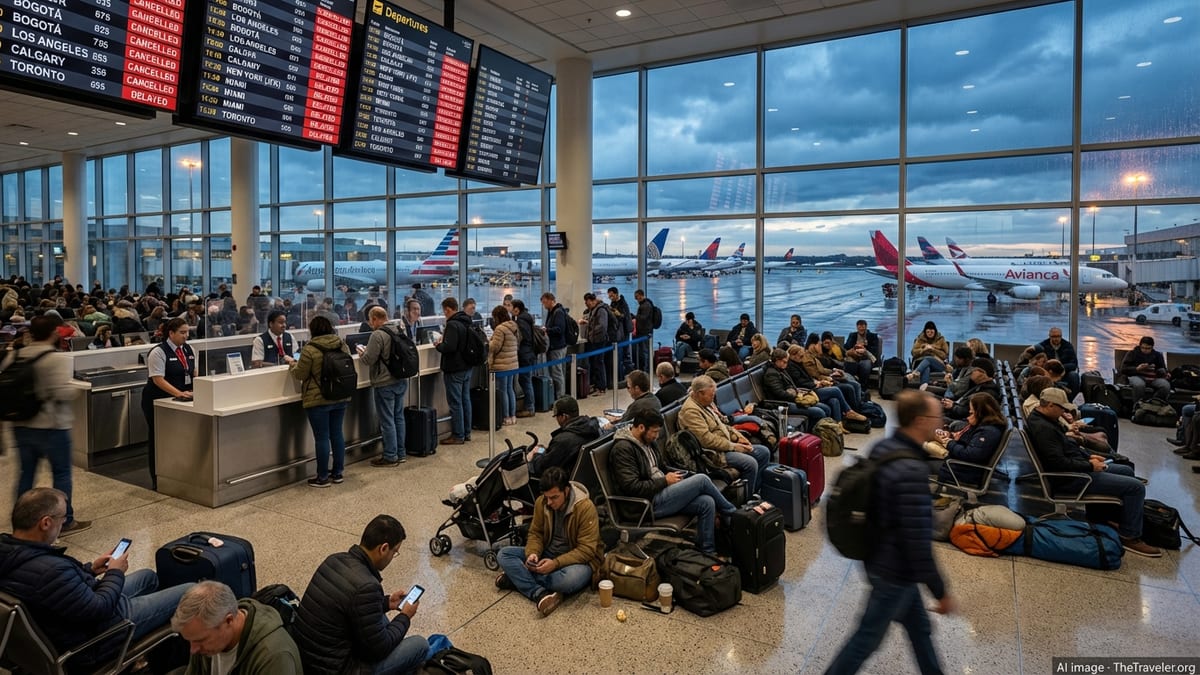
Philadelphia Hub Hit by Cluster of Cancellations
Publicly available flight-tracking data and independent travel-industry monitoring on June 23 indicate that operations at Philadelphia International Airport were significantly strained, with 12 cancellations and around 181 delayed departures and arrivals involving American Airlines and affiliated regional carriers PSA Airlines, Republic and Jazz. The disruption centered on American’s busy domestic and cross-border network, amplifying the impact for connecting passengers.
Philadelphia functions as a primary East Coast hub for American, supporting a large share of the airline’s transatlantic and Northeast traffic as well as key domestic links. When irregular operations occur at the airport, the effect typically ripples through connecting flights to major business and leisure destinations, which on this occasion included Toronto, Montreal, Miami, Boston, Atlanta and Indianapolis.
Monitoring platforms show that the cancellations were concentrated among American’s regional operations, particularly flights marketed by American but operated by PSA Airlines and Republic. These carriers handle a high volume of short-haul traffic into Philadelphia from secondary U.S. markets and Canadian gateways, meaning that a relatively small number of cancelled rotations can strand or misconnect a large number of travelers across the network.
Although cancellations accounted for a smaller share of affected services, the much larger pool of delayed flights contributed to lengthy queues at security, customer-service desks and rebooking counters, as well as congestion throughout the terminal complex.
Knock-on Effects Across the U.S. and Canada
Data compiled by independent aviation and travel outlets show that the Philadelphia disruption did not occur in isolation but formed part of a broader pattern of operational strain affecting U.S. carriers in late June. Previous days saw clusters of cancellations and delays at other regional hubs, with SkyWest, Republic and Envoy among those reporting elevated disruption levels, and American frequently appearing at or near the top of delay and cancellation tallies.
On June 23, the issues at Philadelphia translated directly into problems for passengers heading to and from several major cities. Departures to Toronto and Montreal experienced both schedule changes and extended ground holds, affecting travelers on cross-border itineraries and those relying on onward connections to Europe and the U.S. West Coast.
Routes to high-demand U.S. destinations were similarly affected. Flights linking Philadelphia with Miami and Boston encountered rolling delays that grew longer as the day progressed, complicating connections onto Caribbean, Latin American and New England services. Services to Atlanta and Indianapolis also appeared among the disrupted routes, underlining how quickly a hub-level problem can spread into secondary markets.
Because many of these flights serve as feeder legs into American’s wider network, passengers reported missed onward departures and forced overnight stays in intermediate cities, a common outcome when ground or airspace constraints leave carriers with limited spare aircraft and crews to reposition.
Weather, Congested Airspace and Operational Strain
Publicly posted travel alerts and operational summaries for late June point to a combination of unstable summer weather along the Eastern Seaboard, congested airspace and underlying operational challenges as contributing factors. Thunderstorm activity and associated air-traffic control flow programs have periodically affected key Northeastern and Mid-Atlantic airports, including Philadelphia, Boston and New York, throughout the month.
When weather or airspace restrictions reduce arrival and departure rates at a hub like Philadelphia, airlines typically respond by trimming schedules, prioritizing long-haul and international operations and consolidating traffic where possible. Industry analysis suggests that this can leave shorter regional legs particularly vulnerable to cancellation, as carriers weigh aircraft and crew positioning against total passenger impact.
Recent consumer discussions and third-party commentary about American’s performance have also highlighted recurring themes of tight schedules, limited spare aircraft and crew-availability constraints, especially within the carrier’s regional network. These factors can make recovery from even a modest disruption slow, as a single delayed or cancelled rotation may cascade across multiple later departures.
At the same time, American has been promoting schedule enhancements at Philadelphia and other hubs as part of a broader push toward a record summer travel season. The contrast between expansion plans and the reality of recurring irregular operations has sharpened scrutiny from frequent travelers and aviation observers tracking day-to-day performance metrics.
Passenger Experience: Long Lines, Missed Connections
For passengers on the ground at Philadelphia, the numerical totals of 12 cancellations and 181 delays translated into familiar scenes of crowded concourses, lengthy waits at gate podiums and uncertainty around departure times. Travelers connecting from smaller markets via PSA and Republic-operated flights were particularly exposed, as the loss or delay of a single regional leg often meant losing access to international or transcontinental departures from the hub.
According to accounts shared across social platforms and in online travel forums, some travelers reported rolling delay notifications in increments of 30 to 60 minutes, a pattern that has drawn criticism in previous disruptions involving American and its regional partners. This incremental approach can keep passengers close to the gate but may reduce their ability to pursue alternative options before seats on remaining flights are exhausted.
Those headed to Toronto and Montreal faced the added complication of international documentation and customs clearance, which can limit rebooking choices late in the day. In markets like Miami, Boston, Atlanta and Indianapolis, disrupted passengers described scrambling to secure scarce seats on later departures or reroutes via alternative hubs, sometimes involving additional connections and overnight layovers.
Families traveling for summer holidays and travelers on time-sensitive business trips appeared among those most affected, with some reports describing missed events, lost vacation time and added out-of-pocket expenses for hotels and meals in connecting cities.
What Travelers Can Do During Ongoing Disruptions
While the operational picture typically improves in the days after a major disruption, aviation data for late June suggests that summer irregular operations remain an ongoing risk across much of the U.S. network. Passengers booked on American, PSA, Republic or Jazz itineraries through Philadelphia and other East Coast hubs in the coming days may face continued schedule volatility, especially during afternoon and evening peak periods when convective weather is most likely.
Travel experts and consumer advocates generally recommend that passengers monitor their flights frequently through airline apps and third-party trackers, enabling earlier rebooking when signs of significant disruption appear. Publicly available guidance also encourages travelers to consider morning departures, which are statistically less affected by knock-on delays from prior rotations.
In the event of cancellations or long delays, passengers are typically advised to seek clarity on their rights to rebooking, refunds or vouchers by consulting official airline policies and U.S. Department of Transportation guidance. These resources outline the circumstances under which travelers may be eligible for compensation or alternative arrangements, particularly when disruptions are not categorized as weather-related.
With American and its regional affiliates continuing to operate dense schedules at Philadelphia and other hubs during the peak summer period, analysts suggest that travelers should build additional buffer time into itineraries that rely on tight connections through weather-prone regions or busy East Coast airspace.