

Most visitors experience Antibes between the cruise port and the postcard-perfect old town. They photograph the ramparts, dip a toe at Plage de la Gravette, maybe queue for ice cream on Rue Sade. Then they leave believing they have "done" Antibes. In reality, the town and its peninsula hold a quieter, wilder and more local side that regulars and residents quietly keep to themselves. This guide opens the door to those lesser-known corners, with practical tips so you can experience Antibes the way locals actually use it.
Get the latest updates straight to your inbox!
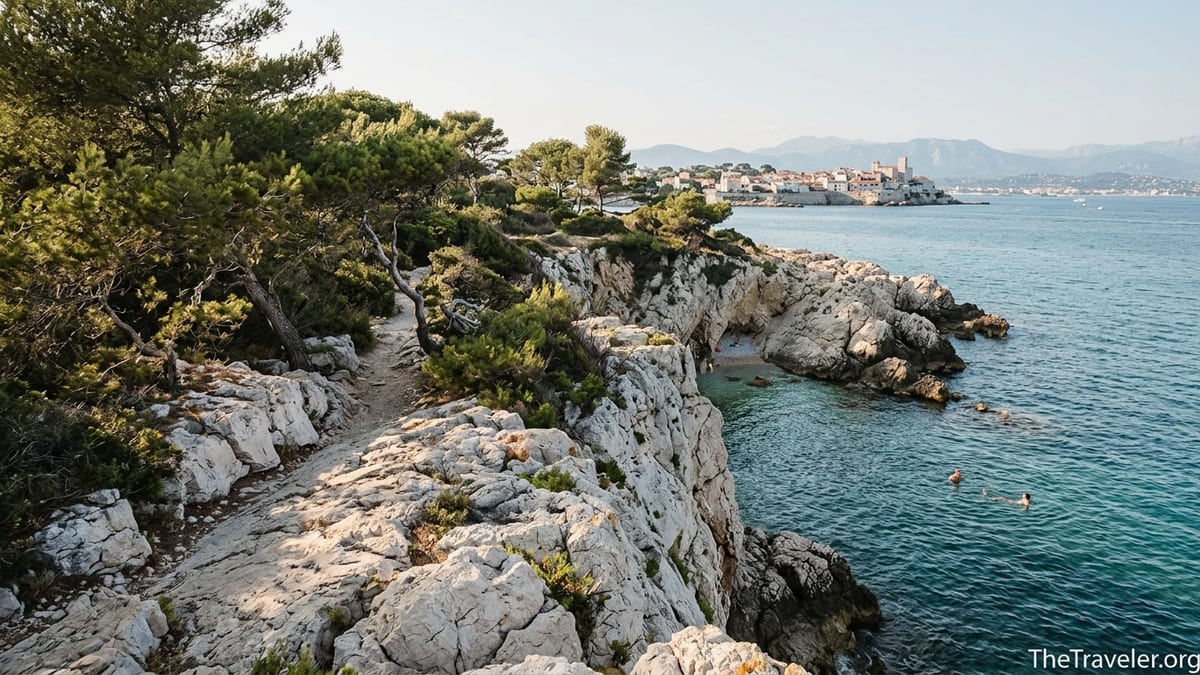
Wild coves and secret swims on Cap d’Antibes
Cap d’Antibes is famous for its billionaire villas and polished beach clubs, but if you step away from the sun lounger rows you discover a much rougher, more intimate coastline. The Sentier du Littoral, also called the Tire-Poil coastal path, traces the edge of the cape for roughly 2.5 to 3 kilometres between Plage de la Garoupe and the Baie des Milliardaires. Much of the trail runs just a few metres above the sea on weathered limestone, with short staircases dropping to flat rocks where locals swim before or after work. These rocky ledges are not signposted as beaches and there are no lifeguards, which is precisely why they stay quiet even in July and August.
Most visitors stop at Garoupe’s main sandy section and never realise that if you continue past the chapel car park and pick up the path, you reach a series of wild coves where the water is clearer than in town. On calm days, residents arrive with just a towel and a mask, descend one of the stone stairways and spread out along the rocks for a swim. There are no rented loungers, no loud music, and no bars. Bring solid sandals for the uneven path, plenty of water, and expect zero shade apart from what the pines cast in late afternoon.
If you want something slightly more comfortable without losing the sense of seclusion, head towards the tiny coves tucked between Boulevard Bacon and the Garoupe lighthouse road on the eastern side of the cape. These pocket coves are pebbly and rarely groomed. Seaweed and stones are left as nature intended, so they are not ideal for beach games but perfect for a quiet sunset swim with views back to the Alps. There is usually free parking scattered along Boulevard Bacon outside peak hours, but in midsummer it is often easier to reach the area by bus from Antibes or Juan-les-Pins and then walk down.
Safety here is about common sense. The sea can become choppy when the wind picks up, there are no flagged swimming zones, and the rock shelves can be slippery. If you are travelling with children or are a less confident swimmer, plan your wild swims early in the morning when the water is calmer and always check the sea conditions that day with your hotel or a local beach attendant before committing to the longer coastal walk.
Quiet local beaches beyond the old town
Inside Antibes itself, most first-timers end up at Plage de la Gravette right by the old walls. It is pretty, shallow and easy, but it also gets shoulder-to-shoulder crowded from late morning in summer. For a more low-key atmosphere, locals drift west towards Plage du Fort Carré and the pebble strands that run on towards La Fontonne and Biot. These beaches sit just beyond the imposing star-shaped Fort Carré, a 16th century defensive work that still watches over the harbour and bay.
Unlike the manicured sand of Gravette, the shoreline here is predominantly pebbles. That simple detail makes a huge difference to the crowds. Families from nearby neighbourhoods arrive in flip-flops with foldable camping chairs, spread out along the waterline, and stay for barbecues and picnics in the long evening light. In early summer you can often have large sections almost to yourself at lunchtime. There are no polished beach clubs here and only a handful of simple kiosks where you can pick up a coffee, cold drink or ice cream for a few euros.
These western beaches appeal if you want views rather than facilities. On a clear day you can look left towards Nice with the Alps rising behind, and right across the bay towards the old town’s skyline and ramparts. The water deepens more quickly than on the sheltered Gravette, and the stones get hot in mid-afternoon, so most people bring thick towels or simple foam mats and plan their swim for late afternoon or early evening. It is one of the most atmospheric places around Antibes to watch the sky slowly turn pink and orange as locals stroll the waterfront promenade with dogs and strollers.
To reach the area on foot, follow the seafront road north from Port Vauban past the Fort Carré football stadium until you see stairways leading down to the water. By car, there is free roadside parking along sections of the coastal road, but spaces disappear fast on hot weekends. The atmosphere remains resolutely local: you are unlikely to hear English or German here, even in high season, which is exactly the point.
Hidden lanes, artists’ corners and village calm
Within the old walls of Antibes, high season crowds funnel along just a few arteries: the harbourfront, the market street and the main spine leading from the port entrance up towards Place Nationale. Step just one block away and you start to hear your own footsteps again. The small quartier around Rue Sade, Rue du Haut Castelet and the lanes backing onto the old ramparts is one of the easiest places to feel that shift from tourist town to lived-in village.
Here, former workshops and antique shops have quietly become character-filled restaurants and studios while keeping their original bones. On a warm evening, you might notice only a small chalkboard menu and a string of bulbs leading through an unremarkable stone doorway into a leafy courtyard where just a dozen tables are set under citrus trees. Many of these spots focus on short, seasonal menus built around whatever looks best that day at the Marché Provençal: grilled Mediterranean fish with fennel and lemon, rabbit with olives, or a simple assiette of local charcuterie and cheeses. Prices for a main course usually fall in a mid-range bracket, often less than what you would pay on the busier seafront terraces.
Because the facades here are often understated, it is easy to walk straight past. Look for hints locals use: handwritten menus only in French, a blackboard listing a plat du jour instead of laminated menus with photos, and a dining room that is half full by 8 pm even in shoulder season. Many of these restaurants close one or two days a week, especially outside July and August, and service tends to be unhurried. Reserve if you can, and if you walk in without a booking, accept that you might need to come back for the second seating after 9 pm.
By day, the same area feels almost sleepy, especially once the morning market crowds ebb. Classic shuttered townhouses shade narrow cobbled lanes where cats sleep on windowsills and the only noise is a distant scooter. This is an excellent time to wander with a camera, slip into small independent galleries tucked under stone vaults, or simply sit on a low rampart wall overlooking Port Vauban and watch the contrast between mega-yachts and fishing boats below.
Fort Carré and forgotten viewpoints of the bay
From a distance, Fort Carré looks like another historical monument to be admired and then moved on from. On the ground, it is one of the most atmospheric places in Antibes to feel the town’s layered history and enjoy wide, uncrowded views. Set on a 26 metre high rocky spur above the harbour, the star-shaped fort once formed part of the defensive network that protected Antibes from attack by sea and land. Today it is a quiet public site rather than an active military post, with entry tickets typically costing just a few euros, making it one of the better-value cultural visits in town.
Inside, simple guided circuits explain how the fortress evolved from the 16th century onwards. You walk through echoing stone corridors and across open courtyards where the mistral can whistle straight through in winter. For many visitors, the highlight is the chance to climb up to the ramparts and walk sections of the wall. From here, you can look one way across the marina towards the old town’s terracotta roofs and cathedral tower, and the other way over the wider Bay of Angels, where airliners trace silent curves on their approach to Nice. It is rarely crowded, even when tour buses line up outside.
Below the fort, a strip of scrubland and pine trees separates the ramparts from the water. Locals use the informal paths here for jogging, walking dogs and evening strolls, but many short-stay visitors never set foot in this green buffer. The combination of maritime pines, open sky and views back to Antibes make it a pleasant place for a picnic if you want a breather from town. Pick up supplies from a supermarket or bakery on the way, find a bench or flat rock, and you will likely be sharing the space only with residents and the occasional fisherman casting from the shore.
Late afternoon tends to be the most attractive time to visit, when the light softens and the worst of the heat has passed. If you come earlier in the day, bring a hat and water because shade on the ramparts is minimal. Comfortable shoes are useful for the uneven stone steps, though the climb is relatively short and manageable for most people with average fitness.
Living like a local around the Marché Provençal
The covered Marché Provençal in old Antibes is on most visitor itineraries, yet the way you use it determines whether it feels like a tourist show or a genuine glimpse into local life. Many day-trippers rush through with a camera, snapping stalls of olives, cheeses and spices before returning to the seafront. Locals move differently. They come early, usually before 9 am, when the hall is filled with chefs and residents doing their daily shop. This is when you see real exchanges between producers and regular customers over which goat cheese is at its best that week or whether the figs will ripen in time for Sunday lunch.
If you rent an apartment with a kitchen, the market becomes your pantry. For breakfast at home, expect to pay roughly the price of an espresso in a cafe for a bag of ripe stone fruit or a crusty baguette that will last the morning. Many stalls also sell prepared items such as tapenades, stuffed peppers and anchovy-based pissaladière that make an instant picnic. With a little planning you can assemble a generous lunch for two from the market, plus a bottle of local rosé from a nearby wine shop, for less than the cost of two main courses on a harbourfront terrace.
Around the market hall, a cluster of small, mostly independent eateries take advantage of the morning footfall yet remain oriented towards residents. Tiny seafood counters offer a daily changing blackboard menu built on whatever came off the boats that morning: grilled sardines, sea bream with lemon and herbs, or a simply fried plate of calamari. Seating is often basic, with just a few high stools or small tables squeezed against the wall, and many do not accept reservations. Arrive on the early side of lunch, around 12 pm, and be prepared to wait a little; the short menus and fast turnover mean queues usually move quickly.
In the surrounding streets, holes-in-the-wall serve Lebanese wraps, socca and simple plat du jour dishes to market workers and office staff. These are some of the few places in this part of the Riviera where you can still eat a hot, satisfying lunch for a modest price, especially if you opt for the daily special instead of the a la carte menu. Glance at the clientele: if you see stallholders and delivery drivers eating there in the shoulder seasons of May and October, you have probably found a solid, good-value address.
Jazz heritage and under-the-radar music nights
Antibes has a deeper relationship with jazz than many casual visitors realise. The seaside resort of Juan-les-Pins, which forms part of the wider Antibes commune, has hosted one of Europe’s major jazz festivals since the early 1960s. Over the decades, figures such as Charles Mingus and countless others have performed here, contributing to a musical heritage that now feels woven into the town’s identity. You can see physical traces of that history along Boulevard Edouard Baudoin, where ceramic tiles embedded in the pavement bear the handprints of musicians who played the festival over the years.
While big-name concerts attract international press each July, the hidden gems are the smaller evenings that spin off from this tradition. In autumn, the town’s tourist office helps run Jammin’Juan, an event that mixes a professional jazz marketplace with public concerts in smaller venues. Throughout the year, a handful of bars and cultural centres put on occasional live sets and jam sessions that rarely appear in mainstream tourist brochures. These nights attract a mix of local music students, seasoned festival veterans and curious neighbours.
To tap into this side of Antibes, think in terms of bulletin boards and word of mouth rather than glossy posters. Check programme flyers at the tourist office, look for chalkboards outside bars around Place Nationale and Rue Sade, and pay attention to announcements pinned up in the windows of cultural centres. Ticket prices for smaller concerts are often modest, sometimes no more than the cost of a cocktail on the seafront. Even if you are not a dedicated jazz fan, spending an evening in a room where locals genuinely care about the music can be a highlight of a stay in Antibes.
On summer nights, street parades and open-air performances occasionally wind through both Antibes and Juan-les-Pins, with brass bands and smaller ensembles performing for free along the waterfront or in small squares. These events are usually linked to the larger festival calendar, so if you are visiting in July or early August, ask at your accommodation or the tourist office which nights something is planned. They provide a chance to experience the Riviera at its most spontaneous, as residents spill out onto the streets and children dance alongside visitors under the plane trees.
Practical tips for finding your own hidden corners
Hidden gems in Antibes are less about secret addresses and more about timing and approach. The same street can feel completely different at 8 am on a Tuesday in May compared with 3 pm on a Saturday in August. If you want to experience the town at its most authentic, plan a few early starts. Wander the old streets while shutters are still half closed, grab a coffee at a bar where harbour workers stand at the counter, and explore the ramparts before the heat and the cruise groups arrive.
The shoulder seasons of late April to early June and September to early October are ideal. Sea temperatures are usually comfortable enough for swimming from late May onwards, but the wild coves of Cap d’Antibes and the pebble beaches near Fort Carré remain much quieter than in high summer. Accommodation prices ease off compared with July and August, and restaurants have more space for walk-ins. Even in peak season, you can reclaim some calm by eating your main meal at lunchtime rather than in the evening and by targeting the slightly less polished beaches and waterfront stretches that do not double as Instagram backdrops.
Transport plays a role too. Antibes is compact enough that you can walk almost everywhere inside the old town and along the seafront, but a local bus or rental bike opens up less obvious corners like the roads behind Cap d’Antibes and the neighbourhoods north of the station. If you do rent a car, be prepared to park it once and leave it; streets within the walls are labyrinthine and parking fills quickly. A better strategy is to use public car parks on the edge of the old town, explore on foot, and then rely on buses or your own legs for the coastal paths and outlying beaches.
Above all, allow some unstructured time. A morning with no set plan, spent following whichever lane looks the quietest or whichever path seems to lead towards the sea, often yields the most personal discoveries. That might be a pocket-sized square with only a fountain and three benches, a set of stone steps leading to a viewpoint you did not expect, or a neighbourhood bar where the owner remembers your drink on the second visit. Antibes rewards curiosity and slowness more than it does box-ticking.
The Takeaway
Antibes is not just the sum of its postcard views. Beyond the busy old-town lanes and main beaches lies a quieter Riviera of wild rocks, pebble strands, fortress walks and unshowy neighbourhood restaurants. The most rewarding discoveries rarely require long journeys or insider contacts, only the willingness to step one street back from the obvious and to adjust your timing to the town’s own rhythm.
Spend a morning wandering the Marché Provençal like a local shopper instead of a spectator, trade Plage de la Gravette for the pebbles near Fort Carré at sunset, follow the Tire-Poil path until you find a cove that feels like it was made just for you. Listen for live jazz seeping from an unassuming bar or square, and leave room in your schedule to follow that sound. Do that, and you will leave with an Antibes that feels more personal and far richer than anything you could glimpse from a day-trip checklist.
FAQ
Q1. When is the best time of year to explore Antibes’ hidden gems?
The most comfortable months are late April to early June and September to early October, when the sea is usually warm enough to swim and the coastal paths, coves and restaurants are less crowded than in peak summer.
Q2. Is the Cap d’Antibes coastal path suitable for children?
The path is manageable for older children used to walking, but there are exposed sections, uneven rocks and no barriers in places. Families often choose to walk only the easiest segments near Plage de la Garoupe, avoid windy days, and keep younger children close by at all times.
Q3. Do I need a car to reach the quieter beaches and coves?
No. Many less busy spots, such as the pebble beaches near Fort Carré and sections of the Cap d’Antibes path, can be reached on foot or by local bus from the centre of Antibes. A car can be convenient outside summer but parking is limited in high season, so public transport and walking are usually more relaxed options.
Q4. Are there facilities at the wild coves on Cap d’Antibes?
Facilities are minimal or nonexistent. You will not find lifeguards, showers, changing cabins or cafés directly at the most secluded coves. Plan to bring water, snacks, sun protection and suitable footwear, and treat these coves as natural swimming spots rather than organised beaches.
Q5. How can I find more local, less touristy restaurants in Antibes?
Look one or two streets back from the busiest squares and the harbourfront, especially around the lanes near Rue Sade and the market. Short, seasonal menus on chalkboards, a noticeable local clientele, and a plat du jour are good signs that a place serves residents as much as visitors.
Q6. Is Fort Carré worth visiting if I am short on time?
Yes. The visit is compact, relatively inexpensive and offers broad views over the harbour, old town and bay that you do not get elsewhere. Even an hour spent exploring the ramparts and surrounding parkland gives a strong sense of Antibes’ history and landscape.
Q7. Can I swim safely at the pebble beaches near Fort Carré?
These beaches are popular with locals in the evenings and are generally suitable for confident swimmers, but they are not as sheltered or shallow as Plage de la Gravette. Wear water shoes for the stones, enter the water carefully, and check sea conditions on the day, especially if you are travelling with children.
Q8. How do I find live music or jazz nights in Antibes outside the main festival?
Check current listings at the tourist office, look for posters around Place Nationale and near the old town, and keep an eye on chalkboards outside bars and cultural centres. Smaller concerts and jam sessions are often advertised locally rather than online.
Q9. Is it possible to visit Antibes’ hidden spots on a day trip from Nice or Cannes?
Yes, but you will need to prioritise. In a single day you could combine a morning in the old town and market with an afternoon on the Cap d’Antibes coastal path or at the quieter beaches near Fort Carré. Staying overnight, even for one night, makes it much easier to experience the town in early morning and late evening when it feels most local.
Q10. What should I pack to make the most of Antibes’ lesser-known areas?
Bring comfortable walking shoes or sturdy sandals for the coastal paths, a refillable water bottle, light layers for breezy evenings, and a small daypack for market picnics or sunset swims. A simple mask and snorkel can also be useful if you plan to explore the clearer waters around the wild coves of Cap d’Antibes.