


More news on this day
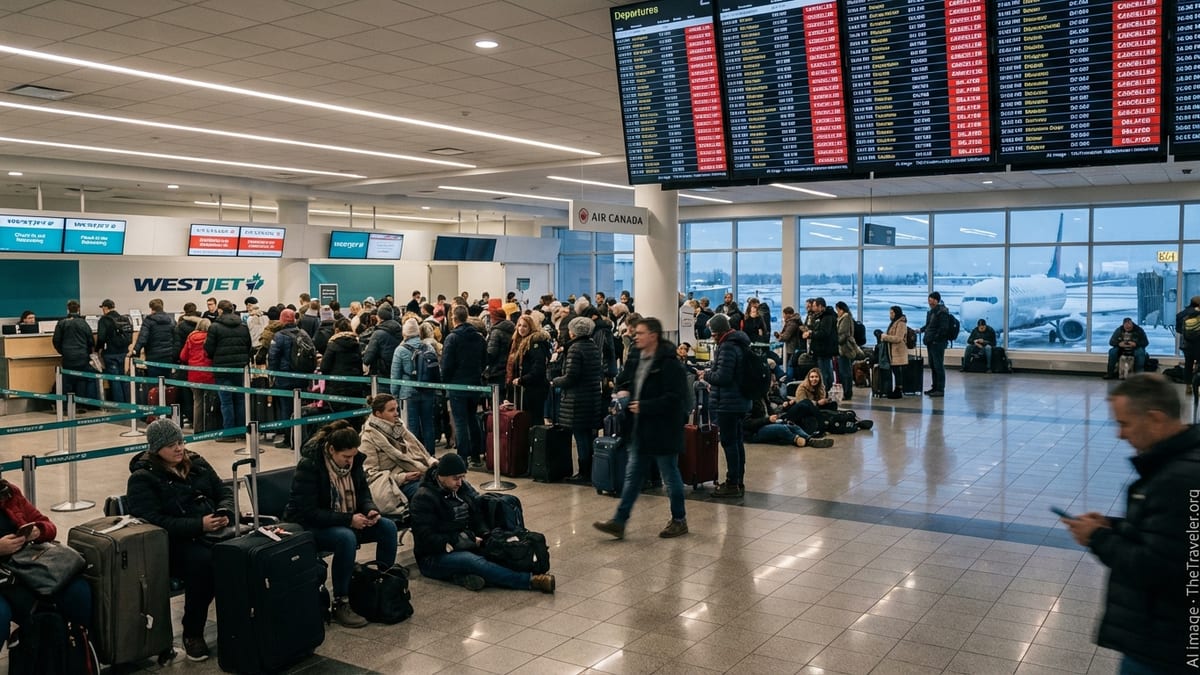
Calgary International Airport is grappling with a major wave of flight disruptions that has affected 41 departures and arrivals, stranding passengers on WestJet, Air Canada Rouge and KLM services and triggering a fresh round of scrutiny over the resilience of Canada’s already fragile air travel network.
Get the latest news straight to your inbox!
Network Shock Hits Key Domestic and Transatlantic Routes
According to published operational data and media summaries, the disruption centered on Calgary International Airport, a primary hub for WestJet and an important node in Air Canada Rouge and KLM schedules. Dozens of flights were either cancelled outright or subject to extended delays, with ripple effects spreading across domestic, cross border and transatlantic routes.
WestJet, which concentrates much of its connecting traffic through Calgary, appeared to account for the largest share of affected flights as schedules were revised and rotations reassigned. Publicly available tracking boards showed multiple WestJet departures to Western Canada and U.S. destinations either grounded or rescheduled, leaving planes and crews out of position for subsequent services.
Air Canada Rouge and KLM operations were also caught in the disruption wave, particularly on routes linking Calgary with leisure and long haul European destinations. Passengers on these services reported extended waits at gates and in terminal areas as new departure times were repeatedly adjusted. The 41 flight tally reflects both cancellations and delays long enough to cause missed connections and overnight stranding.
While the specific initiating factor behind the Calgary disruption has not yet been fully detailed in published reports, analysts note that Canadian carriers have been operating with tight staffing and aircraft utilization, increasing the likelihood that a single operational shock cascades quickly across an entire network.
Passengers Face Long Queues, Missed Connections and Overnight Stays
Reports from social media posts and local coverage indicate that the sudden schedule collapse produced long queues at check in counters and customer service desks throughout the Calgary terminal. Passengers described waiting hours to rebook itineraries, collect hotel and meal arrangements, or secure alternative flights on partner airlines.
Families returning from holidays, business travelers with same day meetings and international visitors transiting through Calgary all appeared to be affected. In several cases, published accounts suggest that travelers missed onward connections to Europe and the United States after initial Calgary departures were pushed back or cancelled late in the boarding process.
Accommodation and rebooking practices varied by carrier and itinerary type. Some travelers reported being placed in nearby hotels with meal vouchers, while others described being advised to make their own arrangements and submit receipts or to accept itineraries departing a full day or more later. Travel insurance requirements, fare classes and frequent flyer status played a role in how quickly passengers were able to secure alternatives.
Consumer advocates cited in recent Canadian aviation coverage point out that this pattern of uncertainty has become increasingly familiar, particularly during peak travel periods, when airports such as Calgary, Toronto and Vancouver run near capacity and have limited slack to absorb unplanned disruption.
Spotlight on Canada’s Air Passenger Protection Rules
The Calgary event has again pushed Canada’s Air Passenger Protection Regulations into the spotlight. Publicly available guidance explains that passengers may be entitled to rebooking, refunds and, in some cases, monetary compensation when disruptions fall within an airline’s control and are not related to extraordinary circumstances such as severe weather or air traffic control restrictions.
Legal analyses and consumer rights organizations note that many disputes stem from how carriers classify the cause of a disruption. If an event is labeled a safety issue or an external operational constraint, compensation obligations can differ significantly from those that apply to crew scheduling problems, maintenance planning or internal technical failures.
For passengers in Calgary, the immediate priority has been securing alternate transport, but travel forums and specialist publications already indicate an emerging wave of complaints and compensation claims. Guidance commonly recommends that travelers retain boarding passes, screenshots of delay notifications and receipts for meals and hotels to support any future claim.
In the medium term, the incident is likely to feed into ongoing debates over whether the current rules provide sufficient incentives for airlines to maintain spare capacity and robust contingency planning, particularly at major hubs where any systemic shock can affect tens of thousands of travelers in a single day.
Strain on Calgary’s Role as a Western Canada Hub
The disruption also underscores Calgary International Airport’s increasingly complex role within Canada’s aviation system. The airport functions as a dominant hub for WestJet and a growing focus city for other carriers, making its operations central to connectivity across Alberta, British Columbia, the Prairies and beyond.
Aviation analysts writing on Canada’s network structure have argued that such hub concentration can deliver efficiency during normal operations but also raises systemic risk. When a high volume of regional, domestic and long haul traffic is funneled through a single airport, cascading delays can accumulate quickly and make recovery more difficult.
Recent data driven reports on Canadian flight performance highlight that Calgary has shared in a wider national pattern of elevated disruption over the past two summer and winter seasons. Causes have ranged from storms crossing Western Canada to air navigation constraints and staffing shortages at airlines and ground handling contractors.
Against that backdrop, the latest 41 flight disruption has renewed discussion about the need for additional resilience measures at Calgary, including better separation of flows between domestic and international operations, more flexible contingency gates, and clearer passenger communication protocols when large numbers of flights are affected at once.
What Travelers Can Do During Major Disruptions
Travel industry guidance suggests several practical steps for passengers caught in events such as the Calgary disruption. First, experts recommend monitoring flight status directly through airline apps and airport displays rather than relying solely on third party booking platforms, which can lag during rapidly changing conditions.
Second, passengers are often encouraged to proactively explore alternative routings, including connections through other Canadian hubs or nearby U.S. airports, and to present concrete options when speaking with airline agents. During large scale disruptions, inventory on remaining flights can disappear quickly, particularly for families or groups that need to travel together.
Third, consumer rights organizations stress the importance of documenting interactions with carriers and keeping all receipts for out of pocket expenses. Even when the root cause of a disruption is disputed, written records and time stamped notifications can strengthen a future claim under Canada’s passenger protection framework.
For now, the immediate focus at Calgary International Airport remains clearing the backlog created by the 41 disrupted flights and repositioning aircraft and crews across WestJet, Air Canada Rouge and KLM networks. Observers of the Canadian aviation sector will be watching closely to see how quickly schedules stabilize and what longer term operational changes, if any, follow this latest test of the country’s air travel infrastructure.