


More news on this day
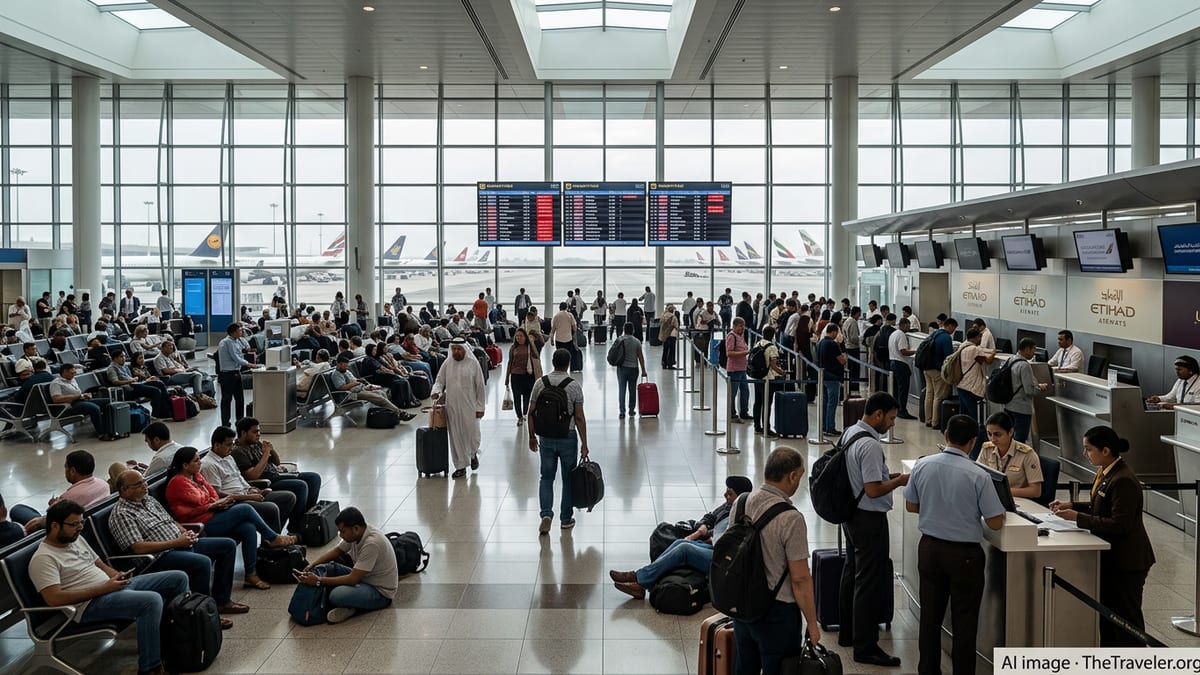
Dubai International Airport is contending with another wave of disruption as a cluster of airlines, including SpiceJet, Flynas, EgyptAir, Royal Jordanian and Emirates, ground individual services and log well over 100 delays, straining key routes that connect the United Arab Emirates with Tunisia, the United Kingdom, Italy, Israel, the United States and other major markets.
Get the latest news straight to your inbox!
Regional Airspace Turmoil Reignites Operational Pressures
Publicly available flight tracking data and recent travel advisories show that Dubai International Airport, one of the world’s busiest hubs, is still operating against a backdrop of volatile regional airspace conditions after months of intermittent closures and restrictions across parts of the Middle East. While the airport remains open, schedules on a range of carriers continue to be adjusted on short notice as airlines reroute around sensitive airspace or thin out frequencies on certain corridors.
The current pattern of disruption follows a series of severe shocks in March, when temporary suspensions of flights to and from Dubai coincided with broader closures affecting airports and airspace in Iran, Israel, Jordan and other states. Subsequent bulletins from risk consultancies and regional authorities have indicated that Dubai’s operations have gradually resumed but remain vulnerable to renewed tensions and capacity constraints on key overflight routes.
This environment has created the conditions for rolling, unpredictable delays rather than a single shutdown event. Even on days when no large-scale cancellations are reported, a combination of aircraft rotations, crew duty limitations and extended routings is contributing to significant knock-on disruption at Dubai and at onward destinations.
As a result, airlines using Dubai as a transfer point are frequently revising departure and arrival times, leading to congested peak periods and quieter off-peak stretches as carriers attempt to rebuild coherent schedules while keeping aircraft and crews within regulatory limits.
SpiceJet, Flynas, EgyptAir and Royal Jordanian Trim Individual Services
Within this shifting picture, several regional and international airlines have removed at least one roundtrip from their Dubai schedules in recent days while allowing the bulk of their programs to continue. Low cost operator SpiceJet, Saudi carrier Flynas, Egypt’s flag carrier EgyptAir and Royal Jordanian are among those showing isolated grounded services in schedule data and flight-status feeds, typically on days when aircraft availability or routing constraints are most acute.
These selective cancellations are often targeted at routes where frequencies are relatively high and passengers can be shifted to alternative departures, such as multiple daily services between the Gulf and key cities in the Levant, North Africa or the Indian subcontinent. Industry observers note that this approach allows airlines to preserve network coverage while creating room to absorb operational shocks elsewhere.
For affected passengers, however, the practical impact can still be severe. A single canceled Dubai rotation on a carrier like EgyptAir or Royal Jordanian can disrupt carefully timed connections onward to Europe, North America or Africa, particularly when the grounded flight was due to feed long haul services from Cairo or Amman.
Across the day, the combination of one-off cancellations and rolling delays is feeding into a broader tally of more than 100 late departures or arrivals linked to Dubai, according to snapshots from live tracking platforms and airline information pages consulted on 22 June.
Emirates and Other Major Carriers Wrestle With Network Complexity
Dubai based giant Emirates, which relies on tightly timed banks of connecting flights, remains particularly exposed to even modest variations in regional airspace availability. Publicly available information from the airline and airport operator in recent weeks indicates that the carrier has restored most of its hub operations after earlier suspensions, but is still making day by day adjustments to departure times and, in some cases, consolidating lightly booked flights.
Other airlines that depend on Dubai as a transfer point into Africa, Europe and the Americas are juggling similar complexities. Even when their aircraft and crews are positioned at the right place and time, unexpected routing changes around closed or restricted airspace can extend flight times sufficiently to push operations beyond crew duty limits, necessitating last minute delays or overnight rescheduling.
The ramifications extend beyond the Gulf. Disruption at Dubai can echo through airline networks for several days, as delayed inbound aircraft arrive late to European gateways such as London, Manchester, Rome or Milan, or to long haul destinations in the United States. When that happens, airlines are often forced to choose between turning aircraft quickly, risking further delays, or inserting extra ground time that stabilizes operations but removes capacity from the market.
For travelers, this means that flights may still appear as operating in booking systems while being subject to substantial day of departure delays. Passengers connecting through Dubai are being urged in public advisories and airline updates to monitor mobile apps and airport screens closely and to factor in the possibility of extended layovers.
Key Routes Impacted Across Europe, North Africa and North America
The latest wave of disruption is most visible on several high profile corridors. Flights between Dubai and Tunisia, for example, are operating within a regional network still adjusting to diverted routings and altered overflight permissions, which can create timing pressure on aircraft and crews that also serve other North African and Middle Eastern cities.
Links between Dubai and the United Kingdom and Italy are also feeling the strain. Public timetables remain dense on routes to London and major Italian gateways, yet irregular operations at the hub can translate into aircraft arriving late into Europe and departing behind schedule on the return leg, incrementally eroding punctuality over the course of the day.
Connections involving Israel and the wider Eastern Mediterranean remain among the most sensitive. Recent reports highlight ongoing instability in traffic flows to and from Tel Aviv, even as some restrictions at Ben Gurion Airport have eased. Airlines serving Dubai and Tel Aviv are operating in an environment where a renewed closure of airspace or a fresh security incident could quickly force additional cancellations or longer routings.
Long haul services to the United States and other North American destinations have so far remained relatively resilient, but are not immune. When feeder flights bringing passengers into Dubai from regional cities are delayed or canceled, nonstop services to hubs such as New York, Washington or other major U.S. gateways can see load imbalances, missed connections and, in rarer cases, operational delays while baggage and passengers are reaccommodated.
Travelers Face Ongoing Uncertainty as Summer Peak Nears
The disruption comes just as the northern summer peak travel season begins to build. Dubai International Airport regularly handles tens of millions of passengers per quarter, and even a modest reduction in capacity or punctuality can ripple widely through global travel patterns, particularly for passengers relying on once daily long haul connections.
Travel advisories covering the Middle East in recent weeks have consistently flagged Dubai as operational but subject to schedule volatility linked to regional conditions. Some guidance encourages travelers transiting the hub to leave longer connection windows, avoid tight self connections on separate tickets and remain flexible about potential rerouting via alternative gateways in the Gulf or Europe if their original itinerary is significantly disrupted.
In practice, the impact on individual trips can vary widely from day to day. Many passengers continue to pass smoothly through Dubai with only minor delays, while others encounter multi hour waits or unexpected overnight stays when a single grounded aircraft or extended routing upsets the planned sequence of flights.
As airlines such as SpiceJet, Flynas, EgyptAir, Royal Jordanian, Emirates and other operators refine their summer schedules, the situation at Dubai International Airport remains fluid. Travelers booked through the hub over the coming weeks are being advised in public information channels to treat flight times as indicative rather than fixed, to monitor their reservations frequently and to prepare contingency plans in case their journey is caught up in the latest round of delays and targeted cancellations.