


Just 30 to 60 minutes from central Naples, Baia is where the Bay of Naples’ volcanic landscape, ancient Roman luxury and tranquil coastal views all collide. For travelers wondering how to spend precious days in southern Italy, the question is simple: is Baia a good day trip from Naples for both history and sea views, or should you focus instead on big-name sites like Pompeii, Capri or the Amalfi Coast? The answer depends on what you enjoy most, how comfortable you are with local transport and how tightly packed your itinerary is.
Get the latest updates straight to your inbox!
What Makes Baia Different From Other Day Trips
In Roman times, Baiae was the playground of emperors and senators, a resort town of extravagant villas, thermal baths and private harbors. Much of that opulent shoreline has since slipped under the sea because of volcanic bradyseism, leaving a unique combination of hilltop ruins, coastal castles and a submerged archaeological park that today attracts divers and history lovers. Unlike Pompeii, which is vast, dry and heavily visited, Baia’s remains are compact, spread between the Terme di Baia archaeological park on the hillside and the underwater park offshore, with the quiet town of Bacoli wrapped around them.
Modern Baia feels markedly more local than destinations like Sorrento or Positano. On a weekday outside August you are more likely to hear Neapolitan dialect than English, and you will see families from Naples spending a Sunday at small beach clubs, not tour groups following umbrellas. That atmosphere is part of the appeal. Travelers who have already seen the main highlights of Naples often rate Baia alongside the Campi Flegrei sites of Cuma and Pozzuoli as a favorite “second-layer” excursion: still close to the city, but with a slower pace and a sense of discovery.
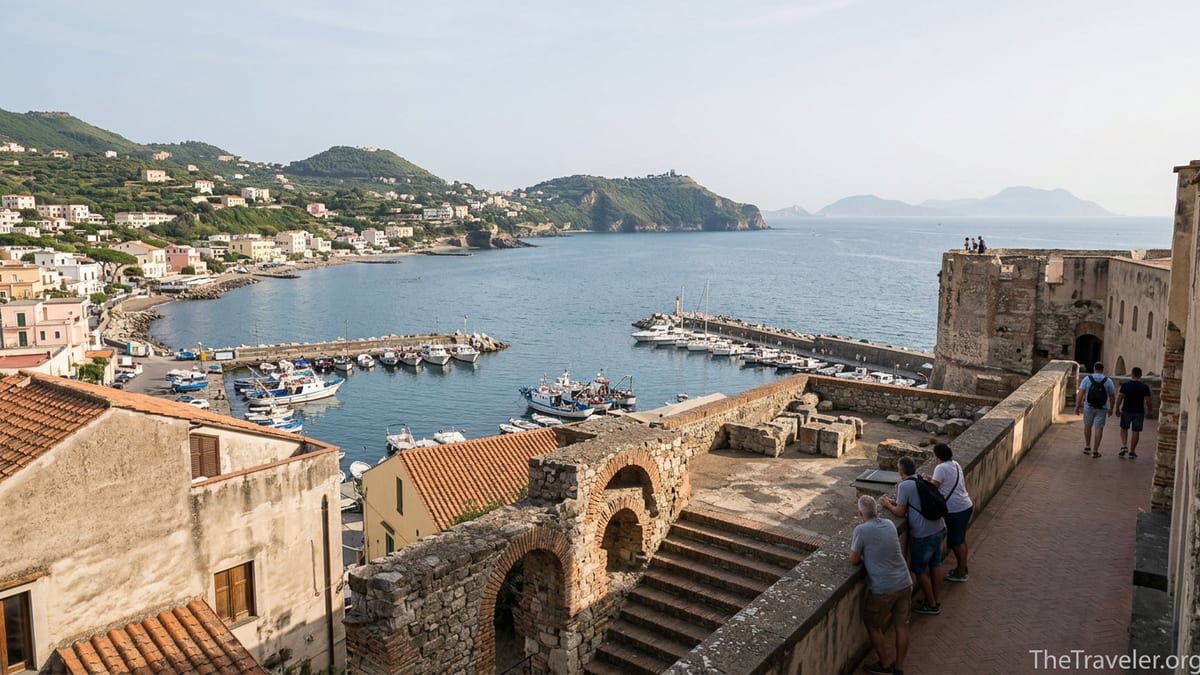
For coastal views, Baia is not about dramatic cliffs like the Amalfi Coast. Instead, the scenery is gentler: low hills covered in pastel houses, the cone of Capo Miseno closing the bay, and long horizontals of sea and sky. From the terraces of the Aragonese castle that houses the Museo Archeologico dei Campi Flegrei you look out over almost the entire Phlegraean coastline, including Nisida, Pozzuoli and the islands beyond. It is an especially compelling panorama in late afternoon when the light drops behind the islands and the water turns silver.
What truly sets Baia apart, though, is the possibility of seeing an intact Roman harbor district through a glass window below the waterline. While other sites in Italy show mosaics in museums and partial villa plans on land, here you float above tiled pavements, column bases and garden layouts that were literally seaside real estate two millennia ago. For visitors who like unusual experiences, that single element can justify making time for Baia.
How Easy Is It to Reach Baia From Naples?
Getting from central Naples to Baia is relatively straightforward, but it is less automated than the high-frequency train route to Pompeii. The most commonly recommended route is to take the Cumana suburban railway, operated by EAV, from Naples Montesanto station. This line runs west through Pozzuoli toward the Campi Flegrei. Depending on the timetable and any ongoing works, you either ride directly to Baia station or to the nearby terminus at Torregaveta, then connect by local bus or short taxi ride to Baia’s harbor and archaeological zone.
In practice, travelers report journey times of around 35 to 50 minutes from Montesanto to Baia when the direct station is operating normally, plus a 5 to 10 minute walk down to the port area. When engineering works affect part of the line, the trip can stretch closer to an hour with a transfer to a bus for the last section. Ticket prices are modest compared with intercity trains or ferries, usually just a few euros each way. Tickets are sold at station kiosks and tabacchi rather than online, so you should allow a little extra time to buy and validate them before boarding.
If you prefer not to navigate suburban trains, hiring a licensed driver from Naples to Baia and back is another realistic option, especially for small groups. A return transfer including waiting time for a half-day visit often costs in the region of 120 to 180 euros for a standard car or van, depending on season and pick-up point. That is more than public transit, but it removes the uncertainty of schedule changes and means you can combine Baia with other Campi Flegrei stops like the volcanic crater at Solfatara (if open) or the Roman amphitheater in Pozzuoli.
There is no regular tourist ferry from central Naples to Baia, so unless you charter a private boat, sea access is not a mainstream option. Buses run between Pozzuoli and Bacoli / Baia, but they can be crowded and slow in summer. For most independent travelers, the Cumana train followed by a short walk is the best compromise of cost, time and reliability.
Highlights for History Lovers: On Land and Underwater
Baia’s main draw for history enthusiasts is the Parco Archeologico delle Terme di Baia, a terraced complex of imperial-era bath structures, nymphaea and villa remains clinging to the hillside above the modern marina. As you walk through, you see enormous brick-built caldarium halls, fragments of marble cladding and serpentine corridors that once led bathers between hot and cold rooms. From several platforms you can look down onto the harbor and visualize how the shoreline has shifted since Roman times.
One practical advantage is that the terrestrial archaeological park is compact enough to see thoroughly in one to two hours, unlike Pompeii, which can feel overwhelming in a single day. The official Campi Flegrei ticketing system offers combined passes that cover several sites in the area, including the Baia baths and the castle museum, typically for under 15 euros for adults, with free or reduced entry on certain days or for EU youth. Pricing and opening hours change periodically, but travelers can expect Baia to remain significantly cheaper than the major Vesuvian sites.
Below the surface of the bay lies the Parco Sommerso di Baia, one of the world’s best-known underwater archaeological parks. Here, seismic activity has submerged an entire slice of ancient shoreline under roughly five meters of seawater. Instead of being cordoned off from the public, it is accessible by guided dives, snorkeling tours and semi-submersible boat trips that depart directly from Baia’s small harbor. The submerged park has become a favorite recommendation among scuba communities, with divers describing surreal swims among street grids, column stumps and mosaics still in situ.
For non-divers, semi-submarine trips offer a low-effort way to experience the underwater ruins. Companies based on the Baia pier run glass-sided or semi-sub boats that cruise slowly over marked zones of the submerged park. Typical tours last about 45 to 60 minutes and cost in the ballpark of 25 to 40 euros per adult, with family discounts and seasonal variations. Snorkeling excursions, often organized by local dive centers such as Sea World Baia Diving, add a short boat ride, equipment rental and an in-water guide for around 50 to 80 euros per person. Age limits and medical questionnaires apply, but these tours are manageable for reasonably fit beginners who are comfortable in open water.
Beyond Baia: Nearby Sights That Shape the Day
One of the strongest arguments for choosing Baia as a day trip is its proximity to other remarkable, lesser-known sites in Bacoli and the wider Campi Flegrei. A short taxi ride or local bus from Baia takes you to the Piscina Mirabilis in Bacoli, an enormous Augustan-era cistern hewn into the tufa hillside. Once the main freshwater reservoir for the Roman fleet at Miseno, it is about the size of several Olympic pools and supported by soaring rows of pillars. After a period of closure for restoration, it reopened to visitors, and small-group, timed-entry visits now allow you to walk between its dim, echoing columns, often with only a handful of other people inside.
North of Baia, the slopes around Cape Miseno and Miliscola hide additional Roman remains like the Cento Camerelle and so-called Tomba di Agrippina, a partially preserved theater belonging to an ancient villa. These are typically quieter and more atmospheric than the better-known attractions near Naples, especially in the shoulder seasons. They work well as add-ons if you have a full day and either your own car or a private driver who knows the area.
On the cultural side, the Aragonese castle of Baia houses the Museo Archeologico dei Campi Flegrei, which pulls together finds from across the region. The museum’s galleries explain how ongoing volcanic uplift and subsidence created the landscape you see from the ramparts, and display statues, inscriptions and reliefs recovered from sites now underwater. Standing on the castle terraces, you can trace with your eyes a sweep from Cuma to Nisida and understand why this area fascinated the Romans.
Because of this density of small but significant sites, many guided excursions marketed as “Campi Flegrei” day trips from Naples include some combination of Baia, Pozzuoli and Cuma, often with a lunch stop at a local agriturismo or seafood restaurant. For independent travelers, it is realistic to visit Baia baths, the castle museum and either the underwater park or Piscina Mirabilis in a single unhurried day, provided you start reasonably early.
Coastal Views, Swimming Spots and Seasonal Feel
While Baia is not a classic beach resort, it does offer coastal scenery that contrasts with gritty central Naples. From the harbor promenade you see fishing boats, small leisure craft and the rounded headland of Capo Miseno closing the horizon. On clear days, the islands of Procida and Ischia are visible in the distance. The views improve as you climb: the archaeological terraces, castle ramparts and hilltop roads in Bacoli all offer different vantage points on the bay and the caldera rim.
Swimming opportunities around Baia are more modest than on the Amalfi Coast or Capri but still pleasant in the warmer months. Small stabilimenti balneari operate along the nearby shorelines, with sunbeds and umbrellas for rent and roped-off swimming areas. Prices rise in high season, but you can expect to pay roughly 15 to 25 euros for a pair of loungers and an umbrella on a summer weekend, somewhat less on weekdays. Many local families simply use patches of free beach or concrete platforms, especially in June and September when crowds are thinner.
Seasonality matters if your main goal is coastal ambiance. From late October through early April, many beach services and boat trips reduce schedules or shut completely, and Baia can feel very quiet outside weekends. That can be ideal if you prefer empty archaeological sites and cool temperatures for walking. For underwater activities, water temperatures in spring and autumn mean that full wetsuits are standard, and some dive centers run only on demand. Semi-submarine and snorkeling operators usually ramp up in late spring and run most consistently from June through September, weather permitting.
One benefit of Baia’s working-town character is that even in winter there is everyday life: cafes open early, locals shop at bakeries and small bars serve espresso and cornetti. You will not find the polished seafront promenades or designer boutiques of towns like Sorrento, but you also avoid the crush of coach tours. If your idea of a good day trip includes watching fishermen mend nets next to a Roman harbor wall, Baia suits that mood well.
Practicalities: Tickets, Time Management and Food
Planning a Baia day trip from Naples is simpler if you treat it as a medium-intensity outing rather than trying to replicate the scale of a full Pompeii or Capri day. Most visitors find four to seven hours sufficient, depending on how many sites and activities they include. A typical independent schedule might look like this in practice: morning Cumana train from Montesanto to Baia, a couple of hours at the Terme di Baia archaeological park, lunch by the harbor or in Bacoli, then an afternoon underwater park snorkeling or semi-submarine tour, finishing with a short visit to the castle museum before returning to Naples around early evening.
Entrance fees remain relatively affordable by Italian standards. The terrestrial Baia site and the castle museum are part of the Parco Archeologico dei Campi Flegrei. Recent information from the park indicates that combined tickets for multiple sites in the area cost around the low teens in euros for adults, with various reductions, occasional free Sundays and special weekend events at specific locations. Exact pricing can shift with new cultural initiatives, so it is sensible to check the official Campi Flegrei communication close to your travel dates, but Baia consistently offers strong value compared with headline destinations.
One pleasant surprise for many visitors is how easy it is to find good, reasonably priced food. The waterfront just steps from the archaeological park holds several seafood trattorias and pizzerias where a plate of local fried catch, a margherita pizza and a glass of house wine are typically cheaper than equivalent meals on the Amalfi Coast. In Bacoli’s residential streets behind the harbor you will find pasticcerie serving sfogliatelle and babà, as well as simple bars where a coffee costs little more than it does in central Naples.
The main challenges to factor in are opening hours and heat. Smaller sites like Piscina Mirabilis often use timed-entry slots and may close for long lunch breaks or certain weekdays, especially outside summer. The hillside baths of Baia have large exposed areas with little shade, and in July and August temperatures routinely climb high enough that midday visits are punishing. If you are traveling in peak season, consider booking any water-based tour for early afternoon and walking the ruins in the cooler morning or late day.
Who Will Enjoy Baia Most (and Who Might Skip It)
Baia is an excellent day trip choice for travelers who are fascinated by Roman history, engineering and geology but who prefer smaller, atmospheric sites to the more crowded “must-see” locations. If you have already visited Pompeii and Herculaneum or are planning multiple days in the area, Baia and the wider Campi Flegrei provide a deeper layer of context. Standing in the underwater park’s visitor boat or on the cistern floor at Piscina Mirabilis makes it easier to grasp how Romans moved water, exploited geothermal heat and built leisure landscapes around these forces.
It is also a strong candidate for visitors who want a taste of the Bay of Naples coastline without committing to long transit times. Compared with Capri or the Amalfi Coast, you spend less of your day in transit and more actually exploring. For families with older children and teenagers, the novelty of a glass-sided boat over ruins or snorkeling above mosaics can hold attention better than another conventional museum. Photography enthusiasts will appreciate the mix of archaeological texture and sweeping bay views from the castle and hillside paths.
On the other hand, Baia may not be the right choice if you have only one full day in Naples and have never seen Pompeii, Herculaneum or the city center’s main museums. Those sites still provide the clearest overview of the region’s history in a short time. Travelers looking primarily for glamorous seaside promenades, boutique shopping and picturesque village centers may find Baia too workaday. The waterfront road is busy with local traffic, and much of the town fabric is modern apartment blocks rather than postcard-perfect old streets.
Accessibility is another consideration. The hillside archaeological area involves slopes and flights of steps, and access paths are not as consistently smooth as in some recently refurbished sites. The underwater park’s snorkeling and diving activities are unsuitable for non-swimmers and may not be comfortable for those with mobility or balance issues getting in and out of boats. Semi-submarine tours are generally the most accessible option, but you should confirm details such as step-free boarding or assistance directly with the operator you choose.
The Takeaway
If your idea of a good day trip from Naples involves exploring half-forgotten Roman luxury complexes, looking out over a volcanic bay from a medieval castle and perhaps watching submerged mosaics slide past your window on a small boat, Baia is very much worth your time. It offers a rare combination of tangible history and gentle coastal scenery in a compact, largely local setting that feels far from the crowds of more famous resorts.
Baia will not replace Pompeii as the essential archaeological excursion, nor can it match Capri or Positano for dramatic cliffs and polished tourism infrastructure. What it does offer is something more low-key and, in many ways, more intimate: a chance to see how an ancient elite resort has literally sunk and risen with the restless geology of the Campi Flegrei, and how modern life has settled in around those remains. For travelers with at least three or four days based in Naples, adding Baia as a day trip can deepen your understanding of the region and provide a memorable blend of history and sea views without straying far from the city.
FAQ
Q1. Is Baia really feasible as a day trip from central Naples by public transport?
Yes. Most visitors take the Cumana train from Naples Montesanto station toward Baia or Torregaveta, then walk or ride a short bus or taxi to the harbor and archaeological sites. The journey typically takes under an hour each way when services run normally.
Q2. How much time should I plan for Baia if I want both ruins and coastal views?
Allow at least four to six hours on the ground. That gives you enough time to visit the hillside Terme di Baia, enjoy bay views from the castle museum and fit in either a semi-submarine, snorkeling tour or a side trip to Piscina Mirabilis without rushing.
Q3. Are the underwater archaeological park tours suitable for non-divers?
Yes. Non-divers usually choose between semi-submarine or glass-bottom style boat tours, which stay on the surface and let you view submerged ruins through windows, and guided snorkeling trips that keep you near the surface with masks and fins. Full scuba dives are available but require proper certification and are more physically demanding.
Q4. Can I combine Baia with Pompeii or the Amalfi Coast in a single day?
It is technically possible but not recommended. Each destination deserves most of a day, and combining them usually means spending more time in transit than enjoying the sites. A more relaxed plan is to devote one day to Baia and the Campi Flegrei and another to Pompeii or the Amalfi Coast.
Q5. Is Baia a good option for families with children?
For school-age children and teenagers who enjoy history or the sea, Baia can be excellent. The compact ruins, castle views and boat-based underwater tours tend to keep attention better than large, hot sites. For toddlers or very young children, the stairs, heat and boat logistics can be more challenging.
Q6. What time of year is best to visit Baia?
Late spring and early autumn are ideal. From May to June and September to early October, most boat tours and beach services operate, the weather is usually warm but not extreme and crowds are lighter than in peak summer. Winter visits are quieter and good for ruins, but some coastal activities may pause or run limited schedules.
Q7. How expensive is Baia compared with other day trips from Naples?
Overall, Baia is relatively budget-friendly. Entrance tickets to the archaeological park and castle museum are modest, especially if you use a combined Campi Flegrei pass, and local restaurants and cafes tend to be cheaper than those in major tourist hotspots like Capri or Positano. The main variable cost is whether you choose additional paid activities such as snorkeling or semi-submarine tours.
Q8. Do I need to book tickets or tours for Baia in advance?
For land-based sites like the Terme di Baia and the castle museum, walk-up visits are usually possible outside of special events. However, for the underwater park, semi-submarine trips and snorkeling or diving excursions, advance reservations are strongly advised in high season and on weekends to secure a spot and a convenient time slot.
Q9. Is Baia safe to visit, given the volcanic activity in the Campi Flegrei?
Baia sits inside the wider Campi Flegrei volcanic area, which is closely monitored by Italian authorities and scientific institutes. Civil protection agencies issue alerts if activity increases, and access to certain zones can be restricted if necessary. Visitors should follow local guidance, but under normal alert levels, tourism and everyday life continue as usual.
Q10. If I only have one extra day in Naples, should I choose Baia or Pompeii?
If you have never visited the region before, most travelers will get more overall context from Pompeii, which offers a broader picture of Roman urban life. Baia is the better choice if you are especially interested in thermal baths, underwater archaeology and a quieter, more local coastal environment or if you have already seen Pompeii on a previous trip.