


More news on this day
Air travelers across the United States are facing a turbulent Independence Day holiday, with hundreds of flight cancellations and widespread delays reported as airlines, airports and the national airspace system struggle to keep up with record passenger volumes, severe weather and special-event restrictions.
Get the latest news straight to your inbox!
Holiday Demand Collides With Operational Strains
Preliminary tallies for July 4 indicate more than 200 cancellations and several hundred delays across the United States, affecting major hubs from the Northeast to the West Coast. Industry monitoring cited by travel trade publications reports at least 216 cancellations and 671 delays on Saturday, July 4, as airlines operate close to capacity during one of the busiest travel periods of the summer.
Published coverage indicates that carriers entered the Independence Day weekend with fuller schedules and higher load factors than in previous years, leaving relatively few open seats for disrupted travelers to be rebooked. Aviation analysts note that this lack of slack in the system can quickly magnify the impact of local storms or equipment outages into nationwide disruptions, especially when multiple regions are affected at once.
Federal data released this week also highlights a challenging operating backdrop. The U.S. Department of Transportation’s latest Air Travel Consumer Report shows elevated complaint levels and persistent delays through the spring, while a recent enforcement notice clarifies how airlines may handle unscheduled maintenance events without incurring additional penalties. Consumer advocates argue that these conditions have left passengers more vulnerable to cascading disruptions when peak holiday demand arrives.
Despite these strains, passenger numbers remain robust. Airport authorities in several major markets projected near-record volumes for the holiday period, reflecting continued strong demand for domestic leisure travel even as fares and ancillary fees have trended higher compared with pre‑pandemic levels.
Weather, Heat and Airspace Restrictions Drive Disruptions
Severe thunderstorms, a dangerous heat wave and temporary airspace closures linked to Independence Day events have combined to drive much of the current disruption. Meteorological reports show storms popping up across multiple regions in recent days, forcing ground stops and reroutes that ripple through interconnected airline networks.
A prolonged heat wave over the eastern United States has added a further layer of complexity. Weather outlets report that extreme temperatures have already disrupted rail services and outdoor events in the Mid‑Atlantic and Northeast, while adding stress to power grids that support airport operations. High heat can also affect aircraft performance, particularly at busy hubs during peak afternoon hours, sometimes requiring payload restrictions or schedule adjustments.
Special-event airspace measures around the nation’s capital have contributed to delays as well. According to publicly available Federal Aviation Administration notices and local broadcast coverage, Ronald Reagan Washington National Airport is subject to extended flight pauses and temporary flight restrictions across July 3 and July 4 to accommodate Independence Day and America 250 celebrations. Airlines serving the Washington region adjusted schedules in advance, but the reduction in available slots has still created bottlenecks for both arrivals and departures.
On the West Coast, reports from financial and aviation news outlets indicate that San Francisco International Airport has experienced particularly heavy delays in recent days, with hundreds of late departures and arrivals and some cancellations as airlines contend with congestion and periodic weather‑related flow constraints. Average arrival delays approaching three quarters of an hour have been noted in FAA system updates, underscoring the challenge of maintaining on‑time operations during peak travel windows.
Major Hubs and Key States Hit Hard
Travel disruption data compiled by industry trackers show that several key states and hub airports are bearing the brunt of the Independence Day turmoil. A survey published by a global travel news service on July 4 points to significant numbers of cancellations and delays in Illinois, Georgia, New Jersey, New York and Massachusetts, where major hubs such as Chicago O’Hare, Atlanta, Newark, New York area airports and Boston Logan form critical junctions for domestic and international flying.
FAA airport status pages for Northeast gateways, including Newark Liberty International, have reflected periodic ground delay programs and arrival management initiatives as controllers meter traffic flows through congested airspace. Even when outright cancellations remain limited, these programs can produce rolling delays across dozens of flights, complicating connections and extending travel days for thousands of passengers.
In the Washington region, temporary restrictions at Reagan National and nearby Dulles have not only affected local travelers but also disrupted connecting itineraries that rely on the capital’s airports. Local news coverage describes travelers rebooking onto earlier departures in an attempt to leave before scheduled ground stops, while others have had to accept extended layovers or overnight stays.
Further south and west, thunderstorms and high demand have tested operations in Atlanta, Dallas-Fort Worth and Houston, among other large hubs. Aviation observers note that these airports function as pressure valves for the national system; when any of them experiences constraints, knock‑on effects can quickly spread to secondary cities that depend on hub connections.
Passengers Confront Long Lines and Limited Options
For travelers, the operational stresses are translating into long lines, missed celebrations and limited rebooking choices. With many flights running full for the holiday, airlines have less flexibility to accommodate displaced passengers on the same day, increasing the likelihood of overnight delays or extended connections.
Consumer guidance issued by travel industry publications urges passengers to monitor airline apps closely, enroll in flight alerts and consider moving to earlier departures where possible, especially from airports affected by weather or airspace restrictions. Passengers are also advised to retain boarding passes and receipts to support any subsequent claims for refunds, vouchers or reimbursement of incidental expenses, depending on carrier policies and the cause of disruption.
Transportation regulators continue to emphasize that airlines must comply with existing refund rules when flights are canceled or significantly changed. The Department of Transportation’s online dashboard outlines which major carriers commit to providing meal vouchers, hotel accommodation or complimentary rebooking in specific disruption scenarios, although recent enforcement notices clarify that certain safety‑related maintenance cancellations may be treated differently.
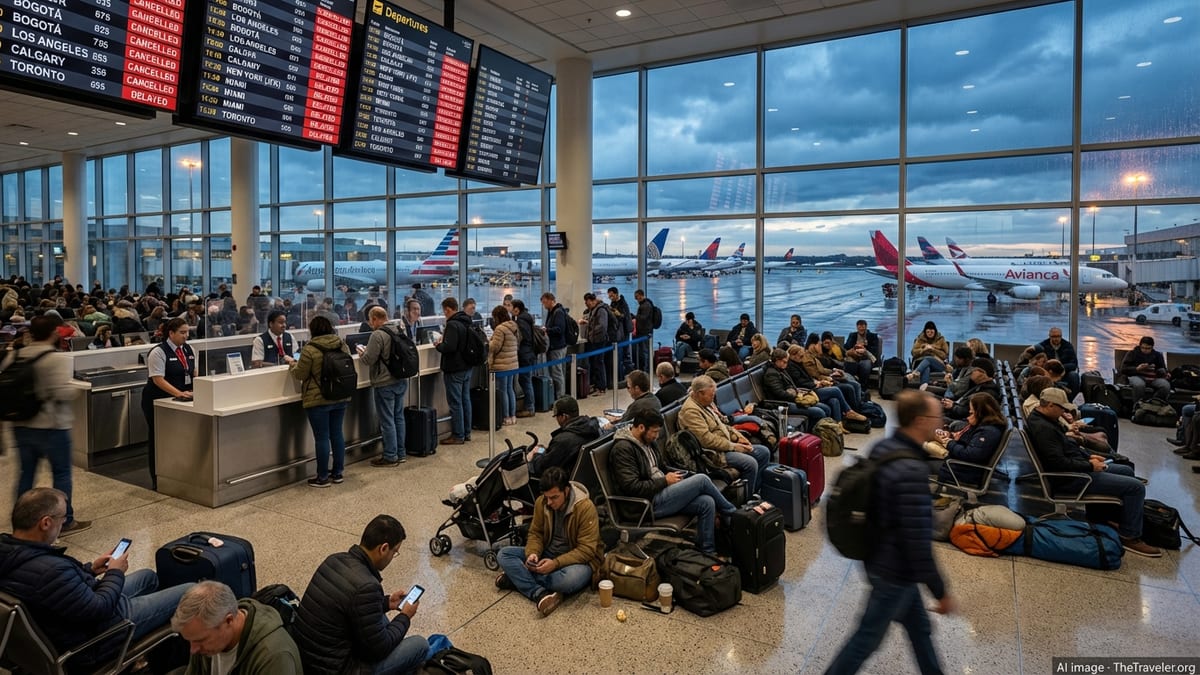
At many airports, images and reports shared through local media show crowded gate areas and customer service lines stretching into concourses, particularly during evening hours when cascading delays have compressed departure banks. Families traveling with children and those connecting to international flights appear to be among the most affected, as missed connections can be harder to rebook during a peak holiday weekend.
Outlook for the Remainder of the Holiday Period
Forecasts suggest that the national airspace system will remain vulnerable to further disruption through the remainder of the Independence Day travel window, which typically extends through Sunday for domestic leisure passengers. Thunderstorms remain in the outlook for several major metropolitan regions, and prolonged heat is expected to persist across parts of the East and South.
Airlines have signaled that they will continue to adjust schedules and proactively consolidate lightly booked flights where necessary to create more buffer room for recovering from delays. Industry statements in recent months have highlighted investments in staffing, crew scheduling tools and airport infrastructure aimed at reducing operational fragility, but analysts caution that these measures may not fully offset the combined effects of weather, high demand and airspace constraints during peak periods.
Regulators and airport operators are expected to review performance data from the holiday period as they refine delay reduction initiatives and capacity planning for the rest of the busy summer season. FAA planning documents released earlier this year outline ongoing efforts to deploy new traffic flow management technology and procedures at congested hubs, with the goal of smoothing demand and reducing chronic bottlenecks.
For now, passenger advocacy groups and travel specialists continue to recommend that anyone flying over the holiday weekend build extra time into itineraries, avoid tight connections when possible and have contingency plans in place. With demand still surging and little spare capacity available, even localized storms or brief ground stops can quickly cascade into widespread delays, turning what should be a celebratory holiday trip into an extended test of patience.