


More news on this day
A sharp contraction in flights from mainland China to Japan following a diplomatic rift is triggering a marked downturn in Chinese arrivals, forcing Japan’s tourism sector to recalibrate while neighboring Asia-Pacific destinations move quickly to capture redirected demand.
Get the latest news straight to your inbox!
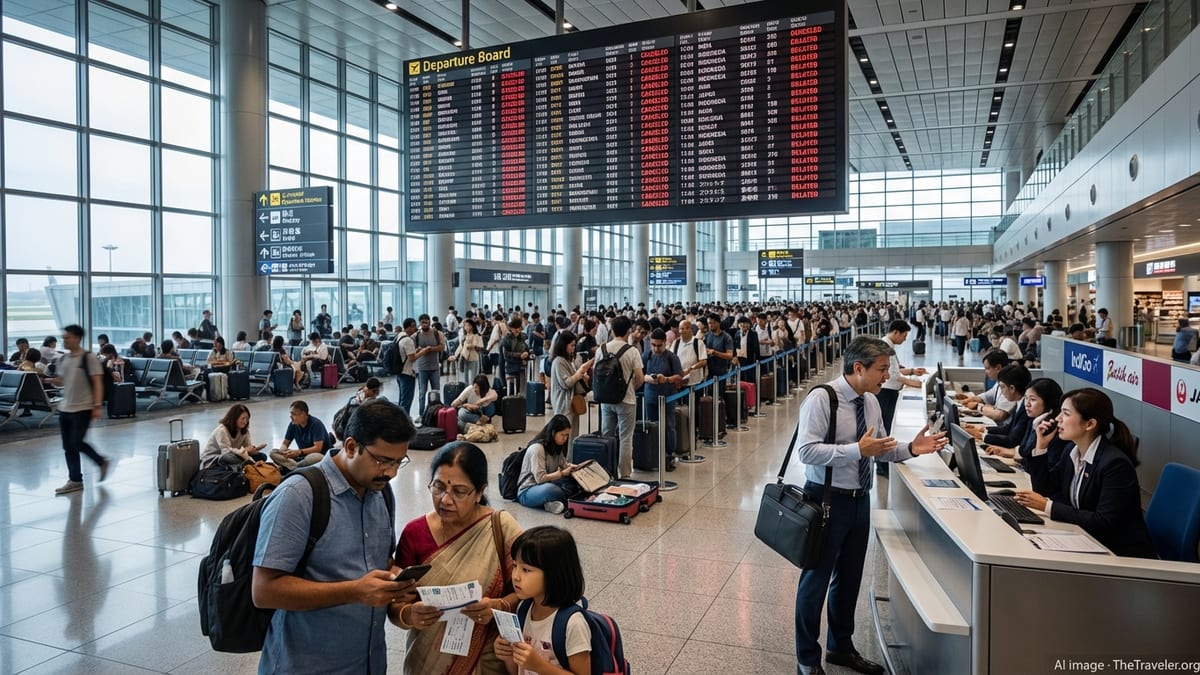
From Record Highs to Sudden Retreat in a Key Market
Japan entered 2025 riding a powerful tourism rebound. Official figures for 2024 showed nearly 37 million foreign visitors, surpassing pre-pandemic records and supported by a weak yen, expanded air links and pent-up regional demand. Chinese travelers, in particular, returned as a high-spending segment, contributing more than one fifth of all inbound tourism expenditure despite not fully recovering in volume terms.
Data from national tourism and economic agencies indicate that visitors from China remained central to Japan’s inbound strategy. In 2019, Chinese tourists accounted for close to 30 percent of all arrivals and an even larger share of retail and duty-free spending. Although their numbers lagged behind those from South Korea and Taiwan in 2023, publicly available statistics show that Chinese visitors still generated a disproportionate slice of total tourism revenue as travel resumed.
This dependence left Japan exposed when diplomatic tensions flared in late 2025. According to widely cited coverage from international news wires and Japanese business media, a travel warning issued in China after comments by Japan’s leadership on Taiwan prompted a rapid wave of cancellations. Market analysts quoted in those reports estimated that around 500,000 airline tickets on China–Japan routes were scrapped within weeks, hitting both airlines and Japan-focused tour operators.
Subsequent reporting in regional aviation and tourism outlets describes a more extended pullback. Chinese regulators asked domestic airlines to extend cuts to Japan flights through at least March 2026, turning what initially appeared to be a short-term diplomatic shock into a more sustained disruption for Japan’s second-largest tourism export earner.
Flight Cancellations Bite Into Japan’s Regional Tourism Economy
The most immediate impact of the flight reductions is visible in aviation statistics. Chinese and Japanese media citing industry data state that roughly one third to two fifths of scheduled services between the two countries have been cancelled since early 2026. In April alone, one tally of flight operations showed more than 35 percent of planned China–Japan sectors withdrawn, with some secondary routes seeing deeper cuts.
While major city pairs such as Beijing–Tokyo and Shanghai–Tokyo retain core frequencies, capacity to regional gateways has been trimmed sharply. Trade and travel publications describe reductions or suspensions on routes serving Osaka, Sapporo, Fukuoka and Kansai area airports, which historically relied heavily on Chinese group tours and corporate incentive travel. Small and mid-sized Japanese travel agencies that specialized in these segments report, through public interviews, a collapse in bookings and a scramble to diversify into other source markets.
Japanese government statistics for the first quarter of 2026 highlight the pressure. Preliminary figures from tourism authorities, cited in Chinese and Japanese press, show spending in Japan by visitors from mainland China falling to roughly half the level recorded a year earlier. Retail and hospitality associations in cities such as Osaka and Sapporo link this drop to a 40 percent slide in sales to Chinese customers and a steep decline in store traffic in popular shopping districts.
Analysts compiling estimates for the broader economic fallout suggest that, if the downturn is prolonged, lost tourism receipts could run into the equivalent of several billion dollars. Given that inbound tourism has emerged as one of Japan’s most important export industries by earnings, the contraction in one of its most lucrative markets is viewed as a clear drag on near-term regional growth prospects.
Asia-Pacific Travel Corridors Realign as Chinese Tourists Pivot
While Japan absorbs the shock, other Asia-Pacific destinations are moving into the gap created by China–Japan frictions. Recent regional tourism rankings and economic insight reports show that Southeast Asian countries such as Thailand, Malaysia and Vietnam are capturing growing flows of Chinese outbound travelers. Many of these destinations have relaxed visa rules for Chinese visitors and promoted new routes, giving airlines alternative ways to deploy capacity released from Japan services.
Payment and airline data analyzed by multinational financial institutions point to a broader reconfiguration of popular corridors. Chinese tourists are increasingly booking multi-stop itineraries that combine beach destinations with shopping hubs, often favoring cities in Southeast Asia where local currencies have weakened and promotional fares remain abundant. Industry researchers note that this shift was already under way due to structural changes in China’s economy and consumer preferences, but the diplomatic spat with Japan appears to be accelerating the trend.
For airlines based in China and elsewhere in the region, the realignment presents both challenges and opportunities. Capacity that was once concentrated on trunk routes to Tokyo and Osaka is being redeployed toward Bangkok, Singapore, Kuala Lumpur and emerging secondary airports in mainland Southeast Asia. Low-cost carriers in particular are reported to be expanding their networks to tap rising demand from price-sensitive Chinese travelers seeking alternatives to Japan.
This pivot is also shaping competitive dynamics among Asia-Pacific tourist boards. Marketing campaigns that previously competed head-to-head with Japan on shopping, cuisine and cultural attractions are now more pointedly courting Chinese visitors with tailored payment solutions, language support and digital platforms. Observers of the regional market describe an increasingly crowded field, as destinations work to secure a share of outbound travel once dominated by Japan.
Japan’s Strategy: Diversification and Higher-Value Tourism
In response to the slump in Chinese arrivals, Japan is leaning more heavily on diversification efforts that began during the pandemic recovery. Policy documents and recent economic white papers outline a strategy to attract more visitors from North America, Europe and high-growth parts of Asia such as Southeast Asia and India, while also encouraging longer stays and higher per-capita spending.
Statistics compiled by Japanese ministries and international organizations show progress on several fronts. In 2023 and 2024, travelers from South Korea, Taiwan and the United States collectively drove visitor numbers close to or beyond pre-pandemic levels, even as Chinese volumes remained subdued. At the same time, total inbound tourism receipts reached fresh records, suggesting that Japan has been successful in moving up the value chain with higher-end experiences and regional dispersal campaigns.
However, the sharp fall in Chinese group travel exposes persistent vulnerabilities. Many regional cities and rural areas invested heavily in infrastructure and retail tailored to short-stay, high-frequency visits from Chinese tour groups. With that flow disrupted, local governments are accelerating campaigns to attract independent travelers from a broader mix of markets, promoting niche experiences such as outdoor adventure, wellness retreats and heritage tourism.
Industry analysts observing Japan’s tourism pivot argue that the current downturn could ultimately strengthen the sector’s resilience if diversification continues. Yet in the near term, the loss of a large, familiar customer base is likely to weigh on earnings for airlines, hotels and retailers that built their models around volume-driven Chinese demand.
Outlook: Prolonged Tensions Keep Region on Alert
The extension of Chinese flight cuts to Japan into 2026 suggests that the tourism downturn may not reverse quickly. Market data providers cited in recent coverage note that cancellations are now being recorded for travel periods well into the coming year, signaling persistent caution among Chinese travelers and continued route adjustments by airlines.
For Japan, the timing is particularly sensitive. Policymakers had hoped that major events such as Expo 2025 Osaka Kansai would cement the country’s position as a premier tourism hub in Asia. Instead, planners must now account for a key market operating far below potential, even as overall visitor numbers from other regions hold up.
The broader Asia-Pacific travel ecosystem is watching closely. If diplomatic tensions ease and air links are restored, some of the current realignment could unwind as Chinese tourists return to familiar Japanese destinations. But if restrictions and advisories remain in place, observed shifts toward Southeast Asia and other nearby markets may become more entrenched, reshaping regional travel flows for years to come.
For travelers and businesses across the region, the episode underscores how quickly geopolitics can redirect the paths of aircraft and tourists alike, turning once-stable corridors such as China–Japan into volatile variables in Asia-Pacific’s tourism equation.