


More news on this day
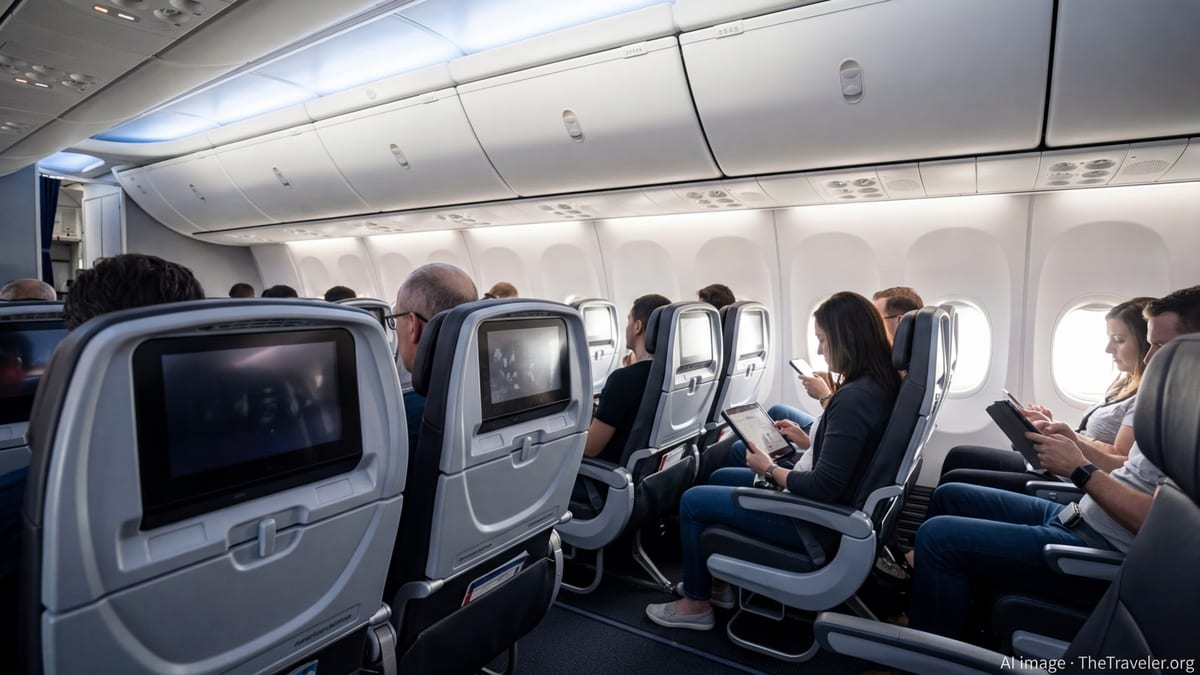
American Airlines is planning a major reversal in its inflight entertainment strategy, with plans to reintroduce seatback screens across much of its narrowbody fleet starting in 2028, according to recently circulated internal details and industry reports.
Get the latest news straight to your inbox!
A Strategic U-Turn on Inflight Entertainment
The move marks a notable change in direction for the carrier, which spent much of the past decade removing built-in screens from domestic aircraft in favor of streaming entertainment on passengers’ personal devices. Industry coverage in recent years has documented how many single-aisle Boeing 737 and Airbus A321 aircraft were refitted without seatback monitors, even when the cabins were otherwise modernized.
Recent reporting and internal-facing communications described in aviation forums indicate that American now plans to install modern seatback systems on new Boeing and Airbus deliveries, as well as on selected retrofitted aircraft, beginning later this decade. The change is expected to focus first on new-generation narrowbodies entering the fleet from 2028 onward.
Analysts note that the shift comes as larger competitors increasingly use embedded screens as a point of differentiation on key domestic and transcontinental routes. Passenger feedback on social platforms and travel forums has also highlighted frustration with the absence of built-in entertainment on longer domestic flights, particularly when rival airlines continue to offer it as standard.
What the New Cabins Will Look Like
Publicly available descriptions of American’s latest widebody interiors offer a preview of what travelers can expect on future narrowbody jets. New long haul aircraft, including Boeing 787 9 and Airbus A321XLR deliveries, are being fitted with 4K-resolution seatback displays, Bluetooth audio connectivity, and a full suite of power options at each seat, according to previous product announcements and aircraft orders.
Reports indicate that a similar technology package is planned for the refreshed narrowbody cabins. Passengers in the main cabin are expected to see high definition screens at every seat, paired with USB-A and USB-C charging ports and standard AC outlets. The entertainment systems will be designed to complement, rather than replace, the airline’s extensive onboard streaming platform.
Aviation industry coverage suggests that the retrofit program will be accompanied by broader cabin changes, including updated seat coverings and expanded extra legroom seating in Main Cabin Extra. This would align the look and feel of domestic aircraft with American’s latest international cabins, creating a more consistent experience across the network.
Seatback Screens in a Connected Cabin Era
The decision to bring back embedded screens comes just as American is leaning heavily into onboard connectivity. The airline and its partners have announced plans for complimentary, high speed inflight Wi Fi on millions of flights each year, with the rollout accelerating through 2026. That investment underscores a broader strategy built around digital services available from gate to gate.
In this context, seatback screens are being framed less as a stand alone entertainment perk and more as one component of a connected cabin. Industry observers expect future American Airlines systems to offer a mix of movies, television, interactive maps, and possibly real time flight information and retail options, synchronized with the airline’s mobile app and onboard Wi Fi portal.
Travel commentators note that this hybrid model responds to how passengers actually use devices in flight. Many travelers prefer to keep phones and laptops free for messaging or work, while relying on the seatback screen for passive entertainment. The combination of free connectivity and large, high quality displays is increasingly seen as a key element of the premium economy and upgraded main cabin experience.
Competitive Pressures and Customer Expectations
American’s updated stance on seatback entertainment also reflects intensifying competition in the North American market. Airlines such as Delta and JetBlue have promoted built in screens as a core part of their product, and customer surveys routinely rank inflight entertainment among the most visible differentiators on domestic routes.
Public discussion in traveler communities has often contrasted American’s largely screenless narrowbody cabins with those of rivals, especially on cross country and leisure focused flights where travelers expect more comprehensive amenities. According to recent commentary in aviation publications, the perception gap around hard product features has become a concern for American as it seeks to court higher yielding passengers and corporate accounts.
Reintroducing seatback screens across new and refurbished narrowbodies signals that the airline is prepared to invest again in visible, passenger facing hardware. Industry analysts suggest that pairing these upgrades with expanded premium seating and extra legroom options could help American reposition its product away from comparisons with low cost carriers and closer to full service competitors.
Rollout Timeline and What Travelers Should Expect
Based on current reporting, the new generation of seatback systems is expected to appear first on fresh deliveries of Boeing and Airbus narrowbody aircraft starting in 2028, with retrofits of existing jets following over time. That means the transition will be gradual, with mixed interiors likely to remain a feature of American’s domestic fleet for several years.
Travelers planning flights in the near term will continue to see a patchwork of cabins: widebody aircraft and certain specialty configurations already offer seatback screens, while many workhorse narrowbodies rely on streaming entertainment only. As the retrofit program advances, a growing share of domestic flights is expected to feature the new screens, power options, and updated seating layouts.
Industry observers caution that exact timelines and aircraft counts may shift as American refines its fleet plan and negotiates with suppliers. However, the broader direction is clear. After years of prioritizing personal device streaming alone, one of the world’s largest airlines is once again betting that passengers want a dedicated screen in the seat in front of them, alongside fast, free connectivity in the air.