


More news on this day
Travelers at Miami International Airport faced significant disruption today as more than 125 flights were reported delayed and at least nine canceled, affecting a wide spread of domestic and international routes and leaving hundreds of passengers stranded across terminals.
Get the latest news straight to your inbox!
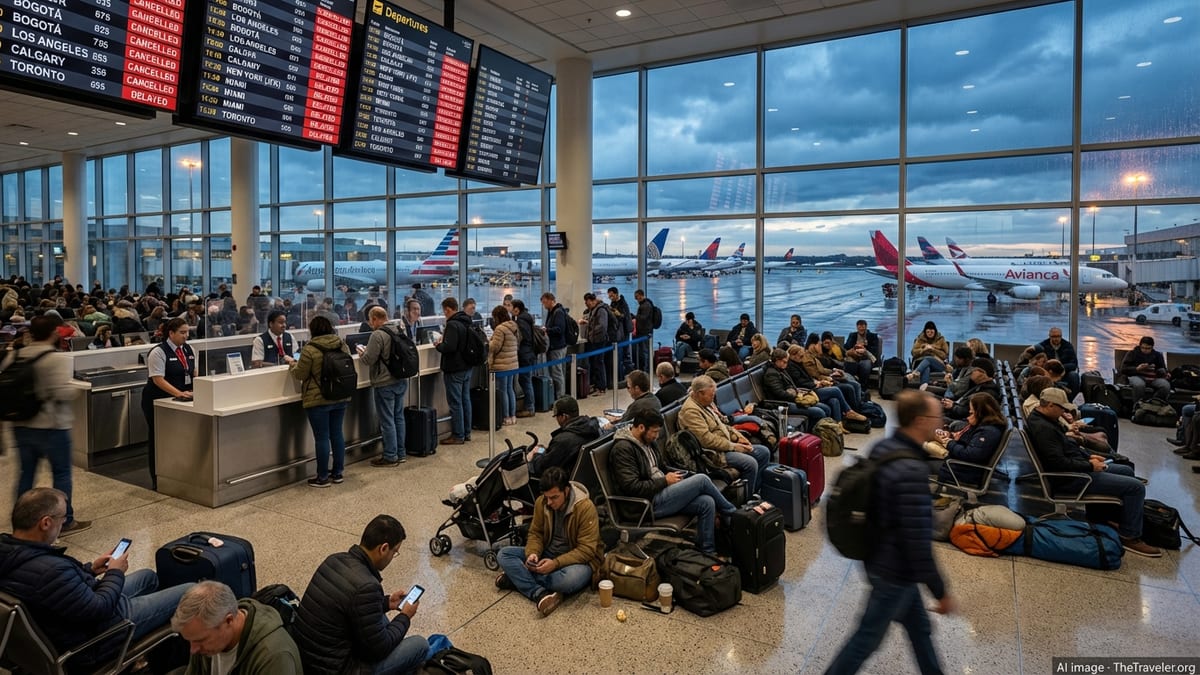
Major Carriers Hit Across North American and European Routes
Publicly available flight tracking data and airport operations summaries indicate that the disruption at Miami International Airport is affecting a broad mix of full service and low cost carriers, including American Airlines, Delta Air Lines, United Airlines and Frontier Airlines. The impact spans both domestic services to major hubs such as New York, Atlanta and Dallas, as well as long haul routes to European gateways including London.
The pattern of delays shows a combination of late departures from Miami and knock on arrival issues at connecting airports. Flights from Miami into large East Coast and Southern hubs are particularly sensitive, as even moderate congestion can cascade into missed connections for onward services throughout the United States and abroad. With Miami serving as a key bridge between North America, Latin America and Europe, delays on a relatively small number of departures can ripple widely through airline networks.
Historical performance statistics for Miami International Airport show that even in normal operating periods a minority of flights experience schedule disruptions, but today’s tally of more than 125 delayed services and multiple cancellations stands out against typical daily averages. The current situation reflects how quickly operational strains, aircraft rotations and tight turnaround times can combine to slow movements at a major hub.
Several long haul departures were reported operating behind schedule after late arriving inbound aircraft and extended ground handling intervals. That combination has produced longer waits at departure gates, more frequent schedule changes on airport information boards and a heightened risk of missed connections for travelers heading onward to Europe and other international destinations.
Passenger Experience Marked by Long Queues and Rolling Delays
Accounts shared on public forums from recent days, together with today’s delay statistics, point to a familiar pattern for travelers caught in extended disruption at Miami. Rolling delays in hourly increments, shifting departure times and crowded gate areas have contributed to uncertainty for passengers who are unsure whether it is better to wait at the airport or attempt to rebook for another day.
Passengers on affected flights describe extended periods spent in security and check in lines, followed by further waiting at gates as departure estimates are repeatedly updated. In some cases, flights scheduled for relatively short domestic sectors have been held for long enough to cause missed overnight connections to South America and Europe, amplifying the impact well beyond Miami.
Travelers report particular frustration when delays are extended in small increments rather than communicated as a single significant schedule change. This approach can make it difficult to decide whether to seek hotel accommodation, change routing, or return home if they live within driving distance of the airport. The result is often overcrowded seating areas and limited access to rebooking assistance at peak hours.
In addition, the combination of delays and cancellations has immediate consequences for baggage handling and customer service desks. Stranded passengers frequently face long queues at airline counters to obtain meal vouchers, hotel information or alternative itineraries, adding to the strain on both staff and travelers.
Miami’s Role as a Congested Hub Amplifies Operational Stress
Miami International Airport is one of the busiest passenger gateways in the United States and the primary international hub for South Florida. Airport statistics from the Miami Dade Aviation Department show tens of millions of annual passengers and a dense schedule of daily operations supporting more than 90 passenger and cargo airlines. This concentration of flights means any significant disruption can quickly spread throughout the network.
Recent federal planning documents highlight that Miami is entering a multi year period of significant airfield and terminal projects designed to expand capacity and modernize infrastructure. While some of those projects are still in early stages, associated work on runways, taxiways and gates is expected to create periodic capacity constraints that can contribute to departure delays during peak periods.
Miami’s position as a key departure point for flights to Latin America and the Caribbean, as well as an important connection point for transatlantic routes, further increases its vulnerability when disruptions occur. A delayed bank of flights in the morning or evening can affect not only domestic connections but also international departures that depend on inbound feed.
The current wave of delays also coincides with a broader period of strain across segments of the U.S. airline industry, including maintenance backlogs and tight aircraft utilization. Industry discussions have raised concerns that some fleets are operating with limited spare capacity, leaving carriers with fewer options to swap aircraft or crews when short notice issues arise.
Knock On Effects Felt in New York, Atlanta, Dallas and London
Because Miami feeds traffic into major U.S. and international hubs, the impact of today’s delays stretches far beyond South Florida. Flights to New York area airports, Atlanta and Dallas operate as vital connectors for passengers heading onward to other cities in North America, Europe and Asia. When Miami departures leave late or are canceled outright, travelers often arrive at their connecting hubs after their onward flights have closed.
On routes to New York and Atlanta, published coverage and traveler reports indicate that delayed Miami departures have contributed to misaligned connection banks at hub airports, forcing some passengers onto later flights or overnight stays. This effect compounds when multiple carriers are affected at once, tightening available seat capacity on alternative services.
Long haul services between Miami and London and other European cities also face challenges when daytime departures slip. Even modest delays can push arrivals deeper into congested morning and midday periods at European airports, straining border control and baggage systems and raising the risk of missed onward connections inside Europe.
As airlines rework schedules and aircraft rotations to recover from today’s disruptions, travelers in connecting cities may experience secondary delays on flights that did not originate in Miami but rely on aircraft or crews cycling through the airport earlier in the day.
What Travelers Can Do When Caught in Miami Disruptions
Consumer advocates and experienced travelers commonly recommend that passengers facing prolonged disruption at Miami take a proactive approach to managing their itineraries. This typically includes monitoring flight status through airline mobile applications and third party tracking tools, rather than relying solely on information posted at gates, which can lag behind real time updates.
When a flight shows repeated rolling delays or appears at risk of cancellation, many travel experts advise contacting the airline through multiple channels at once, including apps, call centers and social media messaging, to explore rerouting options before airport customer service queues become overwhelming. In some cases, same day alternatives may be available via nearby airports in South Florida, although that option depends on availability and individual fare rules.
Travelers are also encouraged to review the specific conditions of carriage and applicable regulations for each carrier and destination. Rules governing compensation, hotel stays and meal vouchers can differ for domestic and international itineraries and often depend on whether the cause is categorized as within the airline’s control or related to weather and air traffic constraints.
Regular flyers suggest preparing for the possibility of extended time at the airport by carrying essential items in hand luggage, including medications, chargers and basic toiletries. For those with tight onward connections in New York, Atlanta, Dallas or London, building longer layovers during booking can provide additional buffer when planning trips through Miami International Airport during busy travel periods.