


More news on this day
Cleanup crews are working around the clock near Woodward after a freight train derailed during severe storms, scattering roughly 160 shipping containers and disrupting a key freight route through the region.
Get the latest news straight to your inbox!
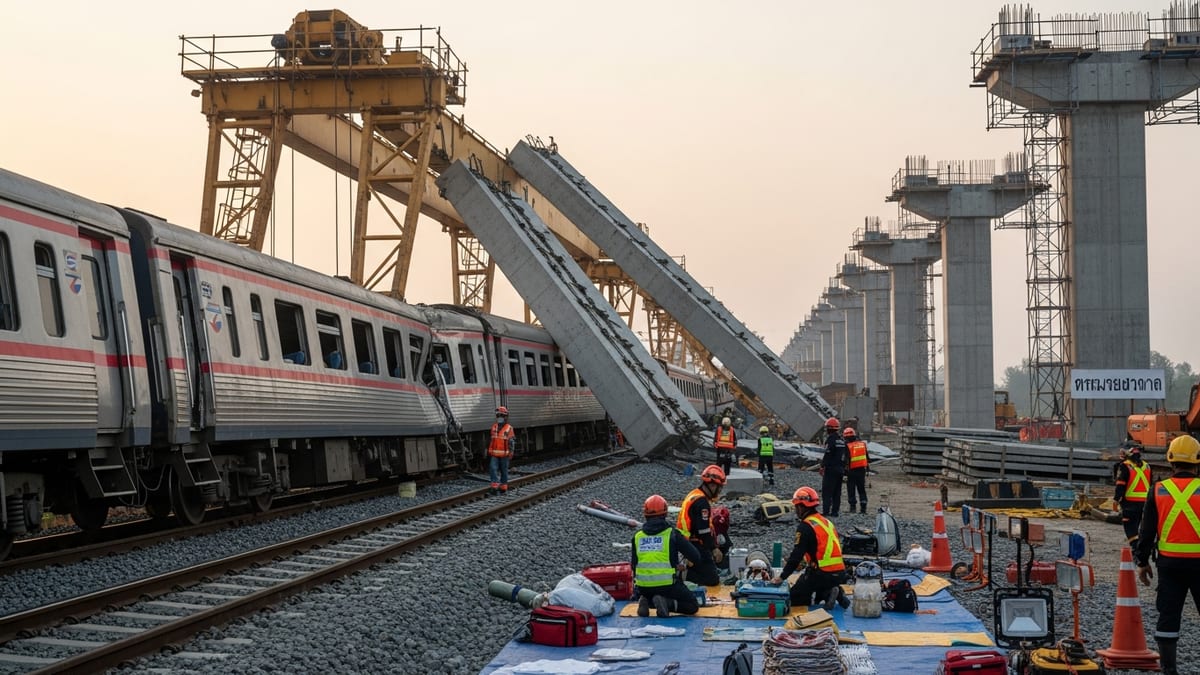
Severe storms precede late-night derailment
Published coverage indicates the derailment occurred as a line of intense thunderstorms moved across the area, bringing heavy rain, strong wind gusts and localized flooding. The combination of saturated ground and fast-changing wind conditions has been cited in past investigations as a factor that can undermine track stability and increase the risk of washouts in low-lying sections of rail corridors.
Initial information from regional news outlets describes a long freight consist moving through the Woodward area when several cars left the tracks, triggering a cascade that eventually pulled dozens more off the line. The incident took place in a largely rural corridor, limiting immediate impacts on nearby roads but complicating access for emergency vehicles and heavy equipment.
Publicly available weather data for the night of the accident shows a corridor of severe thunderstorm warnings across parts of the central United States, with forecasters highlighting damaging winds and torrential rainfall as primary hazards. In similar rail incidents linked to severe weather, investigators have focused on localized flash flooding and debris on the tracks as potential contributors.
Reports from the scene describe a tangle of intermodal cars and twisted steel spread along and beside the right-of-way, with some containers knocked into drainage areas parallel to the tracks. The scale of the wreck has required a step-by-step approach to stabilize the site before large machinery can begin full removal.
160 shipping containers strewn along right-of-way
According to published coverage, roughly 160 shipping containers were affected in the derailment, making it one of the larger recent freight incidents involving intermodal traffic. Many of the affected cars were stacked double-high, amplifying the visual impact when they toppled and slid down the embankment.
Early assessments indicate most of the containers were carrying consumer goods and other mixed freight rather than hazardous materials, reducing the risk of a major chemical release. Even without a toxic spill, however, the sheer volume of cargo now scattered along the tracks presents logistical and environmental challenges, including the potential for debris to obstruct drainage channels or enter nearby waterways if not quickly recovered.
Photographs and video shared by local outlets show containers piled several units high in some sections, with cranes and heavy forklifts brought in to methodically lift and reposition them. Crews must document each container’s identification numbers and condition before it can be moved off site, a process that can significantly extend the duration of cleanup when hundreds of units are involved.
Rail safety specialists often note that intermodal trains can be especially vulnerable to strong crosswinds because of the height and surface area of stacked containers. While the precise cause of the Woodward derailment remains under review, the timing alongside severe storms has renewed attention on how freight networks manage speed restrictions and route planning during fast-evolving weather events.
Cleanup effort focuses on reopening key freight corridor
Published reports indicate that railroad contractors and specialized wrecking crews were mobilized quickly after the derailment, with the initial priority to secure the locomotives, check for fuel leaks and confirm that no hazardous cargo was compromised. Once that phase was completed, the focus shifted to clearing derailed cars from the active tracks and building temporary access roads for heavy machinery.
In similar large derailments, railroads have used a combination of side-boom tractors, cranes and high-capacity loaders to remove cars and containers in stages, often working from both ends of the wreck toward the center. That approach appears to be mirrored near Woodward, where the length of the affected train and the number of containers means operations may continue for several days before full service can resume.
Publicly available information shows that freight traffic through the corridor has been halted or significantly reduced while crews work, with some trains rerouted and others temporarily suspended. These disruptions can ripple across regional supply chains, affecting schedules at distribution centers and intermodal terminals that depend on predictable arrivals.
Track repair teams are expected to begin more extensive work as soon as the last damaged cars are removed, including replacing ties, ballast and any compromised sections of rail. In previous weather-related derailments, investigators have sometimes ordered additional inspections of adjacent segments of track to ensure there are no hidden weaknesses that could lead to further incidents once service restarts.
Travel and logistics impacts for the broader region
For travelers and shippers, the derailment near Woodward comes amid a period of active severe weather across multiple states, with storm systems affecting highways, airports and rail corridors. While passenger rail routes in the immediate vicinity are limited, disruptions to freight lines can still affect long-distance schedules when passenger and freight services share key junctions or dispatching resources.
Logistics analysts note that large intermodal derailments can temporarily tighten available capacity for trucking and warehouse operations as shippers seek alternative routes. Containers delayed on the rail network may require short-notice trucking to meet delivery windows, particularly for time-sensitive retail and manufacturing goods.
Travelers using nearby highways may encounter additional truck traffic and occasional lane closures associated with cleanup operations, particularly if cranes or lowboy trailers need to cross or parallel public roads to reach the site. Local media reports recommend allowing extra time for regional trips and monitoring updated traffic advisories while the response continues.
Air cargo operations are generally less directly affected, but some regional airports can see shifts in freight volumes when rail corridors experience prolonged disruptions. Industry observers often highlight such events as reminders of the interconnected nature of modern logistics, where a single large derailment can reverberate far from the immediate accident scene.
Renewed scrutiny of rail resilience in extreme weather
The Woodward derailment is adding to a growing record of freight train accidents occurring during or shortly after severe storms, a pattern that has already prompted national discussions about rail infrastructure resilience. Publicly available policy documents and recent commentary from transportation experts emphasize the need for better integration between real-time weather data and rail operations, including more conservative speed limits when forecasters flag elevated flood or wind risks along specific corridors.
In recent years, several high-profile derailments have led to calls for modernized inspection regimes, expanded use of ground-based sensors and drones, and increased investment in drainage improvements along vulnerable stretches of track. The combination of aging infrastructure and more frequent episodes of intense rainfall has been cited as a particular concern for rural routes similar to the line near Woodward.
Analysts also point to the role of emergency planning and community outreach in shaping how derailments affect nearby residents and travelers. Transparent information about cargo types, response timelines and detour options can help mitigate anxiety and confusion in the aftermath of a major incident.
As cleanup progresses near Woodward and investigators catalog the condition of the damaged equipment and track, the incident is likely to feature in ongoing debates over freight train length, speed and routing through areas prone to flash flooding and other severe weather hazards. For travelers and shippers alike, the derailment underscores how quickly a single stormy night can disrupt one of the country’s most critical transportation lifelines.