


More news on this day
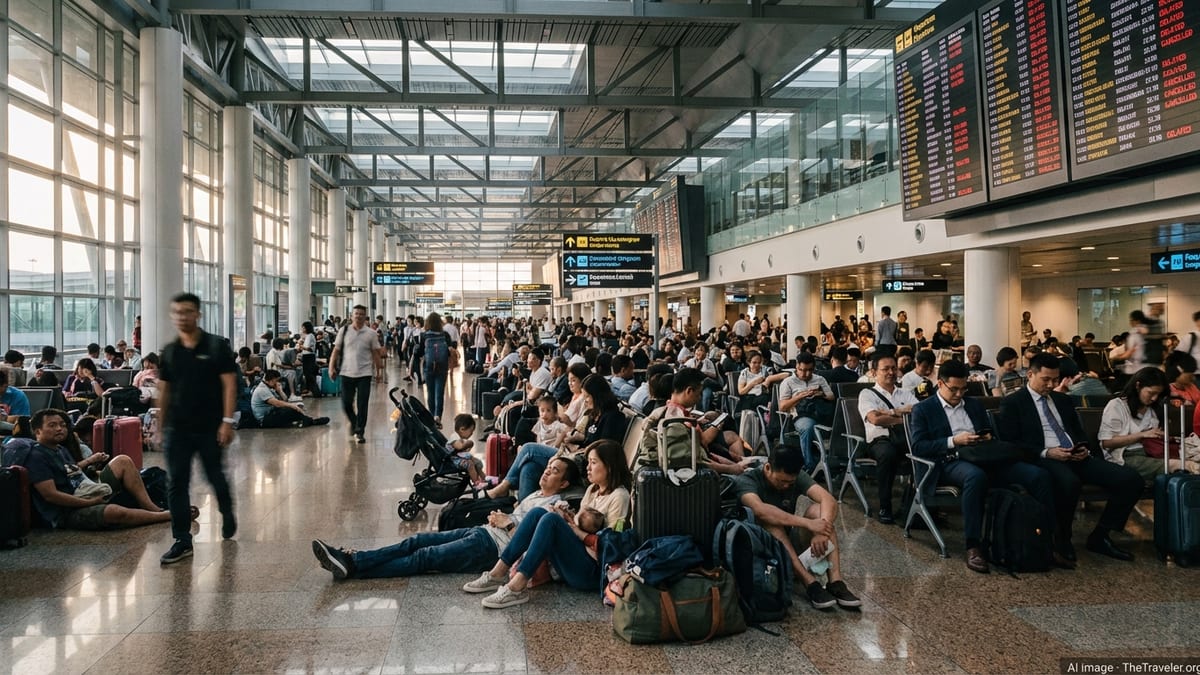
China’s already stretched domestic aviation network faced fresh disruption today as more than 85 flights were reportedly cancelled and over 600 delayed across multiple carriers, snarling key routes through Beijing, Chengdu, Chongqing, Guangzhou and the island hub of Haikou.
Get the latest news straight to your inbox!
Major Carriers Hit Across Key Chinese Hubs
Publicly available flight-tracking data and industry reports indicate that the latest wave of disruption is affecting a broad mix of full-service and low-cost airlines, including Air China, Hainan Airlines, China Eastern, Sichuan Airlines and budget operator 9 Air. The pattern of cancellations and rolling delays is concentrated on China’s busiest trunk routes, particularly those linking the capital with southern and western hubs.
Air China and China Eastern appear to be among the most exposed, given their dense schedules into and out of Beijing and the southwest cities of Chengdu and Chongqing. Flight rotations touching these hubs are especially vulnerable when earlier services fall behind schedule, creating a knock-on effect that ripples through the day’s operations.
Hainan Airlines and Sichuan Airlines, both with strong presences in western China and on leisure-heavy routes to Haikou and Guangzhou, are also listed among the carriers experiencing elevated disruption levels. Low-cost players such as 9 Air, which depend on tight aircraft utilization, can see a single delay cascade across multiple subsequent flights, amplifying the impact on travelers.
Reports indicate that the aggregate toll for the latest disruption cycle has climbed above 85 cancellations and 600-plus delays, a scale consistent with the kind of system-wide stress China’s aviation network has experienced several times already this season.
Beijing, Chengdu and Chongqing See Heavy Operational Strain
Beijing’s dual-airport system has featured prominently in recent disruption patterns, and current data points to renewed pressure on flights linking the capital with other major cities. Services between Beijing and Guangzhou, Chengdu and Chongqing are central to the national network, meaning any congestion at the northern end can quickly manifest as late departures and arrivals further afield.
In Chengdu and Chongqing, strong demand for both business and leisure travel continues to drive high traffic volumes. When weather or airspace restrictions compress operating windows, airlines have limited room to recover once backlogs form. As aircraft and crews arrive late from Beijing or Guangzhou, ground handling and turnaround times are squeezed, pushing departure times further into the day.
Chengdu’s role as a key gateway to western China and onward to Southeast Asia adds an extra layer of complexity. Disruptions on routes into Chengdu can jeopardize onward itineraries to regional destinations, while constraints in Chongqing can affect flows between central China and coastal hubs.
The result is a patchwork of delayed departures and arrivals, with some flights operating close to schedule while others depart hours late. For travelers, the irregularity can make it difficult to predict which connections are at greatest risk at any given time.
Guangzhou and Haikou Disruptions Ripple Across Domestic and Regional Routes
Guangzhou Baiyun International Airport has repeatedly appeared in recent operational reports as a hotspot for congestion, and the latest data again shows heavy delays across a wide cross-section of carriers. High-frequency services linking Guangzhou with Beijing, Chengdu and Chongqing are particularly exposed, as even minor schedule slippages can accumulate rapidly across multiple rotations.
Haikou, a key base for Hainan Airlines and a popular gateway to Hainan Island resorts, is also experiencing disruption. Delayed or cancelled flights on Haikou routes can be especially problematic for travelers with tightly timed resort stays or onward regional connections, as alternative flights may operate less frequently than on busier trunk routes.
The combination of Guangzhou’s role as a national and regional hub and Haikou’s importance for leisure travel means that disruptions are being felt not only by domestic passengers but also by visitors using these airports as stepping stones to destinations across Asia. Missed connections and shortened trips are among the most commonly reported consequences.
While some carriers have been able to re-route aircraft or consolidate services to protect capacity on key links, the overall picture remains one of stretched schedules and limited slack in the system to absorb additional shocks.
Weather, Congested Skies and Tight Turnarounds Drive Ongoing Issues
Recent coverage of China’s aviation performance highlights a recurring combination of factors behind the current wave of cancellations and delays. Periods of adverse weather around several eastern and southern hubs, together with densely scheduled airspace and tight ground turnarounds, have repeatedly forced airlines to trim or reshuffle flights at short notice.
Operational data from earlier in June showed similar spikes in disruption tied to storms and low visibility around Beijing and Guangzhou, with lingering effects on schedules even after conditions improved. Once a backlog forms, airlines often face difficult choices over which flights to protect and which to cancel in order to restore a workable rotation pattern.
These pressures are compounded by strong seasonal travel demand, particularly on routes linking the capital with major regional centers and leisure destinations. High load factors reduce the flexibility to re-accommodate affected passengers, while aircraft and crew rosters can quickly fall out of alignment when multiple sectors run late.
Industry observers note that such disruption clusters are not unusual in peak periods, but the recent frequency of large-scale events raises questions about the resilience of current schedules and the margin airlines have left themselves to absorb operational shocks.
What Travelers Through Beijing, Chengdu, Chongqing, Guangzhou and Haikou Should Expect
For travelers booked on services touching Beijing, Chengdu, Chongqing, Guangzhou or Haikou, the ongoing disruption wave means a heightened risk of last-minute changes. Publicly available tracking platforms show that delays can emerge with little warning as earlier sectors arrive behind schedule, even when departure boards initially list flights as on time.
Passengers connecting between domestic and international services are especially vulnerable, since missed links can result in extended layovers or re-routings through alternative hubs. Reports from recent disruption episodes suggest that some travelers have faced significantly lengthened total journey times once itineraries had to be rebuilt around available seats and aircraft.
Travelers with fixed-time commitments at their destination, such as tours, cruises or resort packages, may find it harder to recover lost time if they arrive a day late or must shorten their stays. This is particularly relevant for itineraries involving Haikou and other leisure gateways, where many services do not operate at the same frequency as the busiest domestic trunk routes.
For now, the available data portrays a system still operating under notable strain, with disruption levels elevated across multiple carriers and hubs. While conditions can improve quickly once weather stabilizes and airlines are able to reset schedules, passengers planning to travel through the affected airports in the coming days are likely to remain exposed to an above-average risk of delay or cancellation.