


More news on this day
Passengers travelling through Liverpool John Lennon Airport this week are being urged to allow extra time for their journeys, as wider UK air travel disruption, tighter security processes and new border checks on popular European routes combine to increase the risk of delays and missed connections.
Get the latest news straight to your inbox!
Knock-on disruption from wider UK weather and capacity issues
While Liverpool John Lennon Airport itself has not reported a specific local incident in recent days, travellers are being caught in the ripple effects of severe weather and capacity constraints across the UK network. Recent thunderstorms and strong winds over southern England triggered significant delays and cancellations at major hubs including Heathrow and Gatwick, with reports indicating that schedules remained fragile into the start of this week. When large hubs experience disruption, aircraft and crew rotations across the country are often affected, which can in turn impact smaller regional airports such as Liverpool.
Publicly available flight tracking and delay dashboards show that Liverpool’s departures board has largely remained operational, but with intermittent delays on busy leisure routes. Late-arriving aircraft from elsewhere in Europe or from disrupted UK airports can compress turnaround times and put additional pressure on security screening, boarding and ground handling, especially in peak morning and late afternoon waves.
Passengers with tight onward connections, including same-day transfers to rail services from Liverpool Lime Street or long-distance coaches, are therefore advised by travel operators and consumer groups to build in more margin than usual this week. Even short delays at departure can have outsized consequences for those relying on fixed onward departures from city-centre stations.
Security queues and staffing under strain at peak times
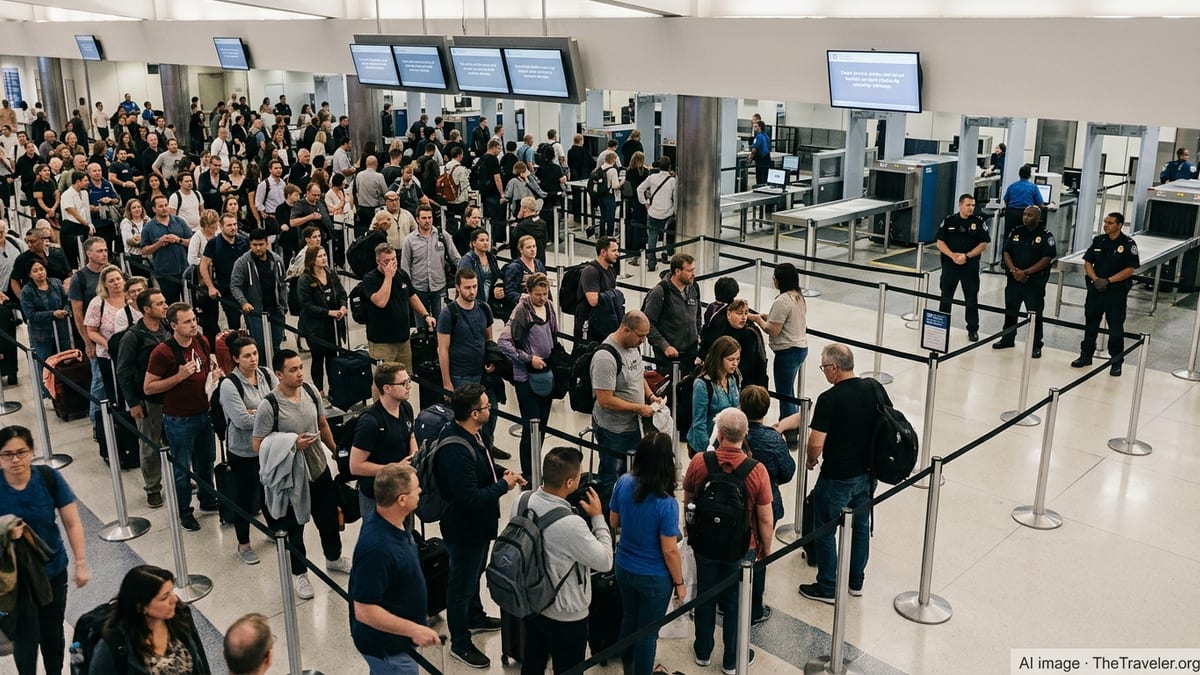
Liverpool John Lennon Airport operates a single terminal, handling several million passengers a year, with security screening concentrated in one main departures area. According to historical passenger feedback and recent community reports, the airport can swing from very short waits to lengthy security queues within a short window, particularly around early morning departures when multiple low-cost flights are scheduled close together.
Past accounts from travellers highlight that on busy mornings, queues have occasionally stretched back through the full zigzag layout, and in a few cases passengers arriving around 90 minutes before departure have reported missing flights after being held up at security and manual bag checks. At quieter times, however, other travellers have described moving through in under 15 minutes, illustrating how variable conditions can be from one day to the next.
Industry data providers that monitor UK airport congestion suggest that Tuesdays and Wednesdays are often slightly calmer, but that school holiday periods and weekend getaway waves drive sharper peaks. With summer travel now under way and airlines adding capacity on Mediterranean and city-break routes, staffing and security resources can come under pressure even when there is no single, headline-grabbing incident at the airport.
In this context, publicly available travel guidance is advising passengers using Liverpool this week to treat two hours as a minimum arrival time before short haul departures, and to consider extending this to closer to three hours for early morning flights, larger groups or those needing special assistance or additional services at check in.
European Entry/Exit System queues add risk on popular routes
Another emerging pressure point for Liverpool passengers this week does not occur in Liverpool itself, but at destination airports in the European Union. The rollout of the EU’s Entry/Exit System, which records biometric data from non-EU travellers at border control, has already led to lengthy queues at some continental airports. Recent coverage across European travel media points to waits of several hours at peak holiday times as passengers are enrolled, with reports indicating that some travellers have had to repeat registration on subsequent trips because their data were not properly retained in the system.
Budget airlines that serve Liverpool and fly extensively into the EU have been advising UK passengers in general to arrive earlier than usual for flights, citing the combined effects of busy summer schedules and the time taken to complete new border checks on arrival. While the biometric processing happens at the European end, longer queues there can feed back into operational delays and turnarounds on flights returning to the UK, potentially impacting later services from Liverpool.
For passengers flying this week to popular sun destinations or major European hubs, publicly available travel briefings recommend allowing extra time at departure in case earlier rotations on the same aircraft are delayed by border queues overseas. Families with young children and travellers with tight hotel or transfer pick-up times at their destination may wish to plan more flexible arrangements in case of late arrivals.
Ground transport and local connections around the airport
Beyond the terminal, Liverpool passengers this week are also being advised to consider the reliability of their ground transport to and from the airport. The main terminal is linked to Liverpool South Parkway rail station by dedicated bus services, and a range of local buses and taxis serve the city centre and surrounding areas. Recent rail maintenance and disruption on some lines into Liverpool, highlighted by National Rail incident reports, underline that last-minute changes to local services can lengthen overall journey times.
Travel planning services and independent rail commentators suggest that anyone relying on an early train to connect with a morning flight should check for overnight engineering works, altered timetables or bus replacement services. Leaving additional time between scheduled train arrival at Liverpool South Parkway and the airport check-in cut-off may reduce stress if services are delayed.
For returning passengers, particularly those landing late at night or very early in the morning, checking the availability of buses or pre-booked taxis is recommended, as some routes operate reduced frequencies outside daytime hours. Travellers arriving into Liverpool with significant flight delays may find that planned public transport options have finished for the night and should consider backup arrangements.
Practical advice for passengers flying this week
Travel organisations and consumer advocates are broadly aligned in advising passengers using Liverpool John Lennon Airport this week to plan for a busier than average experience. That does not necessarily mean severe disruption for every flight, but it does mean that those who cut arrival times too fine may be more vulnerable if a long queue, a bag search or a late inbound aircraft occurs.
General guidance being shared by airlines, travel agents and passenger rights groups includes checking in online where possible, travelling with hand luggage only if practical and confirming baggage allowance rules in advance to avoid last-minute repacking at the desk. Keeping boarding passes and travel documents ready before joining the security line can also help the queues move more smoothly.
Passengers are also encouraged to monitor their flight status on the day of travel using airline apps or airport information feeds, as well as keeping an eye on regional weather forecasts that may affect operations elsewhere in the UK. For those with flexible schedules, shifting to a less busy time of day later in the week could provide a calmer airport experience.
Although Liverpool has historically been regarded by many travellers as a relatively straightforward airport to navigate, the combination of national airspace pressures, evolving security procedures and new European border checks means that a cautious approach is warranted this week. A little extra time built into the journey may prove the simplest protection against unexpected queues and missed departures.